Ezo Salamander
Hynobius retardatus
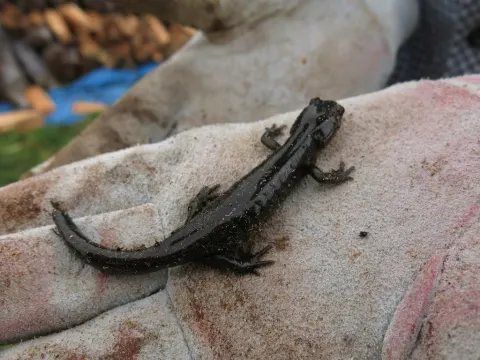
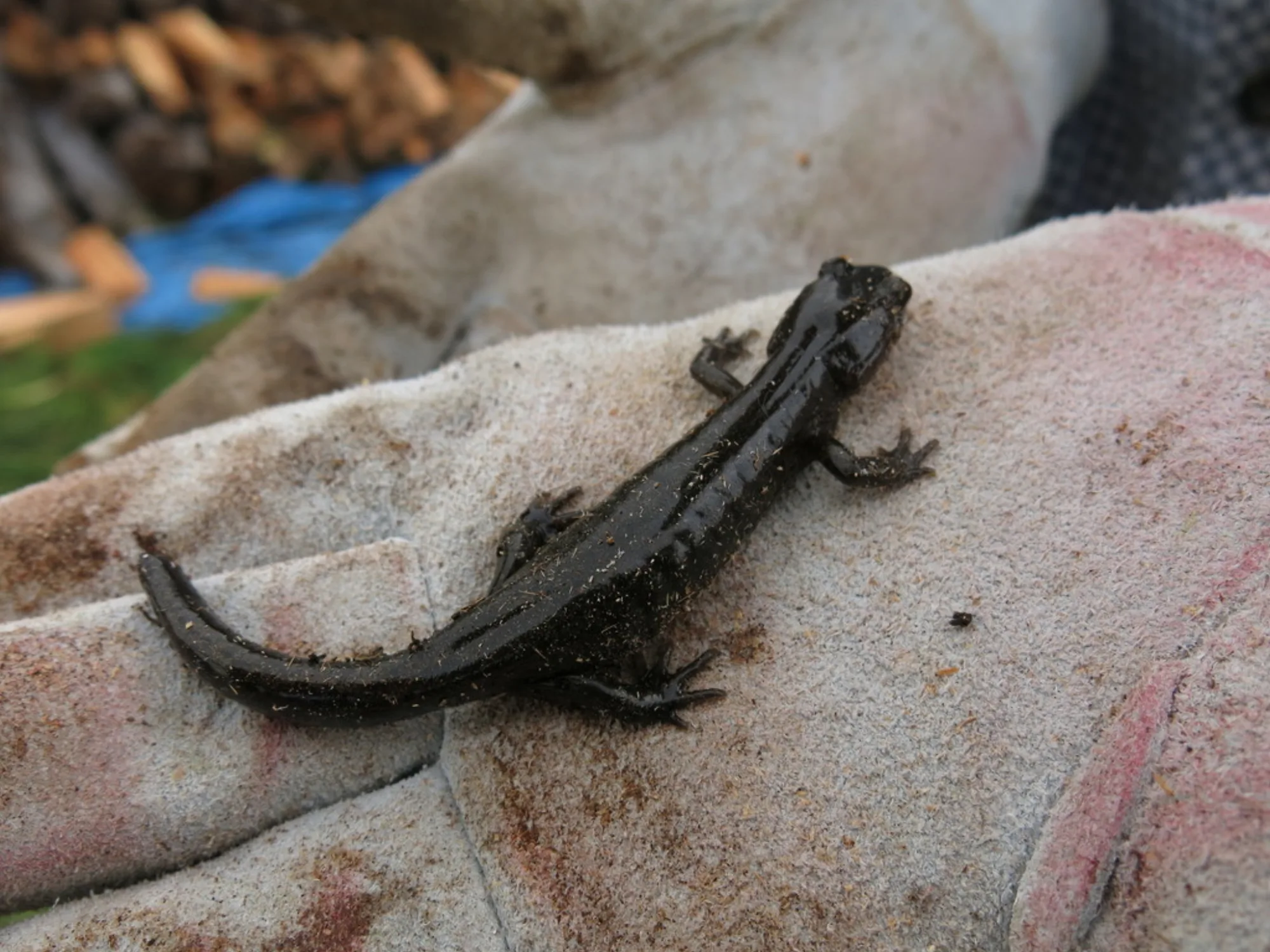
Found exclusively on the northern Japanese island of Hokkaido, the Ezo salamander is a pond-type amphibian that inhabits alpine forests and grasslands. These animals are also at home in diverse wetlands, including swamps, springs, and marshes, as well as man-made canals or irrigated fields. Adults are dark brown and reach lengths between 115 and 200 mm, while the aquatic juveniles are distinguished by golden flecks across their dark bodies. Unlike many related species, they possess only 20 chromosome pairs.
After hatching in May, the larvae spend their first life stage in the water. They are gape-limited predators that swallow prey whole, feeding on sewage worms, small crustaceans, and the tadpoles of local frogs. When food is scarce, the larvae may become cannibalistic, especially if there is a significant size difference between them. Some individuals even develop wider heads and larger bodies to better consume their own kind or large tadpoles. Once they undergo metamorphosis and move to the land, the terrestrial adults shift their diet to invertebrates such as worms and snails.
While these salamanders are numerous across their range, they face several modern pressures. They are frequently sold online as part of the pet trade. In their natural environment, they are preyed upon by invasive raccoons. The introduction of non-native fish can also be devastating; for instance, a unique population in Lake Kuttara was likely driven to extinction by the arrival of salmon. Additionally, urbanization and the modification of wetlands have led to declines in populations living near human settlements.
Written from the English Wikipedia article Ezo salamander (CC BY-SA 4.0).
- Records
- 1
- Countries
- 1
- Atlas places
- 0
These are open occurrence records, so they show where people looked for and recorded the Ezo Salamander as much as where it lives. Cells are up to 25 km across, and every location is generalised to its cell.
Generalised encounter areas, not exact locations. Each shape is a grid cell coloured by how likely the species is there.
- Very likelyJapan25 km zone · medium confidence · 1 record · updated 1 day ago
Conservation status not assessed here yet, so every location is generalised to its grid cell.