Lar Gibbon
Hylobates lar
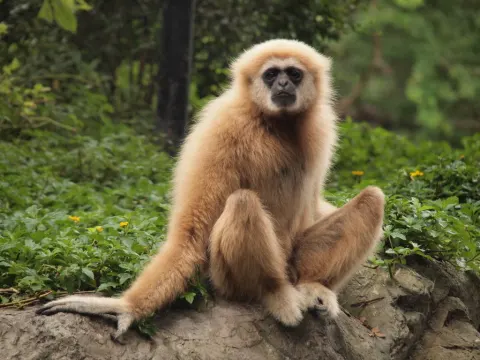
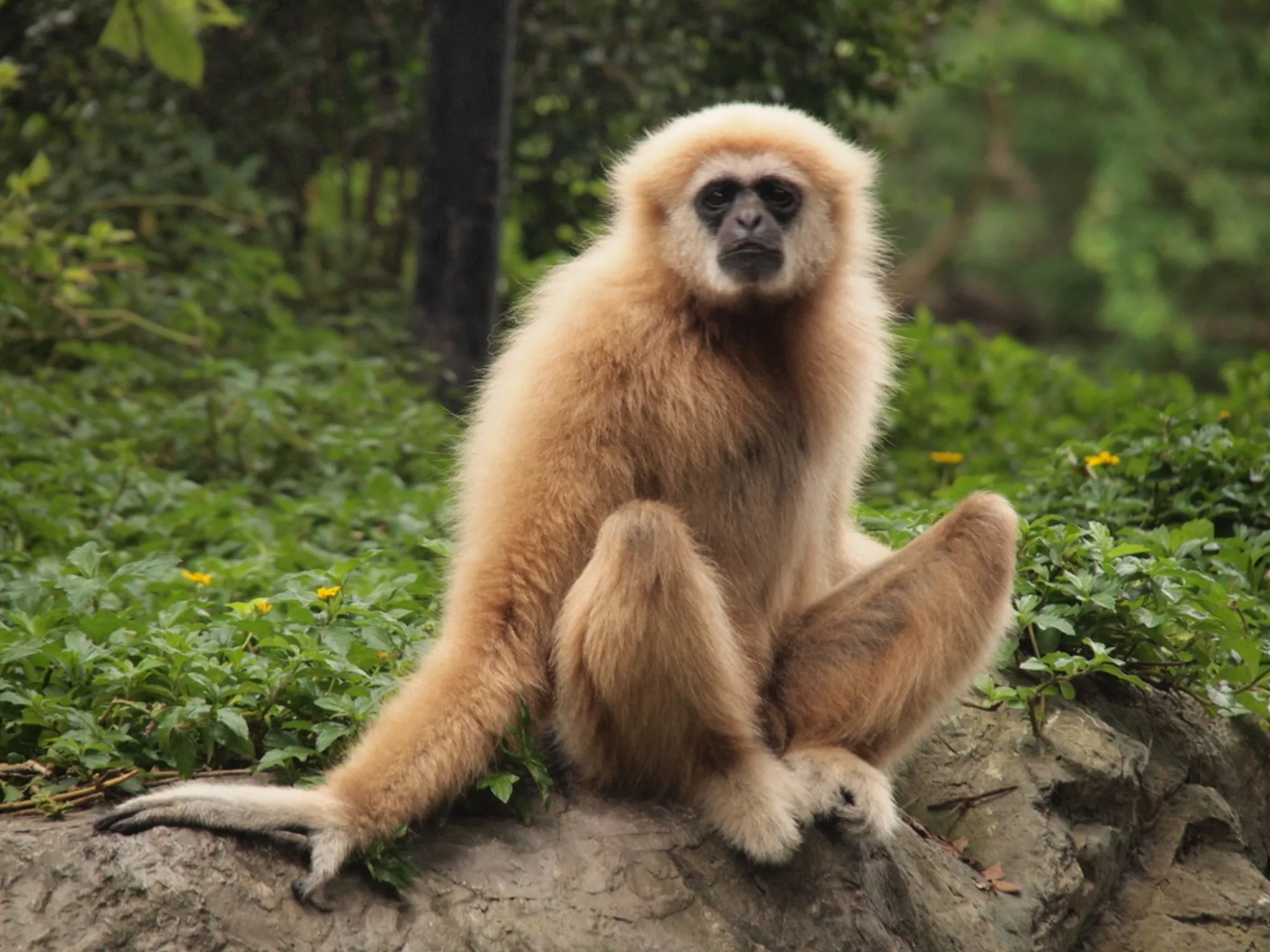
A white ring around a black face gives the Lar Gibbon one of its clearest markings, complemented by white hands and feet. Its coat can be sandy or brown, ranging from light shades to nearly black or black, and males and females can have any of these colours. This primate moves swiftly through the forest canopy, swinging beneath branches on its long arms, and rarely comes down to the ground.
Lar gibbons live in Indonesia, Laos, Malaysia, Myanmar and Thailand, including parts of the Malay Peninsula and northern Sumatra. They inhabit lowland and hill dipterocarp forests, rainforests, seasonal evergreen woodland and mixed deciduous forest with bamboo. They are active by day, usually leaving their sleeping sites around sunrise and settling into sleeping trees well before sunset. Family groups defend territories with calls, and each morning the breeding pair sings a duet, with variations unique to that pair. Fruit makes up half their diet, alongside leaves, insects and flowers; their varied menu includes figs, berries, young shoots and birds' eggs. In summer, when figs and leaves are less available, they eat more insects than in winter.
Groups have been described as a breeding pair and their young, although studies in Thailand suggest that social arrangements can be more flexible. Females first reproduce at about 11 years old in the wild, and usually give birth to a single young after an average pregnancy of six months. Young are nursed for approximately two years. Habitat loss is a major threat, with forests cleared for roads, agriculture, logging, settlements and palm oil plantations. Lar gibbons are also hunted for meat, and parents may be killed so their young can be captured as pets.
Written from the English Wikipedia article Lar gibbon (CC BY-SA 4.0).
- Records
- 167
- Countries
- 2
No atlas park has a record of the Lar Gibbon in or around it yet.
These are open occurrence records, so they show where people looked for and recorded the Lar Gibbon as much as where it lives. Cells are up to 25 km across, and every location is generalised to its cell.
Generalised encounter areas, not exact locations. Each shape is a grid cell coloured by how likely the species is there.
- Very likelyThailand25 km zone · medium confidence · 167 records · updated 80 days ago
- UncommonMalaysia25 km zone · low confidence · 0 records · updated 80 days ago
Conservation status not assessed here yet, so every location is generalised to its grid cell.