Kloss's Gibbon
Hylobates klossii
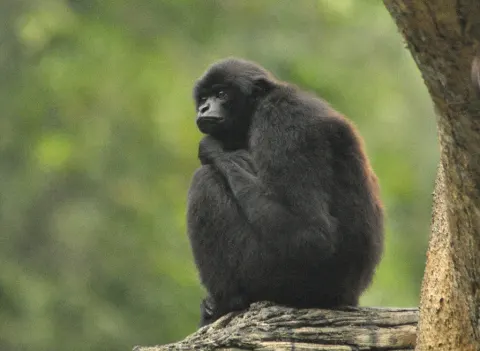
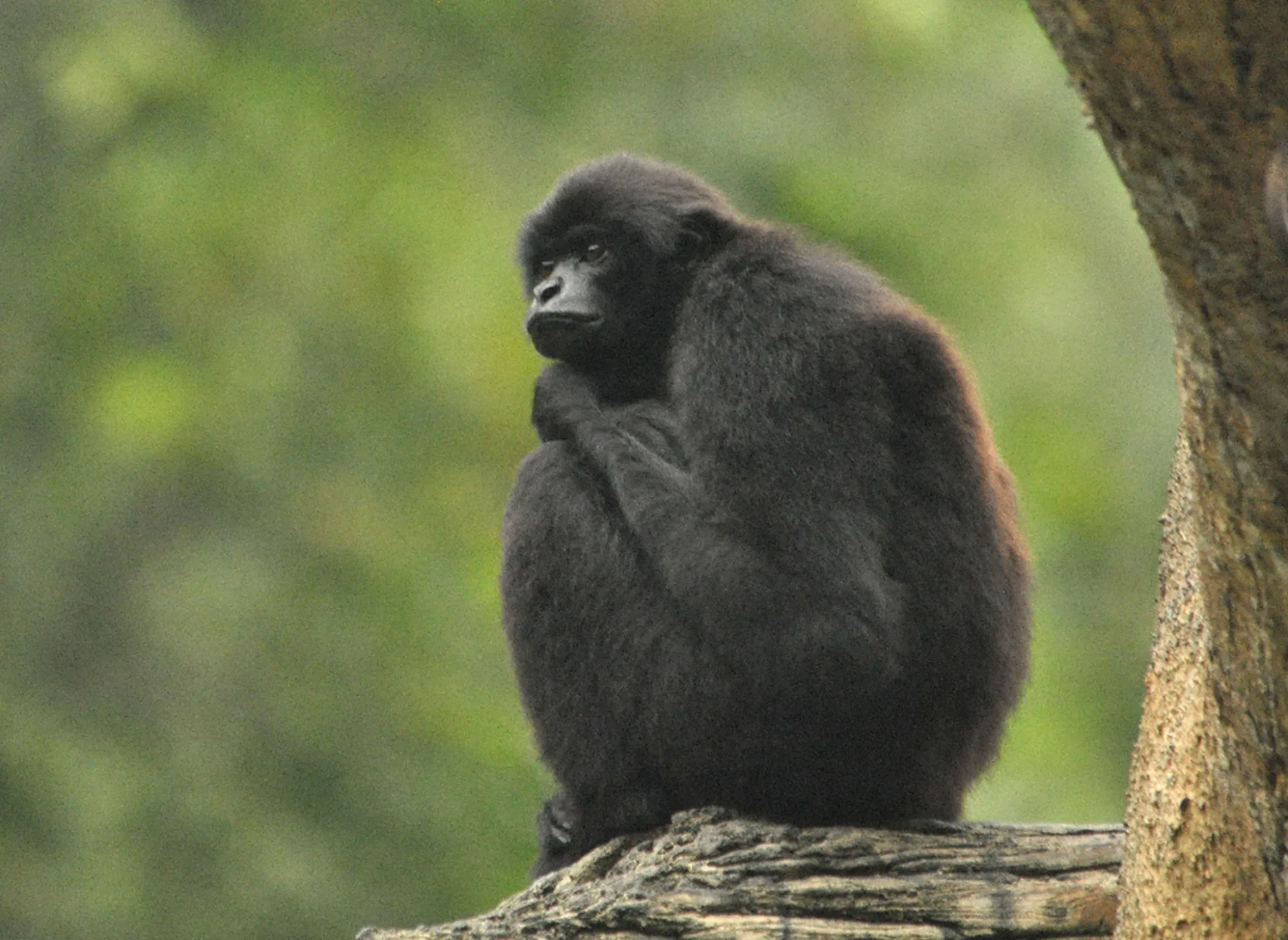
Found only on the Mentawai Islands west of Sumatra, this small primate is known locally as the bilou. It is covered in black fur and lacks a tail, reaching a length of 17 to 25 inches. While it looks like a siamang, it is much smaller and does not have a throat pouch. These apes live in the rainforest canopy, using their long arms to swing through the trees and cross over water. They rarely descend to the ground, preferring to stay hidden in the high branches.
Kloss's Gibbon lives in monogamous pairs within a territory of approximately 49 to 74 acres. Unlike other species, the male and female do not sing together. Instead, the male sings before dawn, and the female calls after sunrise to signal her position. Their diet consists of insects, shoots, and fruit, particularly figs, though they are picky and avoid anything over-ripened. Mothers usually have one baby every two or three years, which stays with them until it is fully mature at age seven.
Human activity is the primary threat to their survival, as they have no natural predators. The population has dropped by 50% over the last twenty five years due to hunting and poaching. The use of air rifles and the construction of new roads have made it easier for people to kill them. Furthermore, industrialization and deforestation are destroying the old-growth forest they need to survive. To avoid being seen by hunters, they often limit social behaviors like playing or grooming.
Written from the English Wikipedia article Kloss's gibbon (CC BY-SA 4.0).
- Atlas places
- 0
These are open occurrence records, so they show where people looked for and recorded the Kloss's Gibbon as much as where it lives. Cells are up to 25 km across, and every location is generalised to its cell.
No encounter zones yet
Where and when you can expect to see Kloss's Gibbon is calculated from observation density. No zones have been computed for this species yet.