Eastern Hoolock Gibbon
Hoolock leuconedys
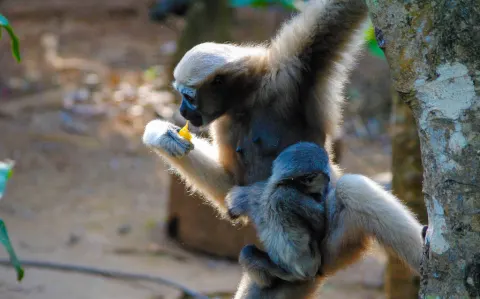
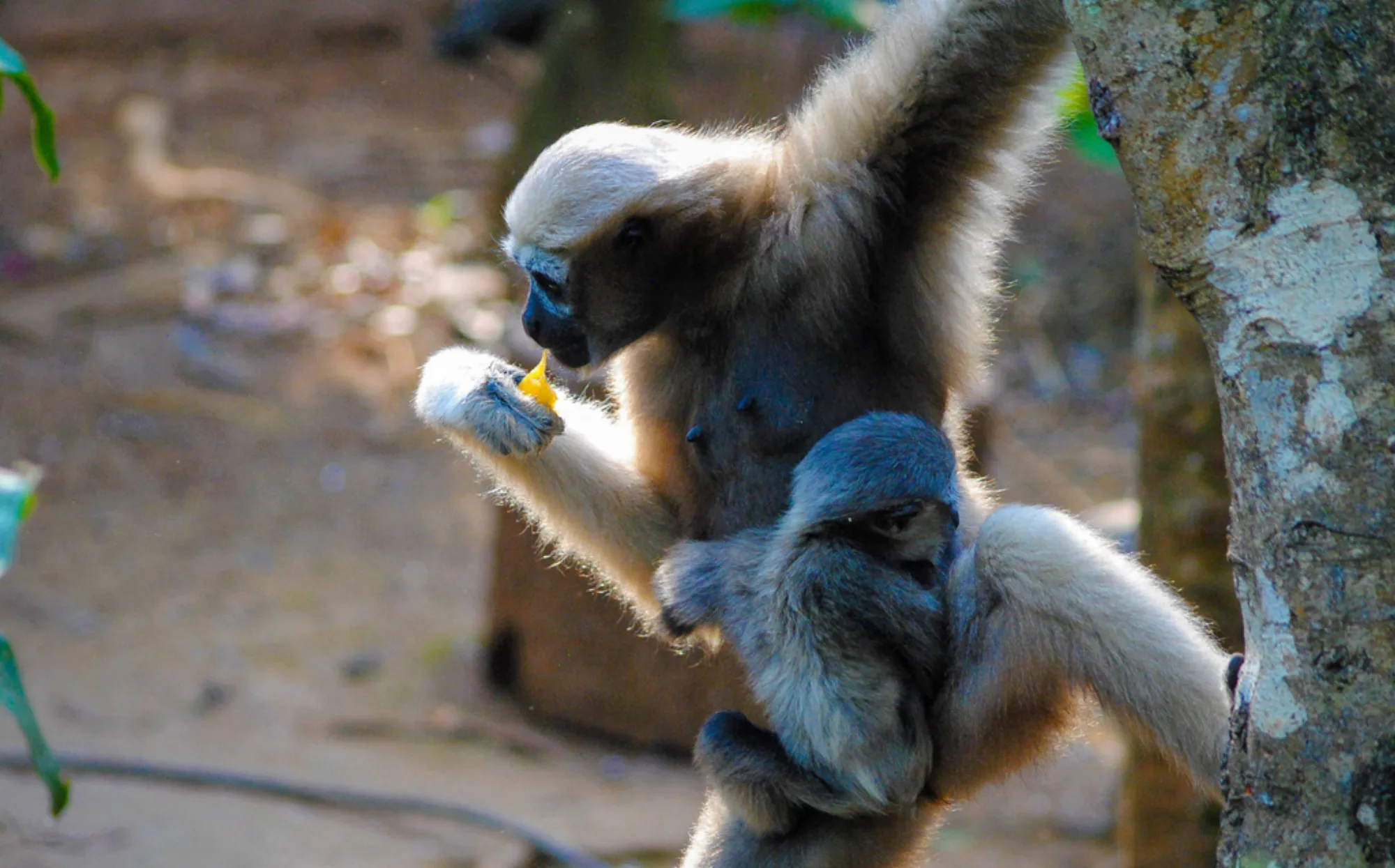
Found east of the Chindwin River, the Eastern Hoolock Gibbon is a forest-dwelling primate that lives in the high, continuous canopies of Myanmar and southwest China. These agile animals inhabit a range of environments from lowland tropical areas to hill forests reaching 2,700 m in elevation. To rest, groups select the tallest trees on slopes or hilltops, where they sleep in a fetal position with their knees hugged to their chests. They are active for 8 to 10 hours daily, waking earlier during the summer than in winter. While they are omnivores that eat insects, bird eggs, and various plant parts, fruit is their primary food source. Figs alone account for 60% of the fruits they consume, and they will actively chase away Malayan giant squirrels to protect these resources.
Survival for these gibbons is increasingly difficult due to human activities like mining, logging, and agriculture. In Myanmar, commercial logging is a major threat, while other populations face competition with humans for resources. Because they rely on a connected canopy, they are forced to cross gaps on the ground where domestic dogs may kill them. They also face natural predators including leopards, pythons, and mountain hawk-eagles. Beyond habitat loss, some groups have been harvested for folk medicine or meat. To help the species, several sanctuaries and nature reserves now provide protected space, and captive-breeding programs aim to eventually release more gibbons into the wild.
Written from the English Wikipedia article Eastern hoolock gibbon (CC BY-SA 4.0).
- Atlas places
- 0
These are open occurrence records, so they show where people looked for and recorded the Eastern Hoolock Gibbon as much as where it lives. Cells are up to 25 km across, and every location is generalised to its cell.
No encounter zones yet
Where and when you can expect to see Eastern Hoolock Gibbon is calculated from observation density. No zones have been computed for this species yet.
Conservation status not assessed here yet, so every location is generalised to its grid cell.