Indonesian Houndshark
Hemitriakis indroyonoi
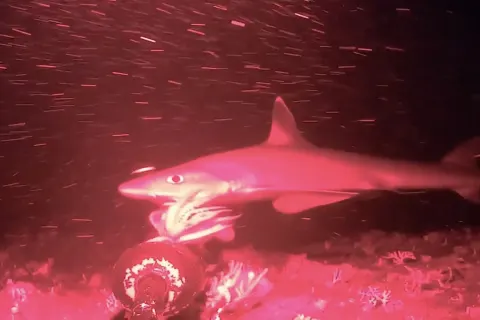
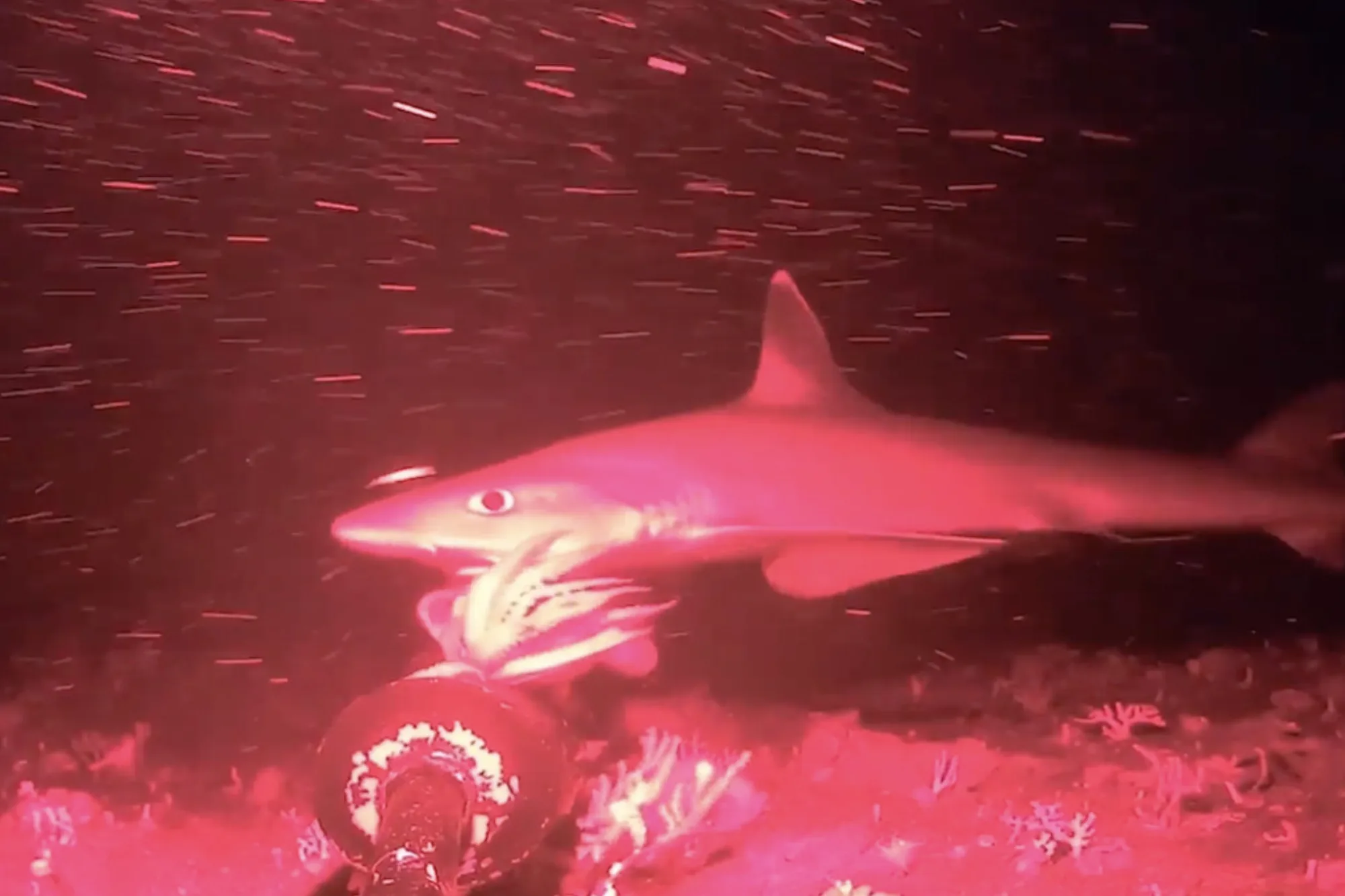
This small shark, named after Indonesian researcher Dr. Indroyono Soesilo, is a tropical inhabitant of the Southern Indian Ocean. While once thought to be endemic to Indonesia, particularly near the islands of Java, Bali, and Sumba, recent observations show they also live in the waters surrounding India. These sharks are bottom dwellers that reside on the seafloor along the fringes of the continental shelf and the upper reaches of underwater slopes. Within this habitat, they favor the Java Trench and environments with rocky, muddy, or sandy bottoms.
Identified by their arched mouths and long, narrow snouts, Indonesian Houndsharks are demersal fish that feed on the sea floor. Although their specific prey is not fully documented, similar species typically eat small fish, squids, and crabs. They have a slow growth rate and are believed to live for about 10 years. Females give birth to live young rather than laying eggs, producing litters of six to 11 pups. A newborn pup is usually 28 to 30 cm long, while adult males can eventually reach a length of 120 cm.
Because they live at depths between 50 and 100 meters, these sharks are highly susceptible to overfishing from trawling and bottom gill nets. They are often caught by accident in longline fisheries. Locally, they are sold in markets for their fins and flesh, though they are generally too small for international trade. Their slow development means that the population faces a significant decline if they continue to be caught at current rates.
Written from the English Wikipedia article Indonesian houndshark (CC BY-SA 4.0).
- Atlas places
- 0
These are open occurrence records, so they show where people looked for and recorded the Indonesian Houndshark as much as where it lives. Cells are up to 25 km across, and every location is generalised to its cell.
No encounter zones yet
Where and when you can expect to see Indonesian Houndshark is calculated from observation density. No zones have been computed for this species yet.