Australian Magpie
Gymnorhina tibicen
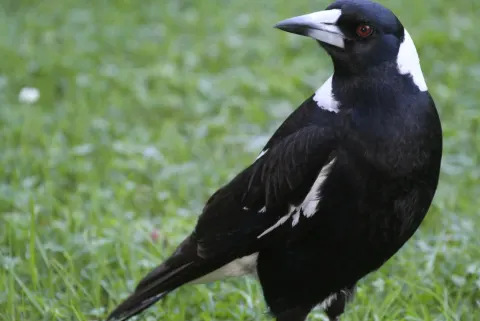
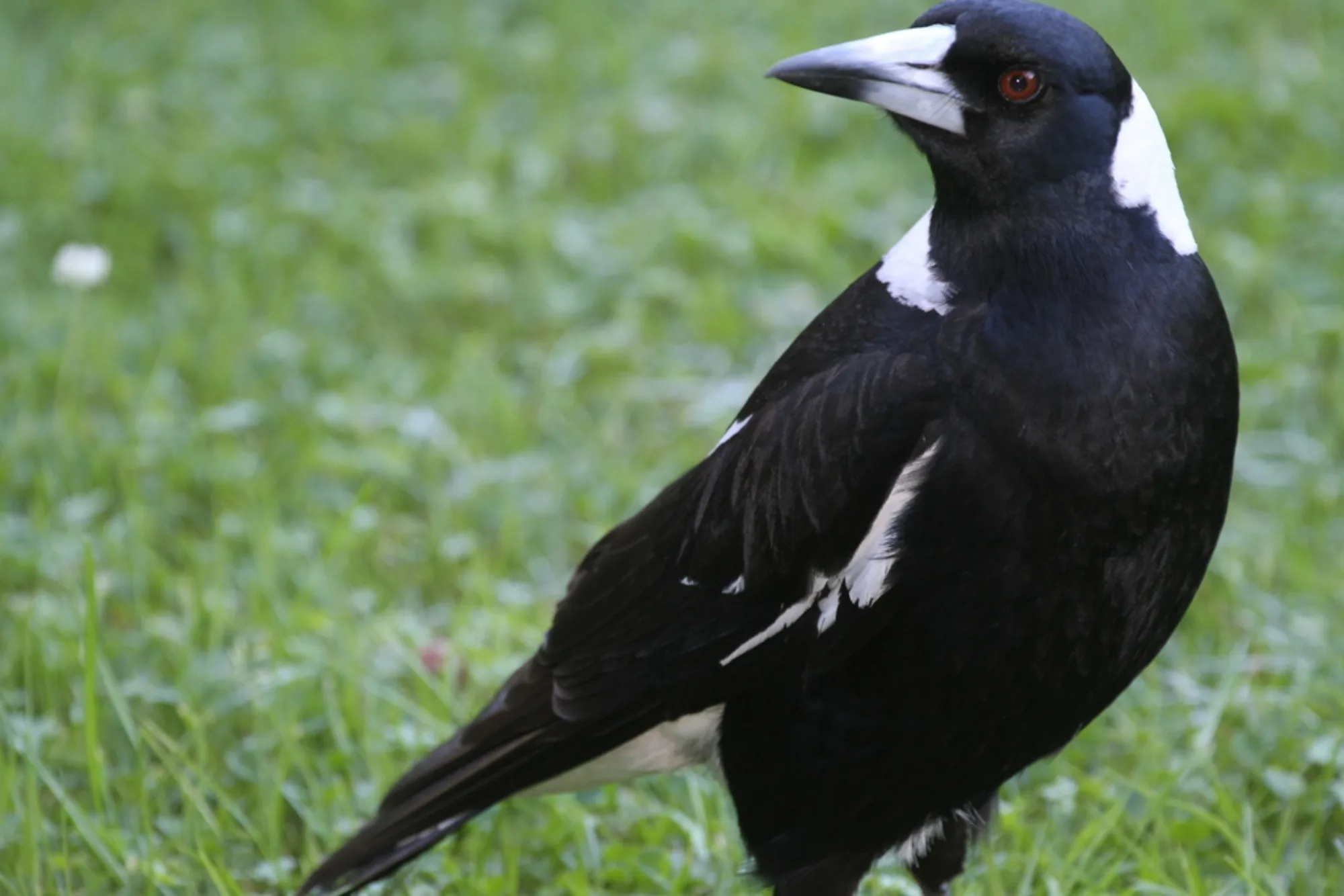
Black and white plumage, long legs and a strong, pale bill make the Australian Magpie easy to recognise. Adults measure 37 to 43 cm long, and their backs may be black or white depending on the form. The male's head is pure white at the rear, whereas the female's white feathers blend into grey there. Listen, too, for its musical warbling and the loud calls known as carolling, which pairs use to advertise or defend a territory.
Native to Australia and southern New Guinea, the bird has also been introduced to New Zealand and Taveuni in Fiji. Look for it in open grassland and fields, or in parks, gardens and streets where trees or forest stand nearby. It shelters and nests in trees but spends much of its time walking and searching for food on the ground. Invertebrates make up most of its varied diet, which also includes small animals, grain and fruit. Magpies usually stay in the same area, often living in groups that defend a territory for years. Young birds play with sticks, leaves and other objects, sometimes chasing one another or mock fighting.
Females build bowl-shaped nests of sticks, usually high in a tree fork, and line them with softer grass and bark. A clutch contains two to five eggs, and helper birds sometimes assist with feeding and raising the young. A small minority of breeding birds swoop at people who approach their nests, especially in spring. Magpies face natural predators including snakes, monitor lizards and barking owls. Roads and powerlines also kill birds, while poison bait can harm them indirectly when they eat poisoned animals.
Written from the English Wikipedia article Australian magpie (CC BY-SA 4.0).
- Records
- 1,306,345
- Countries
- 5
- Atlas places
- 7
These are open occurrence records, so they show where people looked for and recorded the Australian Magpie as much as where it lives. Cells are up to 25 km across, and every location is generalised to its cell.
Generalised encounter areas, not exact locations. Each shape is a grid cell coloured by how likely the species is there.
- Very likelyAustralia25 km zone · high confidence · 1267529 records · updated 86 days ago
- Very likelyNew Zealand25 km zone · high confidence · 38556 records · updated 86 days ago
- LikelyFiji25 km zone · high confidence · 218 records · updated today
- PossiblePapua New Guinea25 km zone · medium confidence · 32 records · updated today
- UncommonIndonesia25 km zone · medium confidence · 10 records · updated today
Conservation status not assessed here yet, so every location is generalised to its grid cell.