Green Iguana
Iguana iguana
Basking in the crowns of trees along slow rivers.
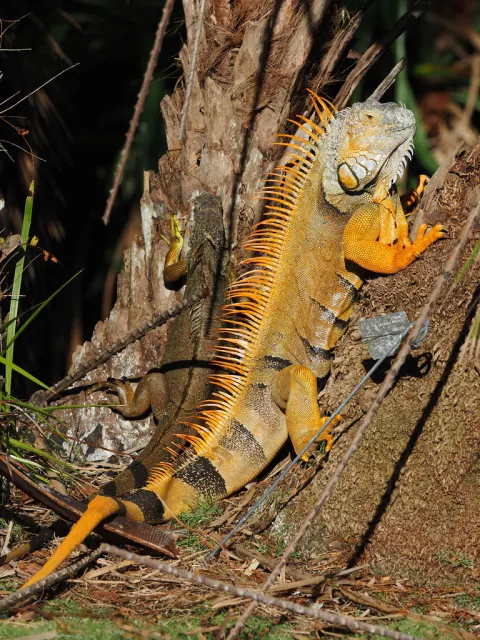
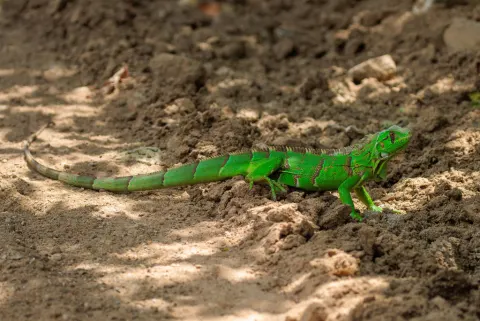
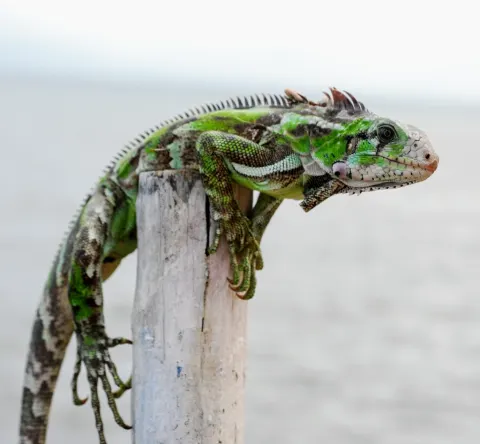
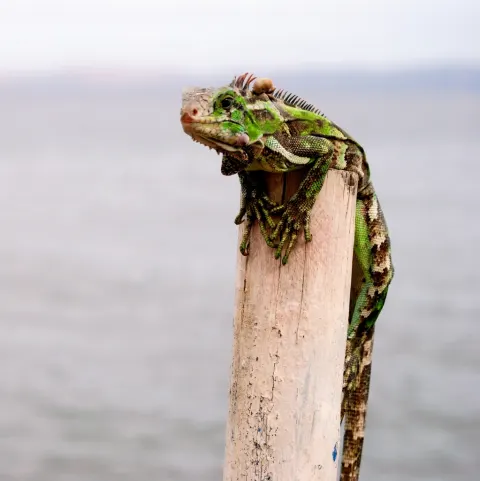
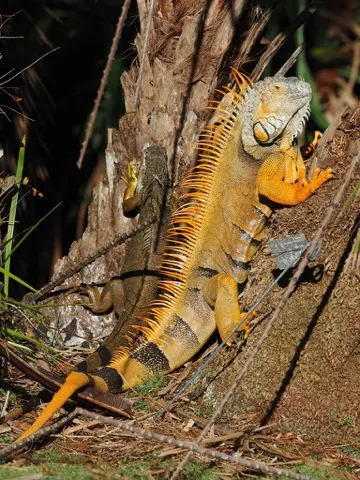
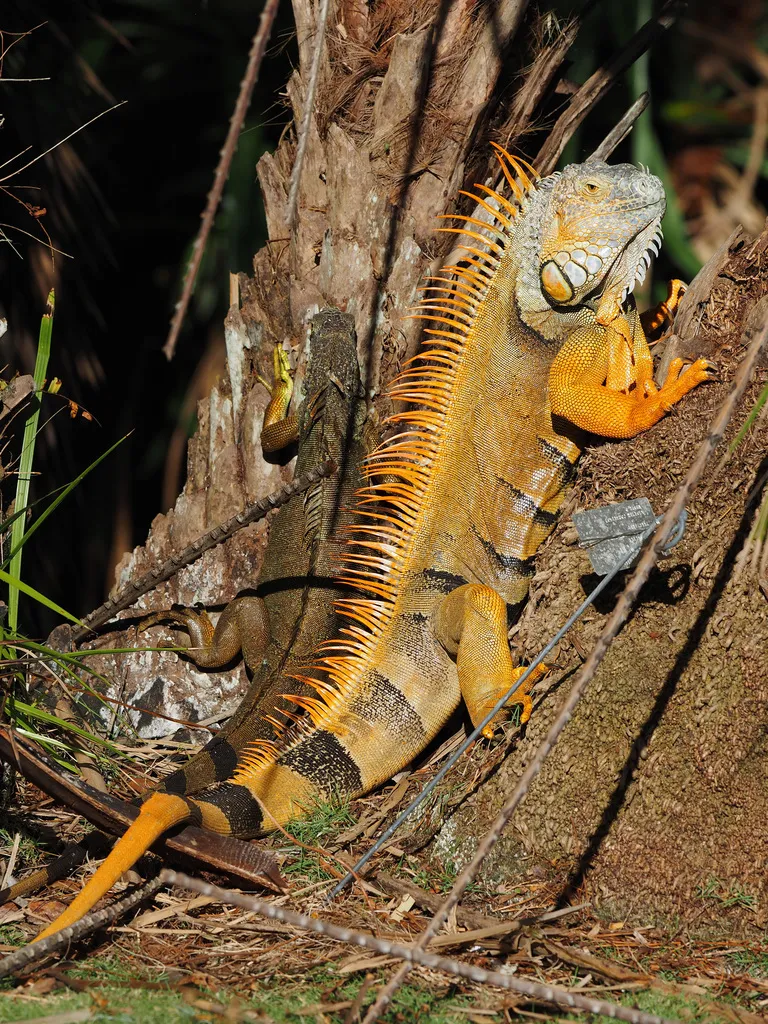
A big male green iguana is two meters of dinosaur theater, whip tail included, in colors that despite the name run from green through orange to slate, crowned with a spiny crest and a solar panel's confidence. They are the most visible large reptile in Costa Rica, stacked along riverside branches, because basking above water is a survival strategy: threatened, an iguana simply falls, crashes through the canopy, and swims off underwater like it planned the whole thing. A third light-sensing organ on the top of the skull, the parietal eye, watches the sky for hawk-shaped shadows while the real eyes mind everything else. Adults are almost entirely vegetarian, which surprises everyone.
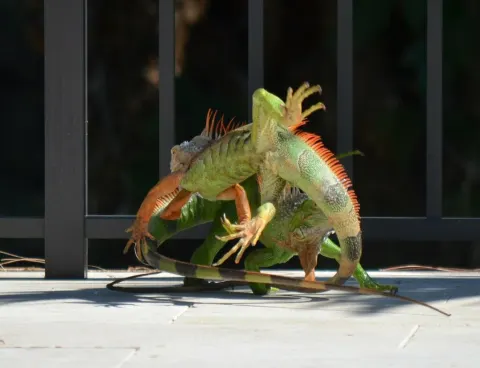
Basks communally, males defending display branches with head-bobs and dewlap flags. Cold snaps literally drop them from trees.
Leaves, flowers and fruit; juveniles add insects while growing. The digestive flora that handles the foliage is picked up by eating elders' droppings.
River-edge trees in mid-morning sun; a low angle across the water gets crest, dewlap and reflection in one frame. Watch for the head-bob display.
Skip any roadside stall offering iguana handling, and never feed wild ones; both feed a capture trade the species does not need.
Generalised encounter areas, not exact locations. Each shape is a grid cell coloured by how likely the species is there.
- Very likelyUnited States10 km zone · high confidence · 1812 records · updated 41 days ago
- Very likelyMexico10 km zone · high confidence · 989 records · updated 41 days ago
- Very likelyFrench Guiana10 km zone · high confidence · 978 records · updated 41 days ago
- Very likelyCosta Rica10 km zone · high confidence · 939 records · updated 41 days ago
- Very likelyColombia10 km zone · high confidence · 695 records · updated 41 days ago