Western Gorilla
Gorilla gorilla
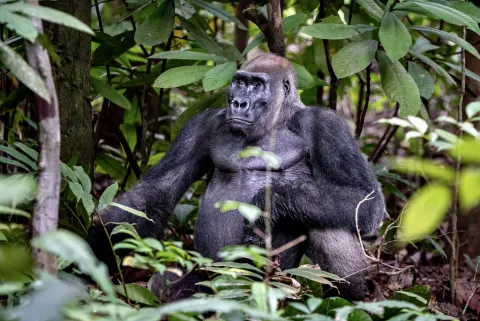
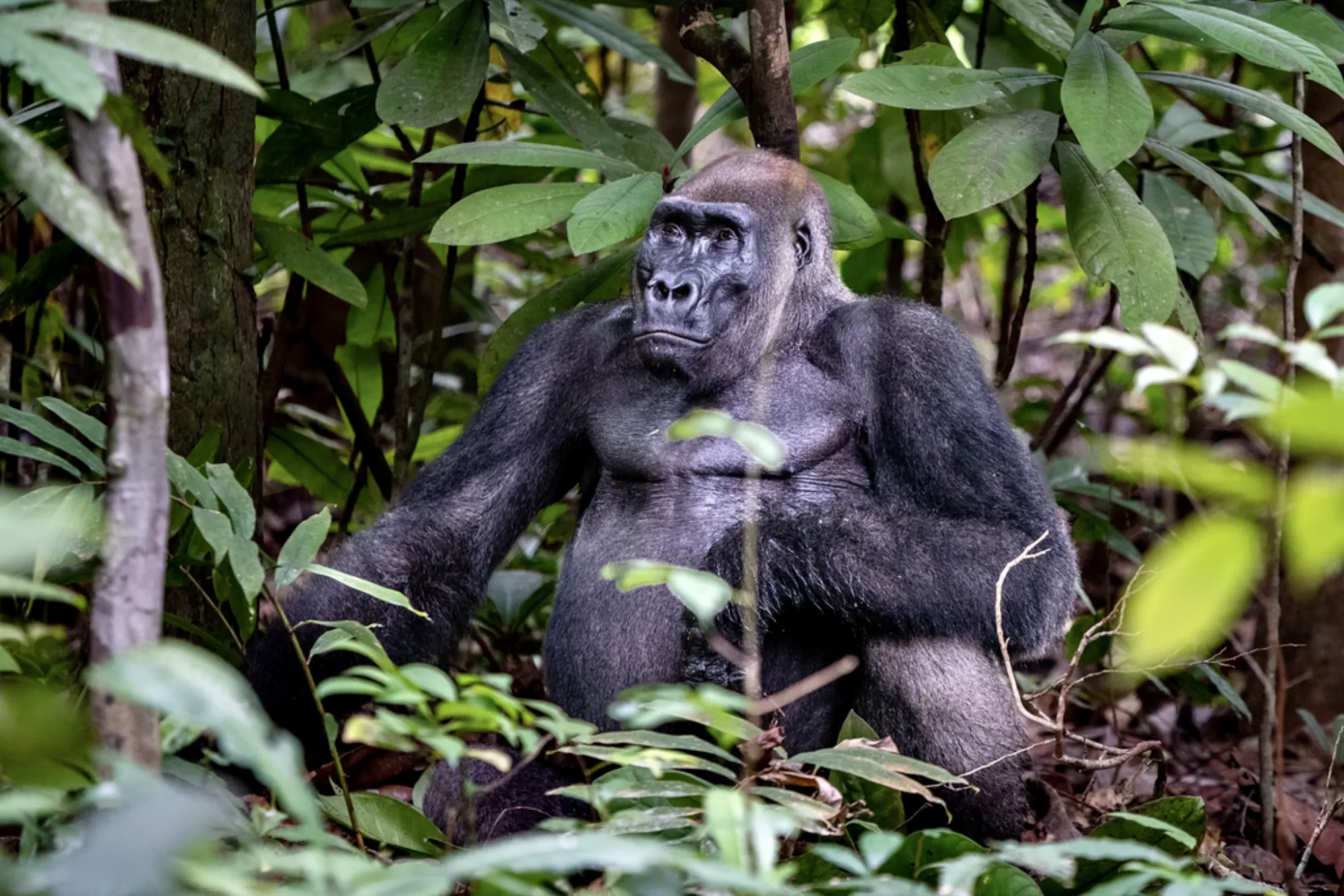
These great apes inhabit the forests of midwest Africa, where they are divided into two distinct groups. Most individuals are western lowland gorillas, but a tiny population of just 250 to 300 Cross River gorillas survives in the north along the border of Nigeria and Cameroon. Western gorillas are identifiable by their black or dark grey hair, which is noticeably lighter than that of their eastern relatives. Adult males are robust, weighing around 168 kilograms and reaching heights up to 1.76 m. They are often distinguished by a brownish forehead and the silver hair of a dominant male leader.
Life for the Western Gorilla revolves around a family group of two to twenty members, led by a single silverback. These groups travel across home ranges as large as 30 km2 searching for high-fiber foods. Their diet is diverse, featuring leaves, stems, ferns, and flowers, though they prefer fruit when it is abundant. They have even been known to use tools or consume specific plants for caffeine-like stimulation. Female gorillas begin breeding at eight or nine years old, but because they care for their infants for three to four years, the time between births is very long.
This slow reproductive rate makes the species particularly sensitive to external pressures. Populations have been devastated by the Ebola virus, which reduced numbers in protected areas by 33% over fifteen years. Human activities such as commercial logging, mining, and agriculture continue to cause habitat loss and degradation. Furthermore, these primates face intense hunting for bushmeat and poaching. Because a female may only produce a surviving offspring every six to eight years, recovery from these combined threats is extremely slow, with some estimates suggesting it could take 75 years.
Written from the English Wikipedia article Western gorilla (CC BY-SA 4.0).
- Atlas places
- 0
These are open occurrence records, so they show where people looked for and recorded the Western Gorilla as much as where it lives. Cells are up to 25 km across, and every location is generalised to its cell.
No encounter zones yet
Where and when you can expect to see Western Gorilla is calculated from observation density. No zones have been computed for this species yet.