Indian Star Tortoise
Geochelone elegans
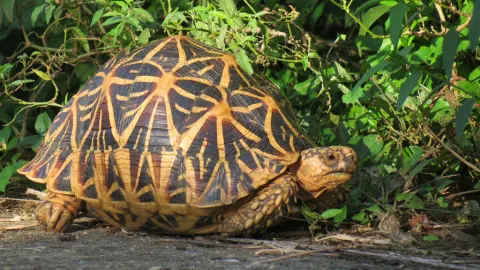
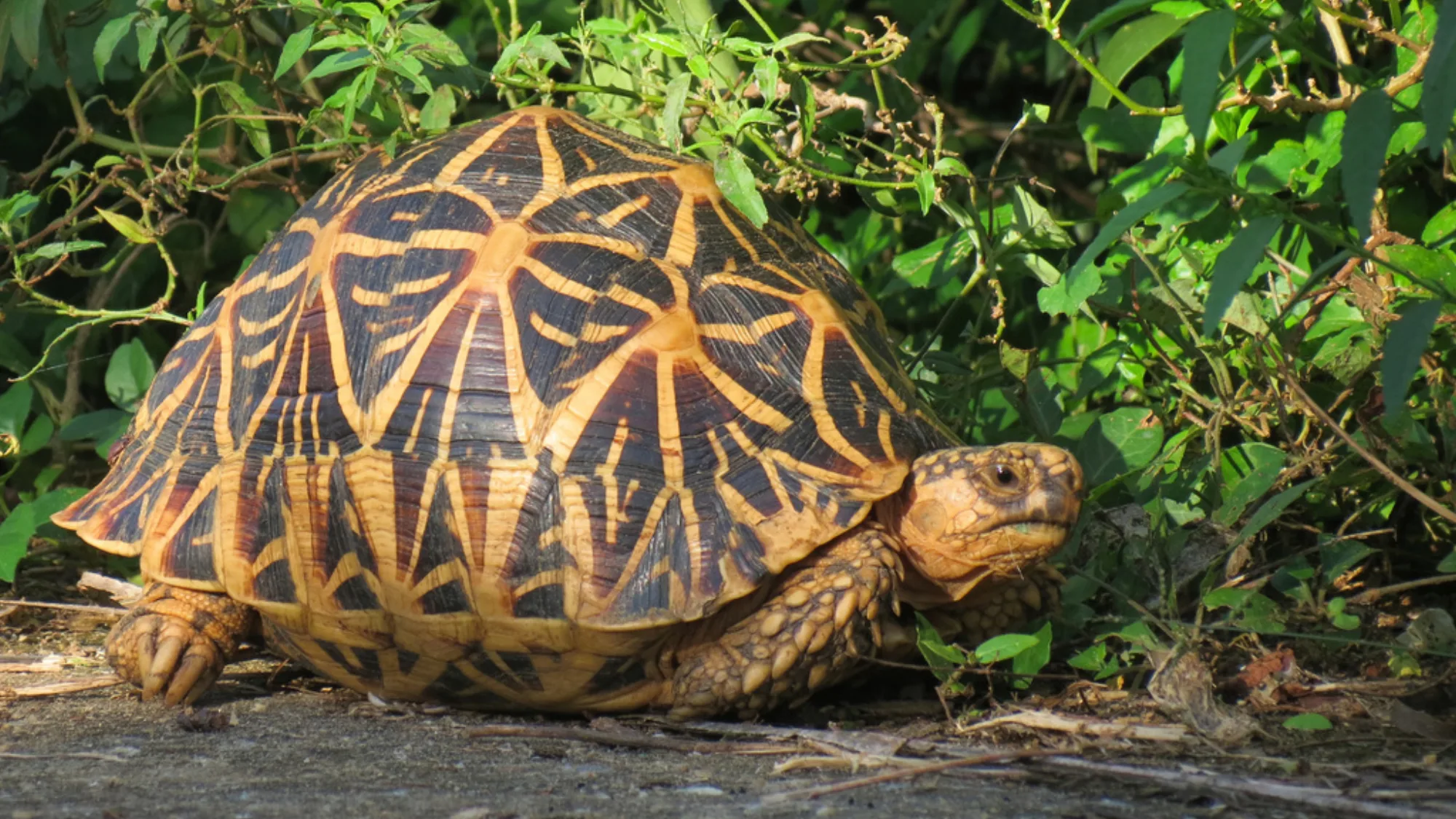
Yellow streaks radiate across the dark, domed shell of the Indian Star Tortoise, creating a pattern that helps break up its outline when it rests in the shade of grass or other vegetation. The markings vary across its range: animals in Sri Lanka tend to be larger and have broader yellow markings than those in India. Females are considerably larger than males, while newly hatched tortoises have yellow rectangular blotches on a black or brown shell rather than a distinct star pattern.
This tortoise lives in western and southeastern India, southeastern Pakistan and Sri Lanka, including in dry country and scrub forest. It also occurs in dry grasslands, rainy deciduous forests and semi-desert, and can tolerate habitats with both dry and wet seasons. Its diet is mostly plant matter, including grasses, fallen fruit, flowers and succulent leaves, although it sometimes eats carrion. Males compete for mates by ramming rivals and attempting to turn them onto their backs. A female digs a nest for her eggs, covers them with sand and may lay one to nine clutches a year, each containing one to ten eggs. The eggs incubate for 50 to 180 days.
The species faces threats from shrinking habitat and capture for illicit wildlife sales. An estimated 10,000 to 20,000 tortoises are removed from the wild annually for worldwide sale, and many die before reaching buyers. Smuggling can involve packing tortoises into small containers, bags or boxes, exposing them to stress, suffocation and injury. Respiratory diseases, including pneumonia, are another threat, with handling and poor transport conditions increasing the risk of disease and parasites.
Written from the English Wikipedia article Indian star tortoise (CC BY-SA 4.0).
- Records
- 22
- Countries
- 2
- Atlas places
- 7
These are open occurrence records, so they show where people looked for and recorded the Indian Star Tortoise as much as where it lives. Cells are up to 25 km across, and every location is generalised to its cell.
Generalised encounter areas, not exact locations. Each shape is a grid cell coloured by how likely the species is there.
- Very likelySri Lanka25 km zone · medium confidence · 15 records · updated 80 days ago
- Very likelyIndia25 km zone · medium confidence · 7 records · updated 80 days ago
Conservation status not assessed here yet, so every location is generalised to its grid cell.