Rhim Gazelle
Gazella leptoceros
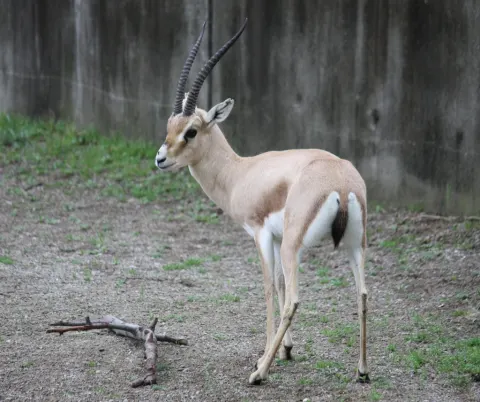
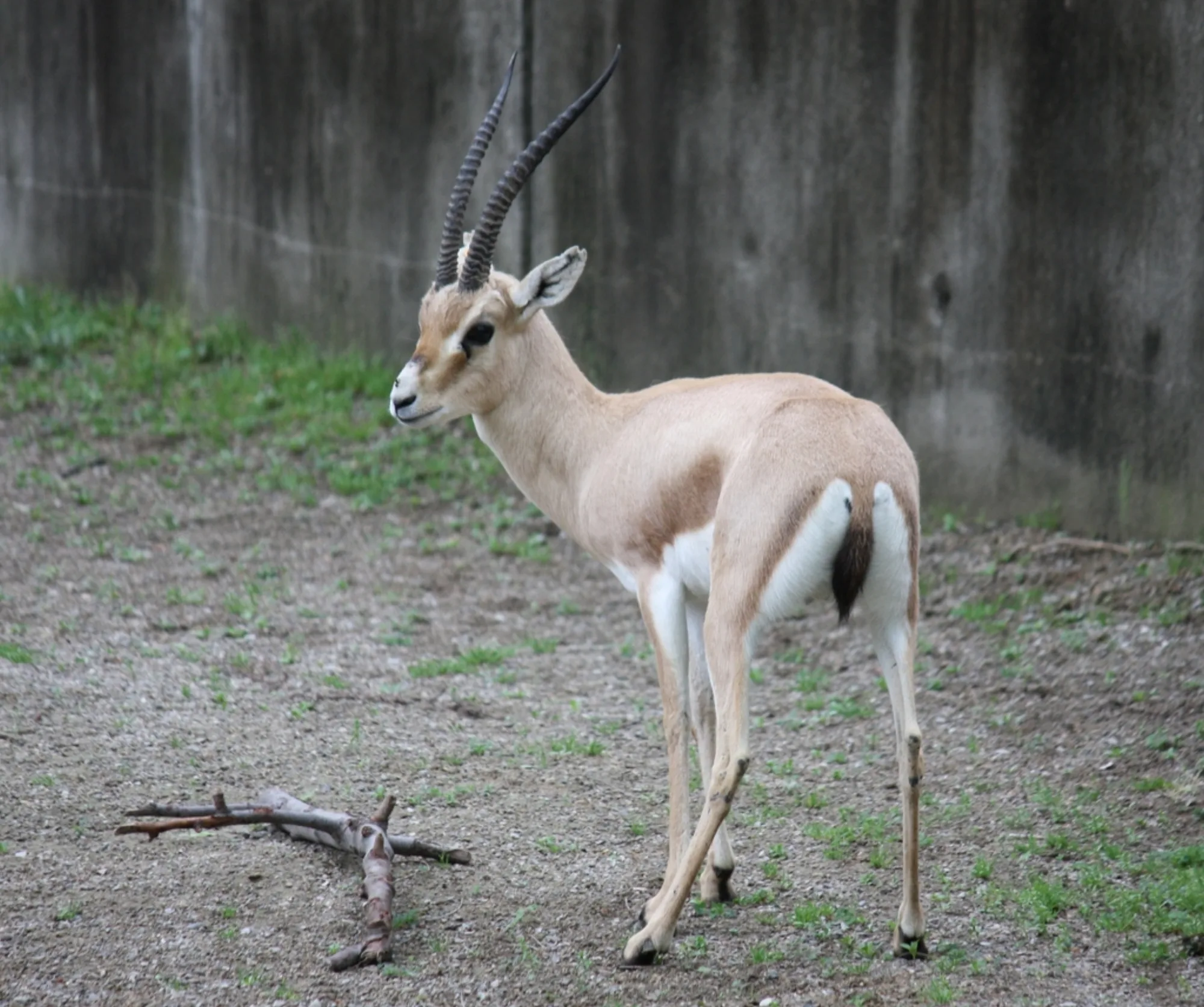
The Rhim Gazelle is a pale creature uniquely equipped for the harshness of the central Sahara. To identify this animal, look for a coat of cream or light buff that makes it the palest of all its relatives. It possesses a dark tail that stands out against its light rump, and its face and sides bear faint markings. Both sexes carry horns, though the male's are longer and slightly S-shaped while the female's are straighter and even more delicate. These animals are currently found in Egypt, Libya, Tunisia, and Algeria, though their specific range remains somewhat uncertain.
Preferring a landscape of sand dunes, rocky ground, and sandy depressions, these nomads wander without a fixed migration route to find fresh vegetation. Because of the intense desert heat, they usually eat only during the morning or evening. They rarely need to drink from open pools, as they get the moisture they require from dew and the plants they consume. To survive the climate, they use a process called heterothermy, where their body temperature rises significantly during the day to save water and energy, then drops back to a typical range during the cooler night hours.
While this species was once common, populations dropped significantly by the start of the 1970s. For many years, people hunted them for their meat or for horns to be sold as decorations. Today, their survival is challenged by human interference and the disappearance of the habitats they need. Experts believe that as few as 300 to 600 mature adults may still live in the wild, surviving in small, disconnected groups across the desert interior.
Written from the English Wikipedia article Rhim gazelle (CC BY-SA 4.0).
- Atlas places
- 0
These are open occurrence records, so they show where people looked for and recorded the Rhim Gazelle as much as where it lives. Cells are up to 25 km across, and every location is generalised to its cell.
No encounter zones yet
Where and when you can expect to see Rhim Gazelle is calculated from observation density. No zones have been computed for this species yet.