Common Chaffinch
Fringilla coelebs
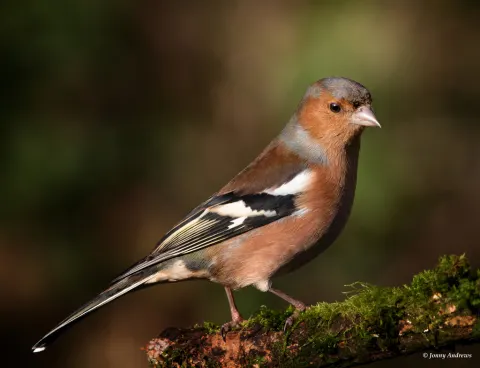
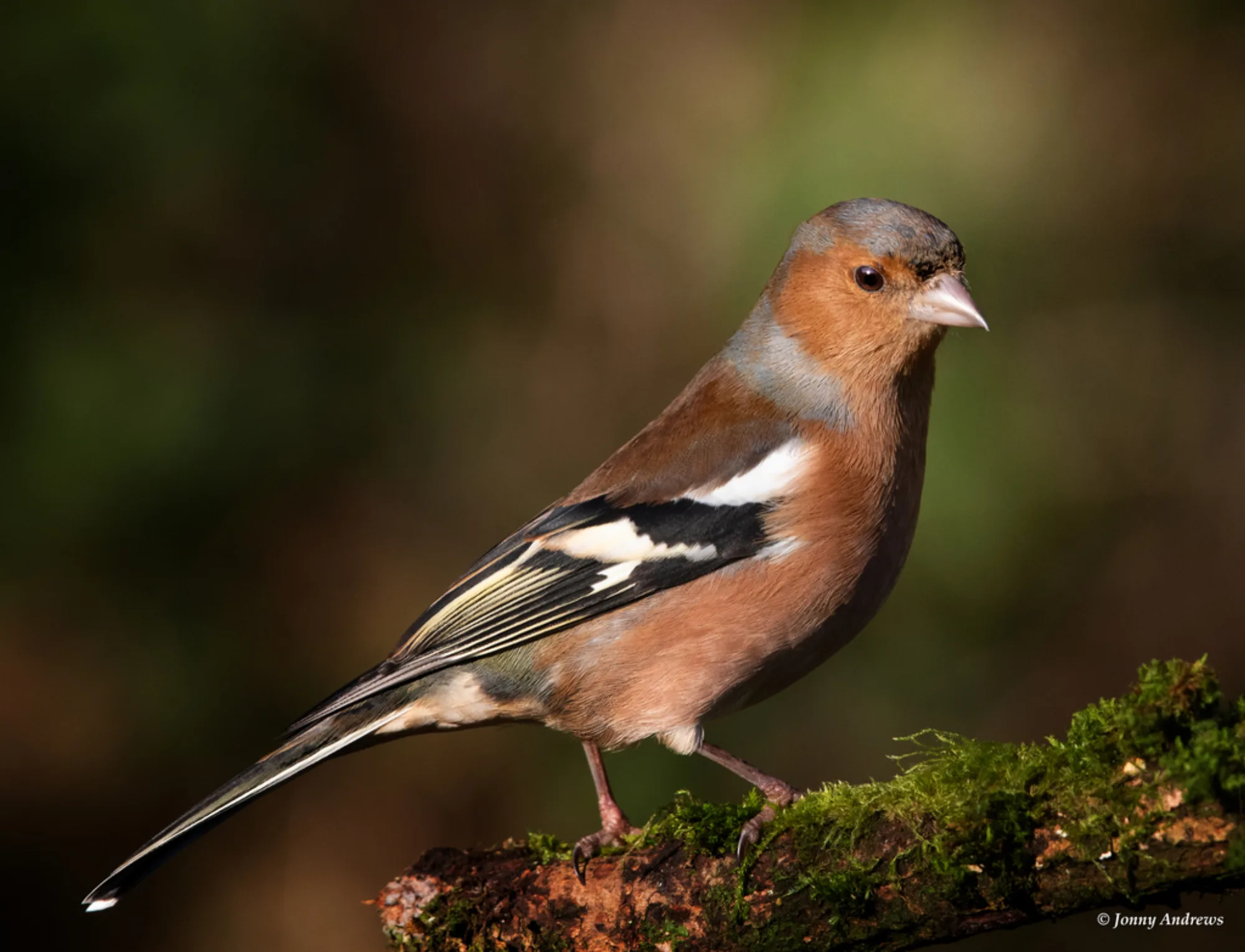
Look for the Common Chaffinch in wooded areas across much of Europe and east through temperate Asia to Siberia. This small finch also lives on both main islands of New Zealand, where it was introduced, and a small breeding colony remains around Cape Town in South Africa. It measures about 14.5 cm long. The male has a blue-grey head and rusty red colouring beneath, while the female is more subdued; both have two white wing bars and white along the sides of the tail. Listen, too, for the male singing from an exposed perch. His song varies between regions, and males typically have two or three song types.
Outside the breeding season, chaffinches gather in flocks in open country, sometimes alongside bramblings, and search the ground for seeds and other plant material. In the breeding season they seek invertebrates in trees, especially caterpillars, and sometimes make short flights to catch insects. Birds from colder northern areas move south for winter, while those in warmer regions remain in place. The female builds a deep cup nest in the fork of a tree or bush, using moss and grass beneath a covering of lichen and spider silk. A typical clutch contains four or five eggs. Once the chicks hatch, both parents feed them, and continue to help them find food for several weeks after they leave the nest.
Eggs and nestlings can fall prey to crows, squirrels and domestic cats, and probably also to stoats and weasels. Chaffinches can also contract a disease caused by the parasite Trichomonas gallinae, though its arrival in Great Britain was not associated with a significant decline in overall chaffinch numbers.
Written from the English Wikipedia article Eurasian chaffinch (CC BY-SA 4.0).
- Records
- 1,779,162
- Countries
- 85
- Atlas places
- 4
These are open occurrence records, so they show where people looked for and recorded the Common Chaffinch as much as where it lives. Cells are up to 25 km across, and every location is generalised to its cell.
Generalised encounter areas, not exact locations. Each shape is a grid cell coloured by how likely the species is there.
- Very likelyUnited Kingdom25 km zone · high confidence · 310229 records · updated 86 days ago
- Very likelyFrance25 km zone · high confidence · 271010 records · updated 86 days ago
- Very likelyBelgium25 km zone · high confidence · 259532 records · updated 86 days ago
- Very likelyNorway25 km zone · high confidence · 234687 records · updated 86 days ago
- Very likelyFinland25 km zone · high confidence · 138743 records · updated 86 days ago
- Very likelySpain25 km zone · high confidence · 107014 records · updated 86 days ago
- Very likelyNew Zealand25 km zone · high confidence · 52047 records · updated 86 days ago
- Very likelySweden25 km zone · high confidence · 46946 records · updated 86 days ago
- Very likelyGermany25 km zone · high confidence · 29014 records · updated 86 days ago
- Very likelyNetherlands25 km zone · high confidence · 28443 records · updated 86 days ago
Conservation status not assessed here yet, so every location is generalised to its grid cell.