Chinese Mountain Cat
Felis bieti
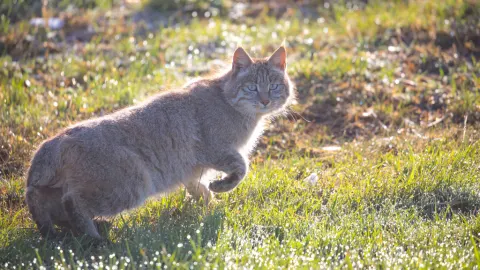
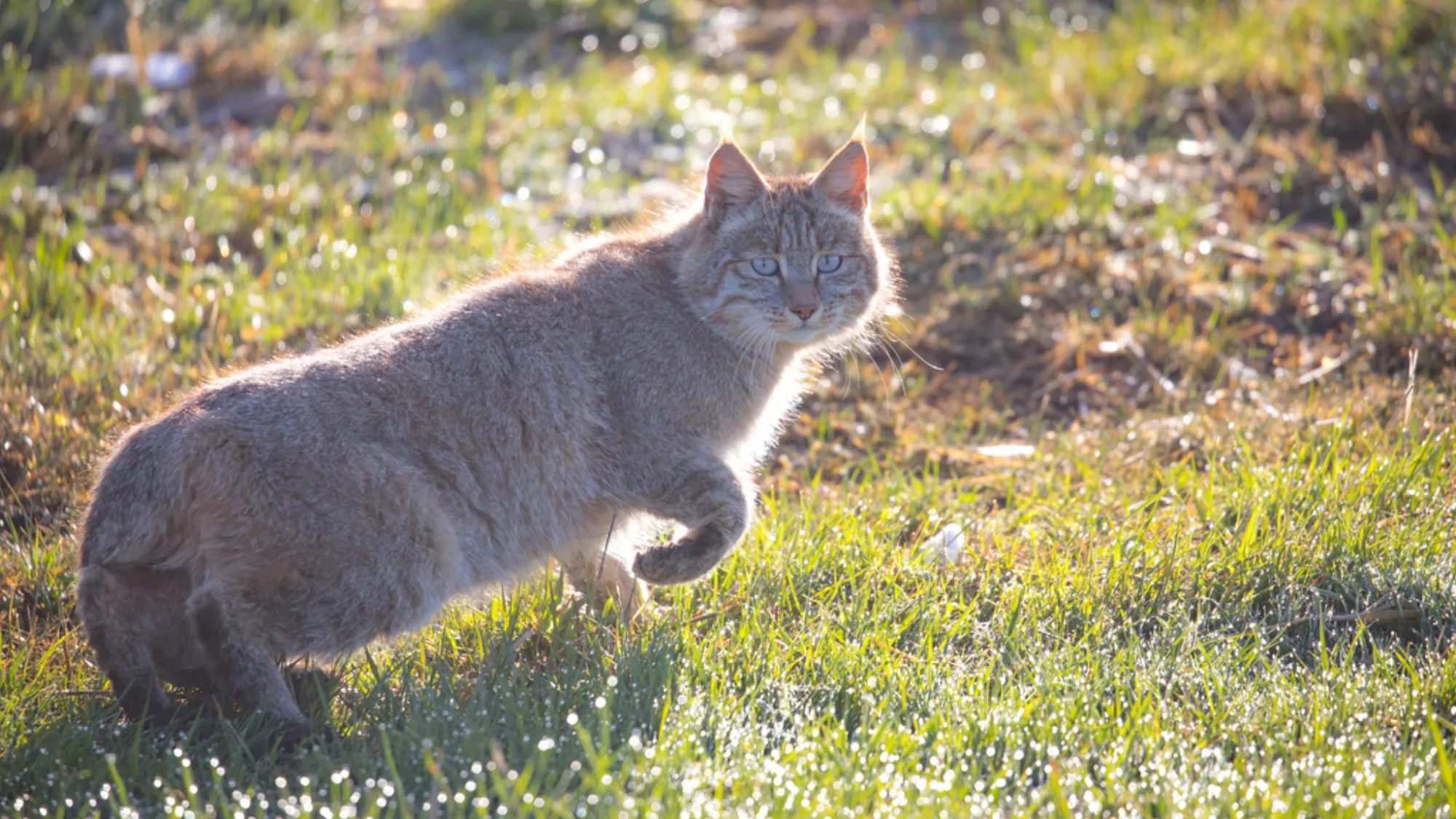
Travellers visiting the high-altitude reaches of the Tibetan Plateau may find it difficult to spot this rare feline. With its sand-colored coat and dark guard hairs, the Chinese Mountain Cat blends into the rocky terrain of western China. It features subtle horizontal stripes on its legs and face, though these markings are often difficult to see. Key identifiers include black tips on the ears and distinct black rings circling the legs and tail. These cats are roughly 69 to 84 cm long, with tail lengths of 29 to 41 cm, and typically weigh between 6.5 and 9 kg. Long hair grows between their foot pads, providing protection in their cold, high-elevation home.
This species is found specifically in eastern Qinghai and north-western Sichuan, favoring alpine meadows, shrublands, and the edges of coniferous forests. They live at elevations ranging from 2,500 to 5,000 m, avoiding both deep forests and true deserts. While active throughout the day, they are most busy from the late afternoon into the early night. Their diet consists mainly of birds, rodents, and pikas. To raise their young, females seek out secluded burrows, often moving into abandoned badger or marmot dens. They sometimes even kill marmots to claim these underground shelters for their two to four kittens.
Human activity poses significant risks to their survival. Large-scale programs to poison pikas have a double impact, as the chemicals remove the cats' primary food source and can accidentally kill the felines themselves. Additionally, individuals occasionally run into trouble near human settlements; one male was recently found caught in a mouse trap while attempting to hunt near a chicken pen. Despite these challenges, the cat remains a protected species within China, and researchers have begun using GPS collars to track and study their movements in the wild.
Written from the English Wikipedia article Chinese mountain cat (CC BY-SA 4.0).
- Records
- 0
- Countries
- 1
- Atlas places
- 0
These are open occurrence records, so they show where people looked for and recorded the Chinese Mountain Cat as much as where it lives. Cells are up to 25 km across, and every location is generalised to its cell.
Generalised encounter areas, not exact locations. Each shape is a grid cell coloured by how likely the species is there.
- Very likelyChina50 km zone · low confidence · 0 records · updated 4 days ago