Northern Rockhopper Penguin
Eudyptes moseleyi
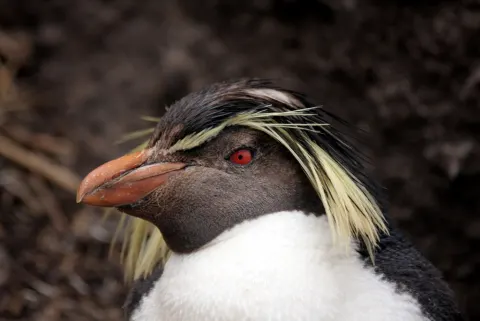
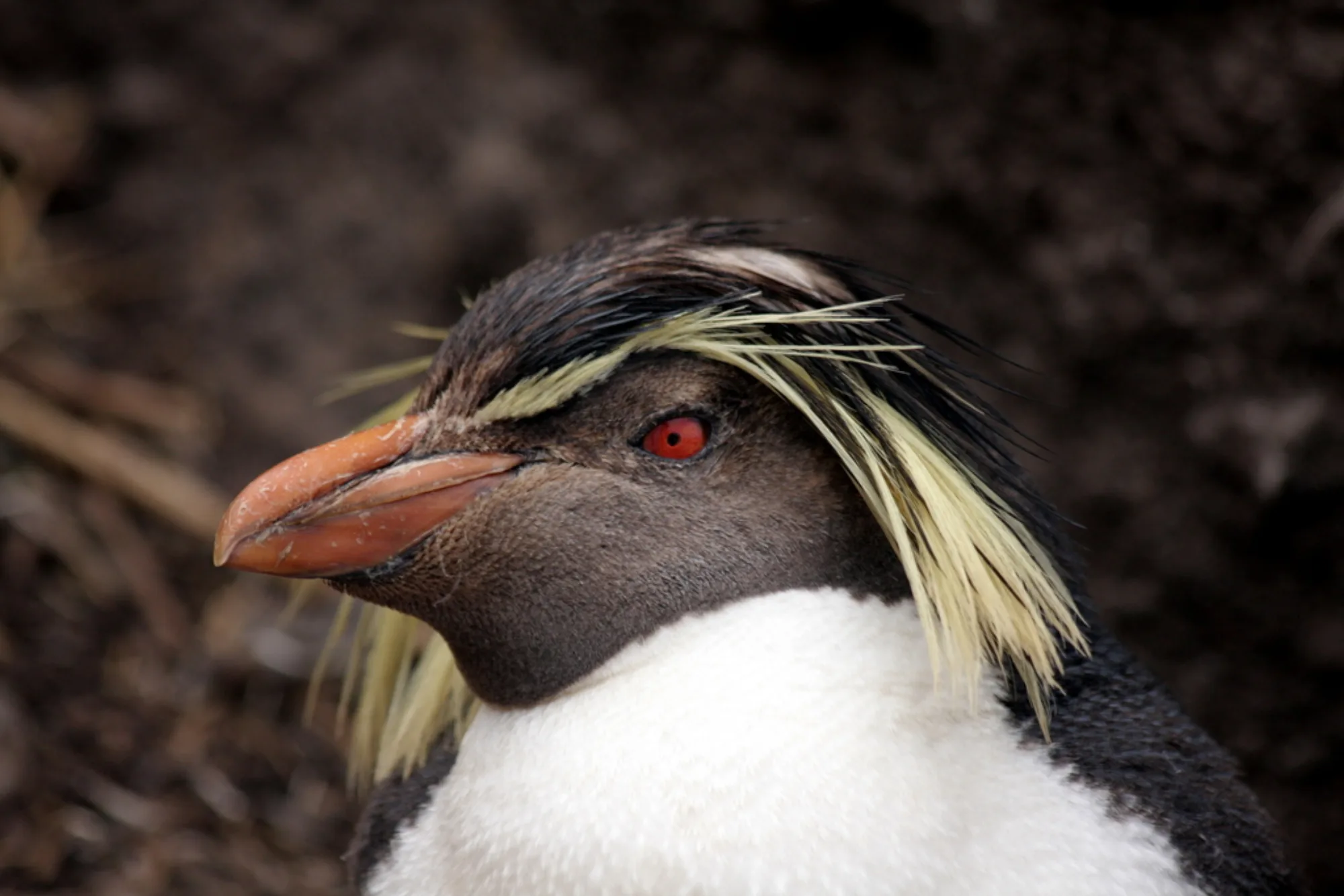
At breeding time, the Northern Rockhopper Penguin gathers in colonies across islands in the southern Atlantic and Indian Oceans. This crested penguin, Eudyptes moseleyi, is larger than the eastern and western rockhopper penguins, with differences in its crest tassels and the stripe in front of the eye. Gough Island and Tristan da Cunha host more than 99% of breeders in late spring or early summer. Colonies also occur on Amsterdam Island and St Paul Island, and can occupy sites at sea level, on cliff sides or sometimes inland.
At sea, northern rockhoppers feed on krill, other crustaceans, squid, octopus and fish. During the breeding season, adults eat zooplankton before switching to fish, while their chicks receive prey from a lower level of the food chain than the adults eat. A study published in 2009 found that the global population had fallen by 90% since the 1950s. Possible causes include climate change, changes in marine ecosystems and human overfishing of squid and octopus. Climate change can reduce nutrients and productivity, affecting food supplies, body mass and breeding success. Other pressures include egg harvesting, disturbance and pollution associated with tourism and fishing, and competition and predation from subantarctic fur seals. Introduced house mice eat the penguins' eggs and hunt their young, while surveys show that the birds are also at risk of infection by goose barnacles. An oil spill around Nightingale Island in 2011 threatened its rockhopper penguins, some of which were taken to Tristan da Cunha for cleaning.
Written from the English Wikipedia article Northern rockhopper penguin (CC BY-SA 4.0).
- Records
- 330
- Countries
- 5
- Atlas places
- 1
These are open occurrence records, so they show where people looked for and recorded the Northern Rockhopper Penguin as much as where it lives. Cells are up to 25 km across, and every location is generalised to its cell.
Generalised encounter areas, not exact locations. Each shape is a grid cell coloured by how likely the species is there.
- Very likelySt. Helena25 km zone · medium confidence · 181 records · updated 80 days ago
- LikelyFrench Southern Territories25 km zone · medium confidence · 58 records · updated 80 days ago
- LikelyFalkland Islands25 km zone · medium confidence · 48 records · updated 80 days ago
- LikelyAustralia25 km zone · medium confidence · 32 records · updated 80 days ago
- PossibleSouth Africa25 km zone · medium confidence · 11 records · updated 80 days ago
Conservation status not assessed here yet, so every location is generalised to its grid cell.