Heuglin's Gazelle
Eudorcas tilonura
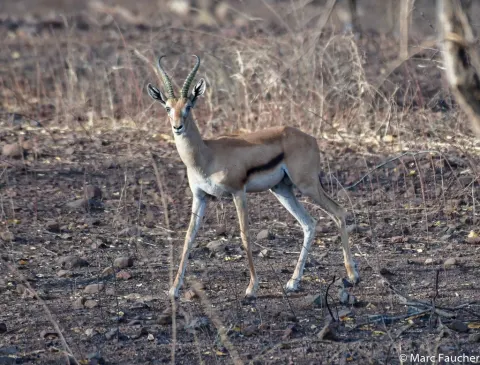
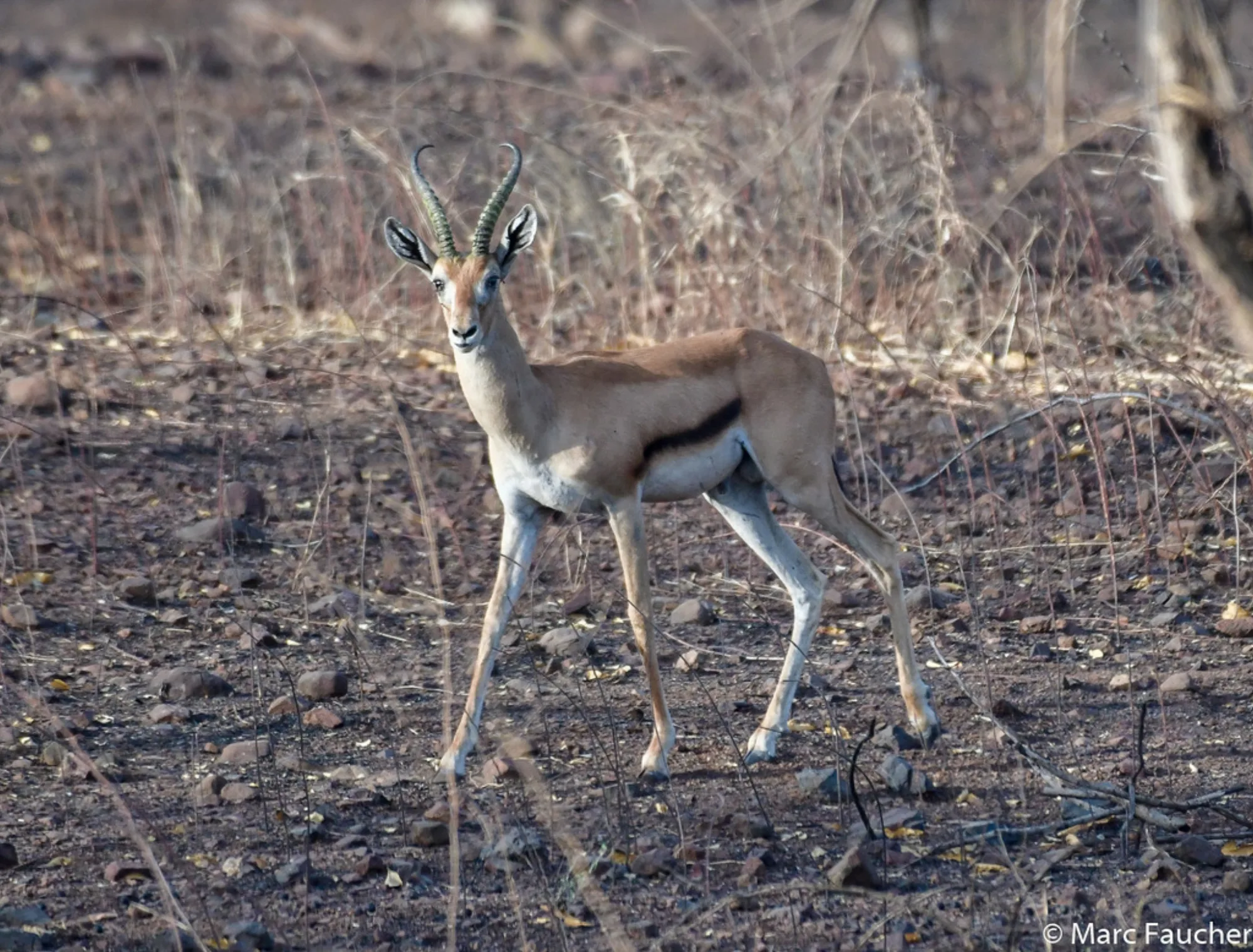
This small antelope, also known as the Eritrean gazelle, stands about 67 cm at the shoulder and is covered in dark reddish-brown fur. A matching stripe runs along its sides, while its belly and rump are white. Both sexes possess horns that curve inward at the tips, though the female's horns are thinner and straighter. Travelers can distinguish the Heuglin's Gazelle from other local species by its darker stripe and the absence of markings on its nose.
Found east of the Nile River, these animals live in Sudan, Ethiopia, and Eritrea. They favor open landscapes like dry grasslands, steppes, and thorn bushlands at elevations reaching 1,400 m. While they are capable of going without drinking for extended durations, they rely on water more than other gazelles in the area. During the heat of the day, they scrape out resting spots under trees or shrubs. They typically live alone or in tiny groups of two to four individuals, where they graze on grass and likely browse on other plants.
Populations are declining, with fewer than 2,500 adults remaining as of 2016. Breeding usually results in a single calf born during the wet season, but many young fall prey to jackals. Human activity is the primary danger; the species faces illegal hunting for its meat and significant habitat loss. In protected areas like Dinder National Park, livestock herders often trespass during the dry season, leaving the gazelles with less food and fewer places to rest.
Written from the English Wikipedia article Heuglin's gazelle (CC BY-SA 4.0).
- Atlas places
- 0
These are open occurrence records, so they show where people looked for and recorded the Heuglin's Gazelle as much as where it lives. Cells are up to 25 km across, and every location is generalised to its cell.
No encounter zones yet
Where and when you can expect to see Heuglin's Gazelle is calculated from observation density. No zones have been computed for this species yet.