Kenyan Sand Boa
Eryx colubrinus
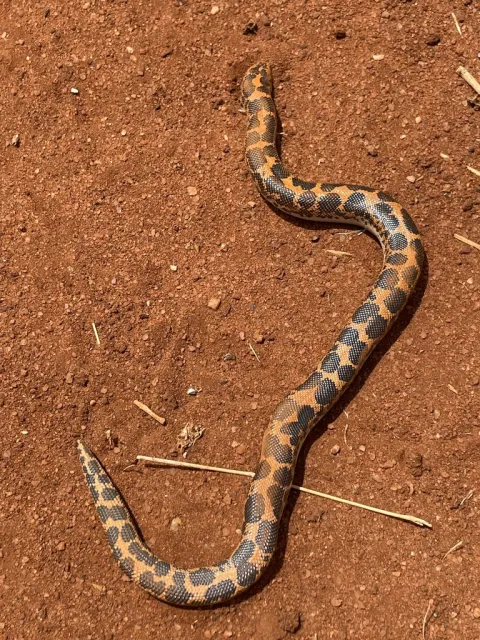
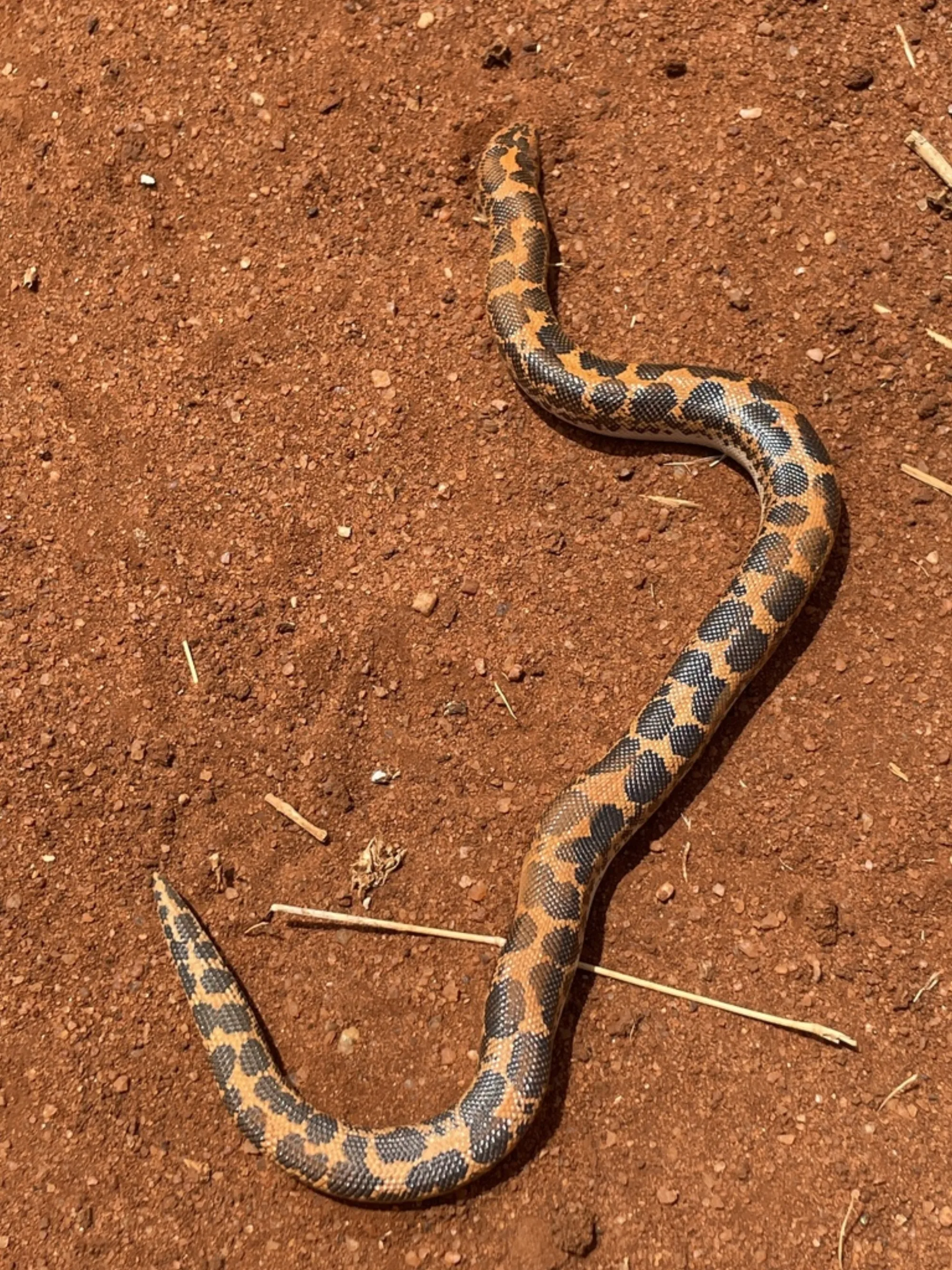
This thick-bodied snake with a small head and short tail is native to northern and eastern Africa. Usually reaching 30 to 80 cm in length, females are noticeably larger than males and can grow up to 91 cm. The Kenyan Sand Boa is typically recognized by its yellow or orange skin marked with dark brown splotches and a white or cream belly. While most of its scales are very smooth, the texture becomes rough and keeled toward the end of the tail.
Preferring sandy soil and friable ground, these snakes live in scrub savannahs, semi-deserts, and around rocky outcrops. They are fossorial animals that spend approximately 80 percent of their time below the surface. During the hottest parts of the year, they take cover in mammal burrows or under stones, though they sometimes climb trees. Although they are most active after dark, you might occasionally spot them during the day.
As ambush predators, they hide beneath the sand to wait for prey, which they kill by constriction. Their diet includes small mammals like rodents, as well as birds and lizards. They also search for the nests of birds and small mammals to find food. This species gives birth to live young, typically producing 10 to 20 offspring at a time. Because they are docile and small, they are frequently collected and sold in the pet trade.
Written from the English Wikipedia article Eryx colubrinus (CC BY-SA 4.0).
- Atlas places
- 0
These are open occurrence records, so they show where people looked for and recorded the Kenyan Sand Boa as much as where it lives. Cells are up to 25 km across, and every location is generalised to its cell.
No encounter zones yet
Where and when you can expect to see Kenyan Sand Boa is calculated from observation density. No zones have been computed for this species yet.
Conservation status not assessed here yet, so every location is generalised to its grid cell.