European Robin
Erithacus rubecula
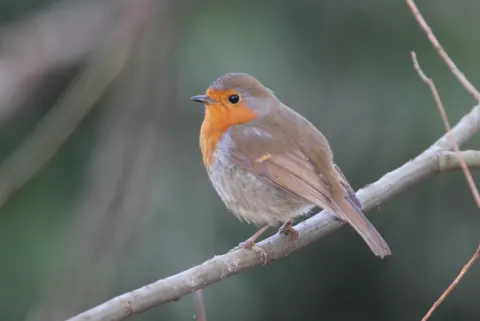
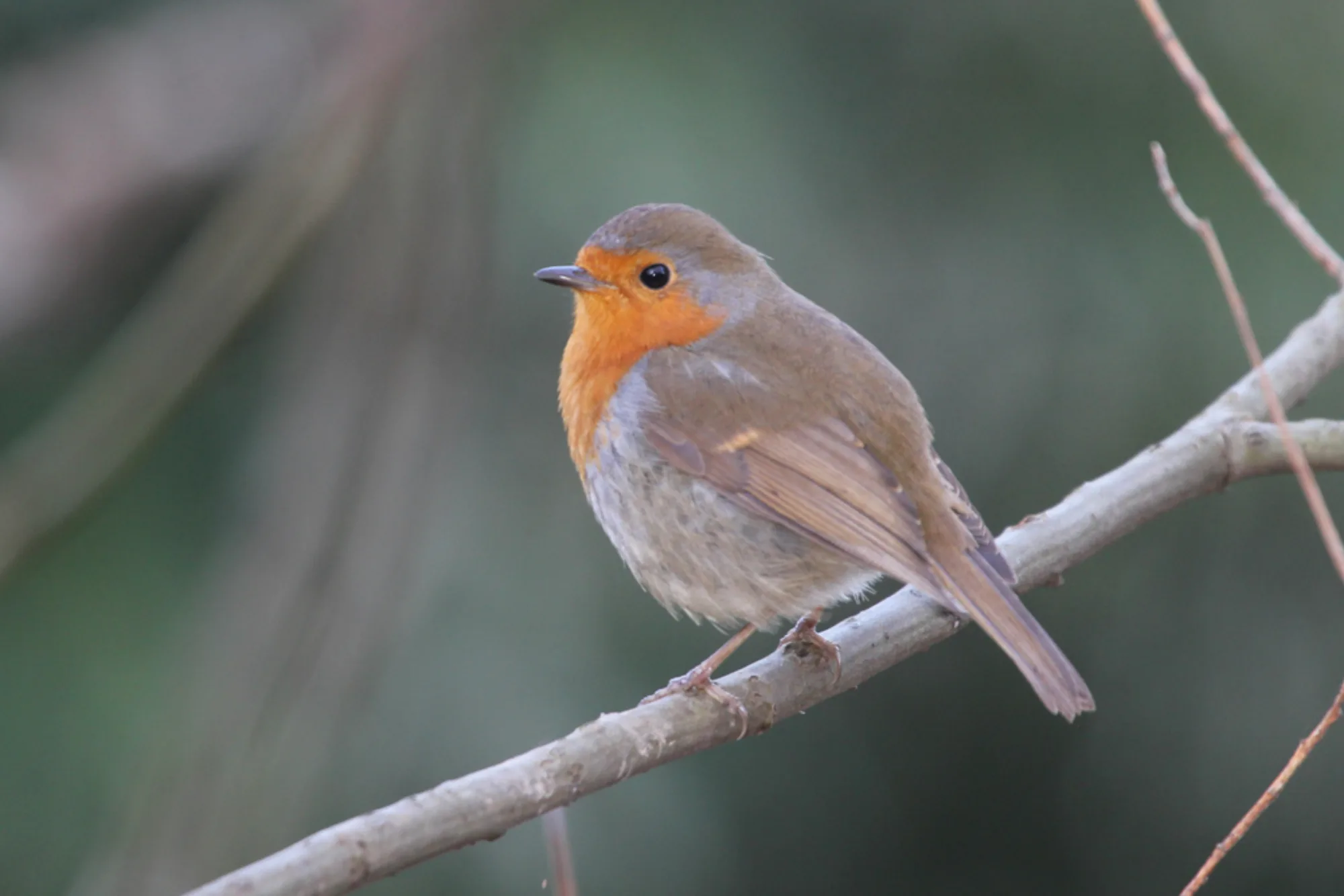
An orange-red face and breast make the European Robin easy to recognise, although young birds begin life mottled brown. Adults of both sexes look alike, with brown upperparts, a pale belly and black eyes and bill. This small bird measures 12.5 to 14.0 cm long.
Its range reaches across Europe to Western Siberia, south to North Africa and west to Madeira and the Azores. Many robins in the west and south stay put, while those in the colder north and east migrate. Scandinavian and Russian birds travel to Britain and western Europe for winter. In Great Britain, robins favour parks and gardens, while winter migrants in northern Europe prefer spruce woods. In southern Iberia, resident birds remain in the woodlands where they bred.
Active mainly by day, robins sometimes hunt insects by moonlight or near artificial lights. British and Irish birds are relatively unafraid of people and visit gardeners digging soil, searching for exposed worms and other food. They also follow wild boar to find food disturbed from the ground. Spiders, worms and insects form part of their diet, supplemented by fruit, berries and seeds in autumn and winter. Both sexes sing throughout the year, and their winter song sounds more plaintive than in summer. Males defend their territories fiercely, and fights can be fatal. Robins nest in sheltered holes and crevices, as well as in objects from flower pots to old kettles. Their nests are made largely of moss, leaves and grass, lined with finer material. In Britain and Ireland, breeding starts in March; each clutch contains five or six eggs, and robins lay two or three clutches during the season. Very cold winter spells can increase mortality, while many robins die in their first year.
Written from the English Wikipedia article European robin (CC BY-SA 4.0).
- Records
- 2,794,731
- Countries
- 82
No atlas park has a record of the European Robin in or around it yet.
These are open occurrence records, so they show where people looked for and recorded the European Robin as much as where it lives. Cells are up to 25 km across, and every location is generalised to its cell.
Generalised encounter areas, not exact locations. Each shape is a grid cell coloured by how likely the species is there.
- Very likelyUnited Kingdom25 km zone · high confidence · 729028 records · updated 86 days ago
- Very likelySweden25 km zone · high confidence · 480566 records · updated 86 days ago
- Very likelyFinland25 km zone · high confidence · 248148 records · updated 86 days ago
- Very likelyNorway25 km zone · high confidence · 225568 records · updated 86 days ago
- Very likelyBelgium25 km zone · high confidence · 223598 records · updated 86 days ago
- Very likelyFrance25 km zone · high confidence · 171508 records · updated 86 days ago
- Very likelySpain25 km zone · high confidence · 161155 records · updated 86 days ago
- Very likelyDenmark25 km zone · high confidence · 100586 records · updated 86 days ago
- Very likelyÅland Islands25 km zone · high confidence · 90909 records · updated 86 days ago
- Very likelyPortugal25 km zone · high confidence · 76433 records · updated 86 days ago
Conservation status not assessed here yet, so every location is generalised to its grid cell.