Kiang
Equus kiang
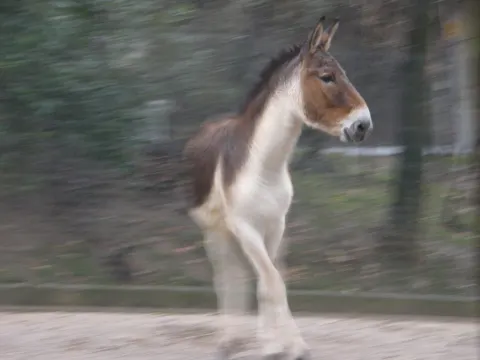
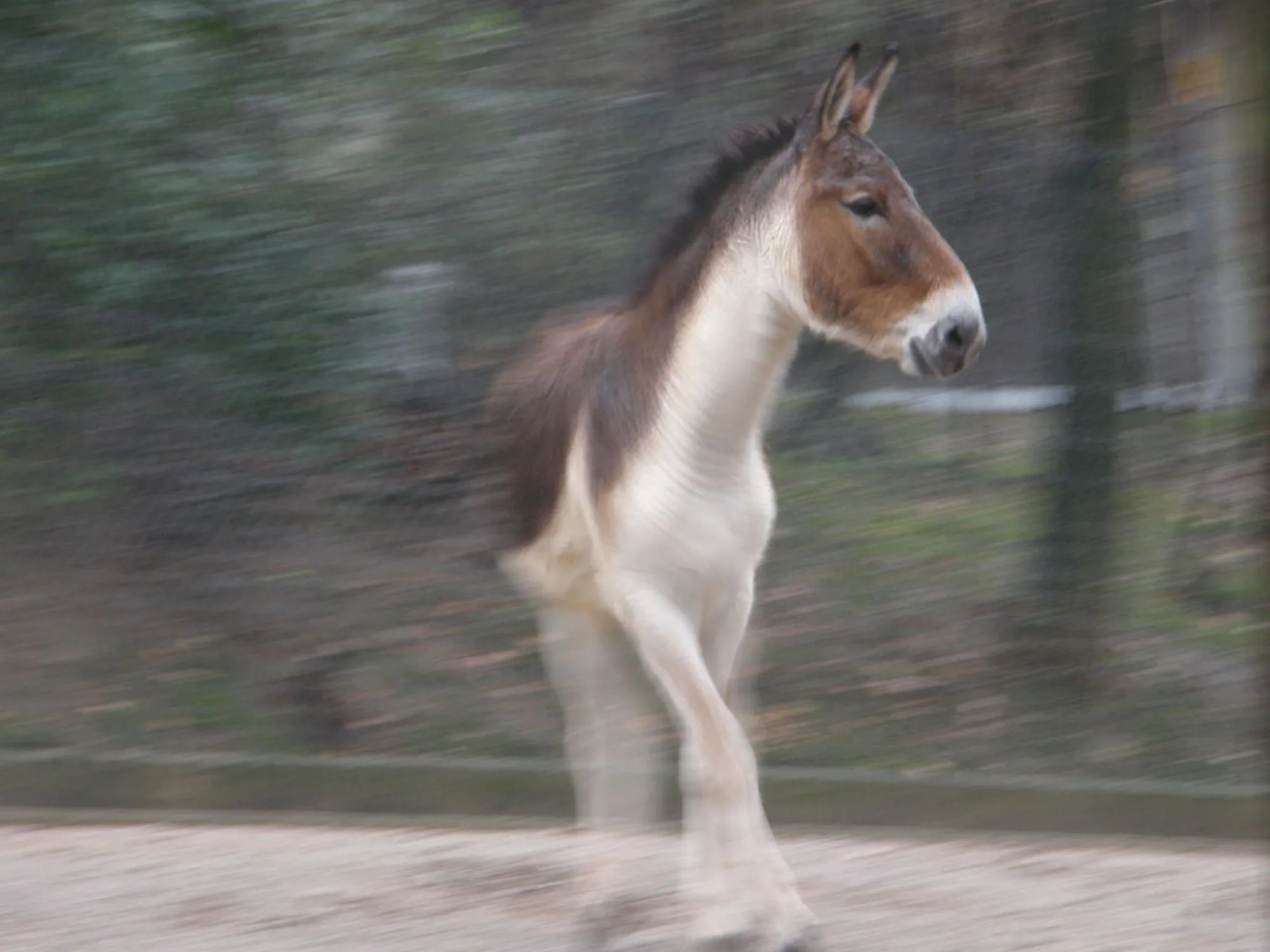
On the high grasslands of the Tibetan Plateau, the Kiang stands out as the largest of the wild asses. It has a large head, a blunt muzzle and a short, upright mane. Its chestnut coat turns darker brown in winter and reddish brown in late summer, while its legs, underparts, muzzle tip and inner ears are white. A broad dark stripe runs from the mane down the back, and the tail has a tuft of blackish brown hair.
Kiangs range across parts of northern Pakistan, India and China, with small numbers along Nepal's northern frontier. They inhabit alpine meadows and steppe at elevations of 2,700 to 5,300 m, favouring flat plateaus, wide valleys and low hills with short vegetation. Grass and sedges make up their diet, but when grass is scarce they also eat shrubs, herbs and roots. They sometimes drink at waterholes, although these are rare on the Tibetan Plateau, and likely get most of their water from plants.
Herds can gather several hundred animals, but these are temporary groups of young males or of mothers and foals. Older males usually live alone, defending territories and chasing away rivals. Mating takes place from late July to late August, and a female gives birth to a single foal after a reported gestation of seven to 12 months. Foals can walk within a few hours of birth, while births every other year are more common than annual births. In the wild, kiangs can live for up to 20 years.
Written from the English Wikipedia article Kiang (CC BY-SA 4.0).
- Records
- 24
- Countries
- 2
- Atlas places
- 1
These are open occurrence records, so they show where people looked for and recorded the Kiang as much as where it lives. Cells are up to 25 km across, and every location is generalised to its cell.
Generalised encounter areas, not exact locations. Each shape is a grid cell coloured by how likely the species is there.
- Very likelyIndia25 km zone · medium confidence · 21 records · updated 80 days ago
- LikelyChina25 km zone · medium confidence · 3 records · updated 80 days ago
Conservation status not assessed here yet, so every location is generalised to its grid cell.