Rainbow Shark
Epalzeorhynchos frenatum
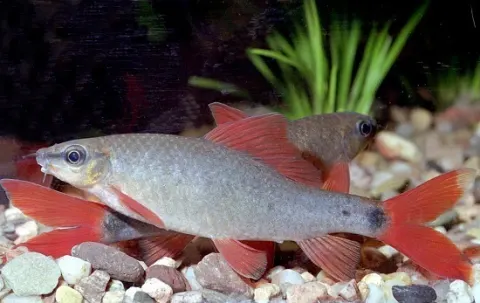
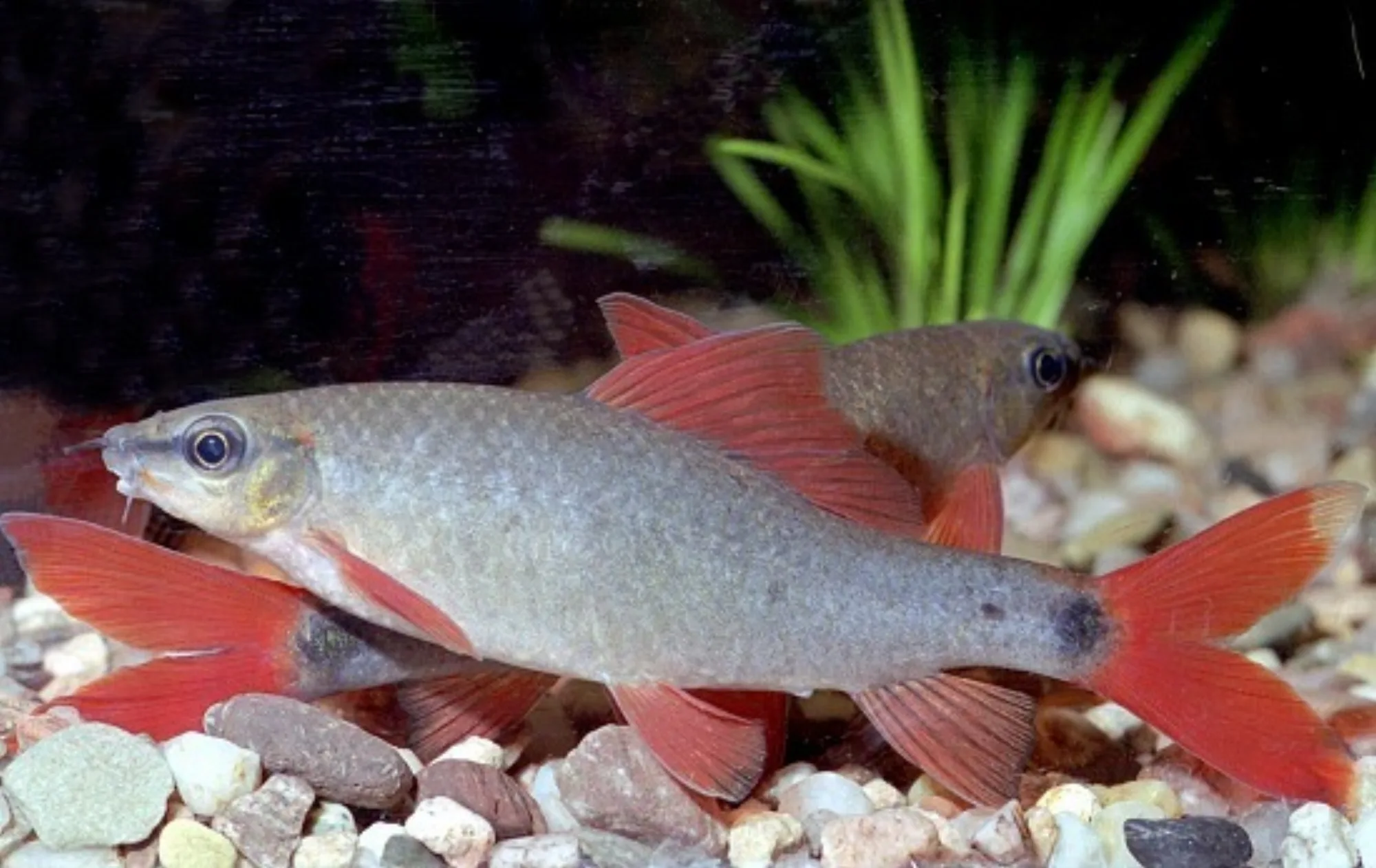
Found within the river basins of Indochina, such as the Mekong and Chao Phraya, the Rainbow Shark is a ray-finned fish rather than a true shark. These animals prefer to stay near the river bottom where the substrate is sandy. They are easily identified by their long, dark blue or black bodies and pointed snouts. Their fins are a contrasting red or orange-red, and a short, distinct stripe runs across the face from the mouth to the gill cover. While they usually reach about 6 inches in length, males are typically thinner and more brightly colored than females.
In their natural habitat, these fish follow the rhythm of the seasons. They move into flooded zones when the water rises and return to the main river channels as the floods recede. Their diet is varied, consisting of algae, plankton, and small aquatic insects. While they are generally peaceful toward their own kind in the wild, they are highly territorial in confined spaces. A larger individual will often chase smaller fish or relatives relentlessly, sometimes resulting in the death of the smaller animal.
Because they are so active and prone to aggression, they require significant space to swim quickly and establish territories. They are known to be egg-layers, yet their specific breeding habits remain undocumented in captive settings. Most of the fish seen in the trade are produced on commercial farms in Southeast Asia. Although they are hardy, they face risks in captivity if kept in tanks that are too small, which can lead to them jumping out of the water or terrorizing more timid tank mates.
Written from the English Wikipedia article Rainbow shark (CC BY-SA 4.0).
- Atlas places
- 0
These are open occurrence records, so they show where people looked for and recorded the Rainbow Shark as much as where it lives. Cells are up to 25 km across, and every location is generalised to its cell.
No encounter zones yet
Where and when you can expect to see Rainbow Shark is calculated from observation density. No zones have been computed for this species yet.
Conservation status not assessed here yet, so every location is generalised to its grid cell.