Bramble Shark
Echinorhinus brucus
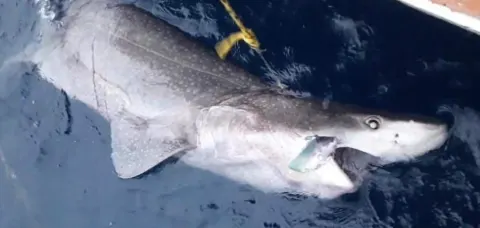
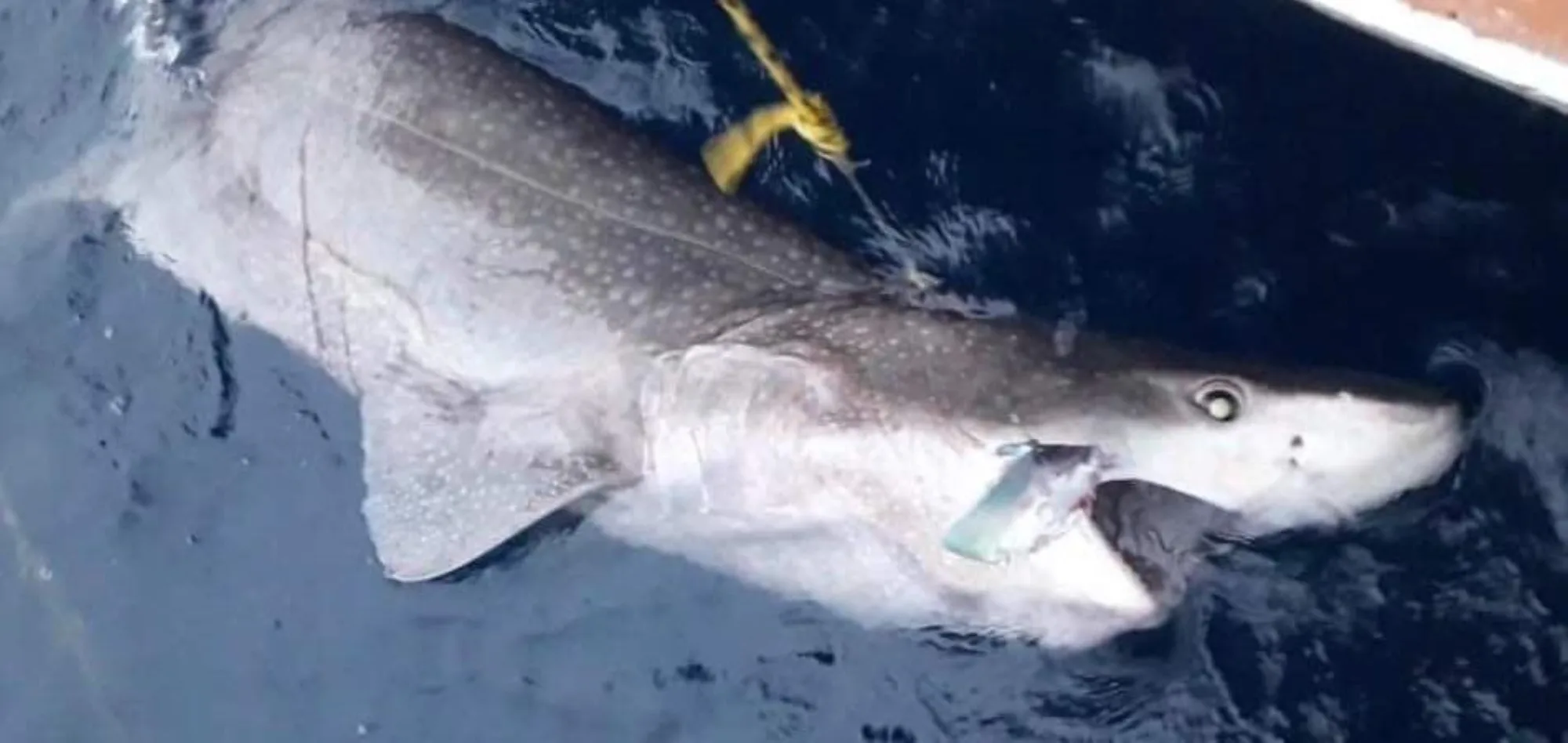
This deep-sea dweller is named for the sharp, thornlike scales that dot its skin. These irregular growths can measure 1.5 cm across and sometimes fuse into multi-pointed plates. Reaching lengths of 3.1 m, the Bramble Shark has a heavy, cylindrical body with a flattened head and a blunt snout. Its skin is typically purplish brown or black and is coated in a thick layer of stinking slime. While its eyes are often green in life, one specimen was even reported to emit a greenish glow.
Except for the eastern Pacific, these sharks are found in temperate and tropical waters across the globe. They usually stay near the seafloor on continental slopes at depths between 400 and 900 m, though they occasionally venture into shallower waters as deep as 18 m. In Europe, they may move into depths of 20 to 200 m during the summer months. These slow-moving predators likely use suction to catch crabs, bony fishes, and smaller sharks. Females give birth to live young in litters of 15 to 52 pups.
Though they are harmless to people, these sharks face significant pressure from human activity. They are caught by accident in bottom trawls and by recreational anglers. In various regions, they are processed for fishmeal or killed for their liver oil, which is used as a dietary supplement, a traditional medicine, or a coating for canoes. Their numbers in the northeastern Atlantic have dropped significantly since the 18th century, a decline likely caused by overfishing.
Written from the English Wikipedia article Bramble shark (CC BY-SA 4.0).
- Atlas places
- 0
These are open occurrence records, so they show where people looked for and recorded the Bramble Shark as much as where it lives. Cells are up to 25 km across, and every location is generalised to its cell.
No encounter zones yet
Where and when you can expect to see Bramble Shark is calculated from observation density. No zones have been computed for this species yet.