Antarctic Toothfish
Dissostichus mawsoni
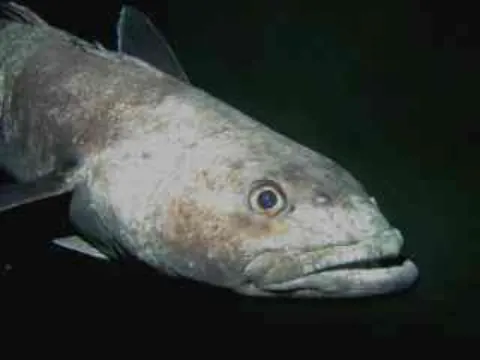
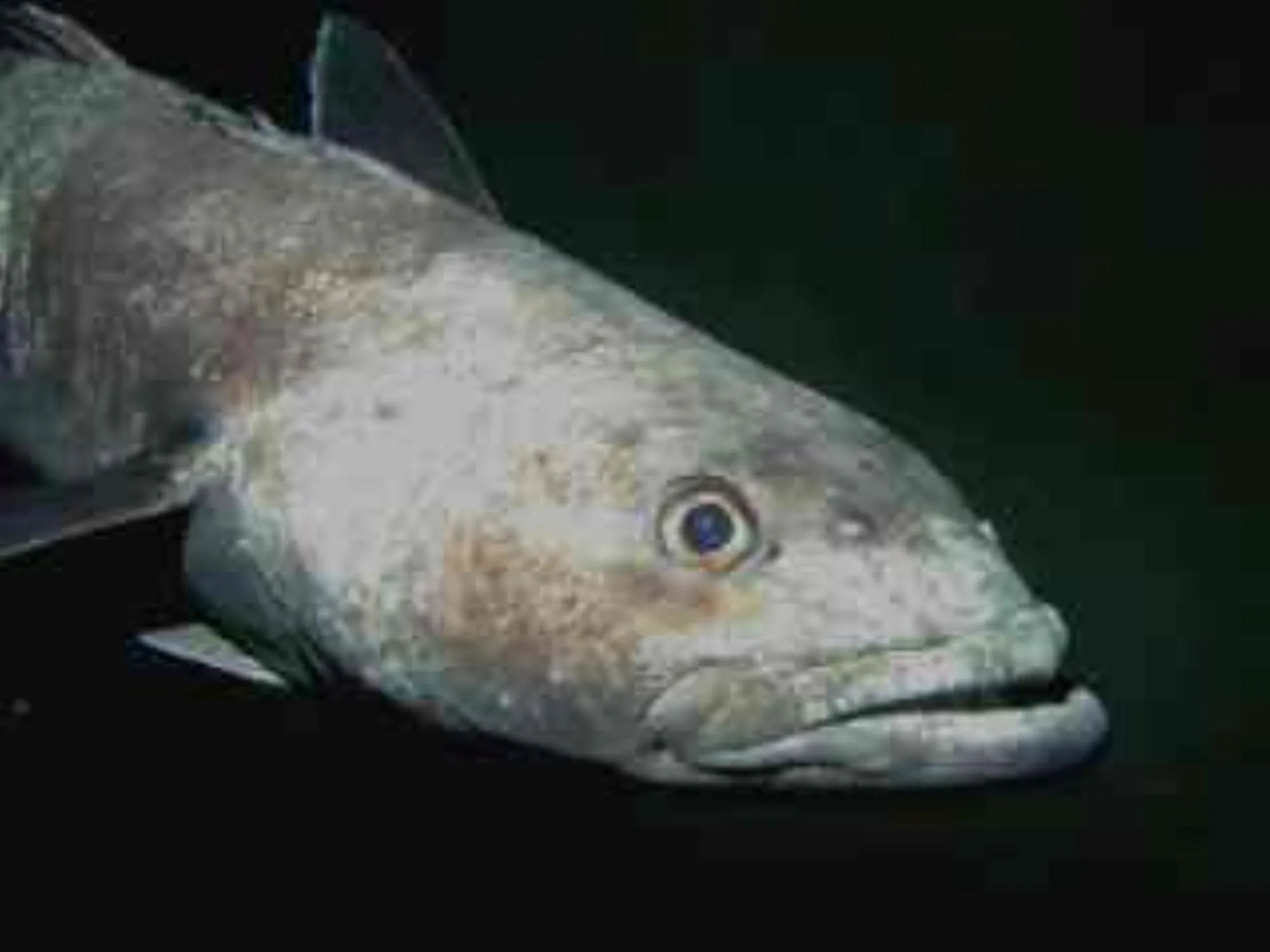
Black to olive brown, sometimes paler underneath, the Antarctic Toothfish has a mottled body and fins, a broad head and a long body. Its two rows of upper teeth give it a shark-like look. Fully grown, it can exceed 1.7 m in length and weigh more than 135 kg. Small fish blend in among sponges and corals on the seabed. The species lives in the cold Southern Ocean around Antarctica, including waters below freezing. It has been recorded near the Antarctic Peninsula and the South Sandwich Islands, and along the Antarctic coast to the south of the Indian Ocean. Smaller, younger fish tend to gather in shallower water over the continental shelf, while many older fish live on the continental slope. Toothfish have been caught as deep as 2200 m, although few appear to occur at that depth.
Adults can spend time above the seabed without using energy to stay there, giving them access to prey both on the bottom and in midwater. They usually move slowly but can make bursts of speed that may help them escape seals. Their diet includes fish, shrimp and squid, and they also scavenge remains of penguins killed by other predators. Large toothfish are eaten by whales and Weddell seals. They spawn during winter, but much about their breeding remains unknown. Males mature at 13 years and females at 17 years, and mature fish may not spawn annually. The fish are caught for food, mainly in the Ross Sea. Managing the fishery is contentious, partly because reliable information about the population and its reproduction is limited. The high price of toothfish and the remoteness of fishing grounds have also been cited as encouragement for illegal, unreported and unregulated fishing.
Written from the English Wikipedia article Antarctic toothfish (CC BY-SA 4.0).
- Records
- 4,541
- Countries
- 1
No atlas park has a record of the Antarctic Toothfish in or around it yet.
These are open occurrence records, so they show where people looked for and recorded the Antarctic Toothfish as much as where it lives. Cells are up to 25 km across, and every location is generalised to its cell.
Generalised encounter areas, not exact locations. Each shape is a grid cell coloured by how likely the species is there.
- Very likelyAntarctica25 km zone · high confidence · 4536 records · updated 80 days ago
- UncommonUnnamed area25 km zone · medium confidence · 5 records · updated 80 days ago
Conservation status not assessed here yet, so every location is generalised to its grid cell.