Hairy-legged Vampire Bat
Diphylla ecaudata
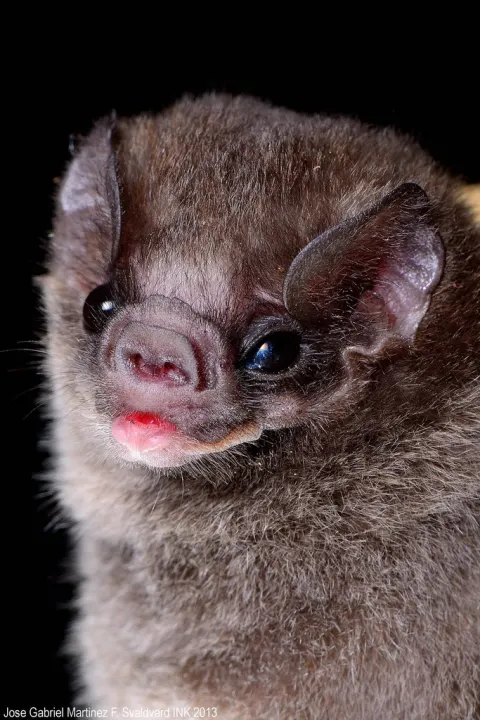
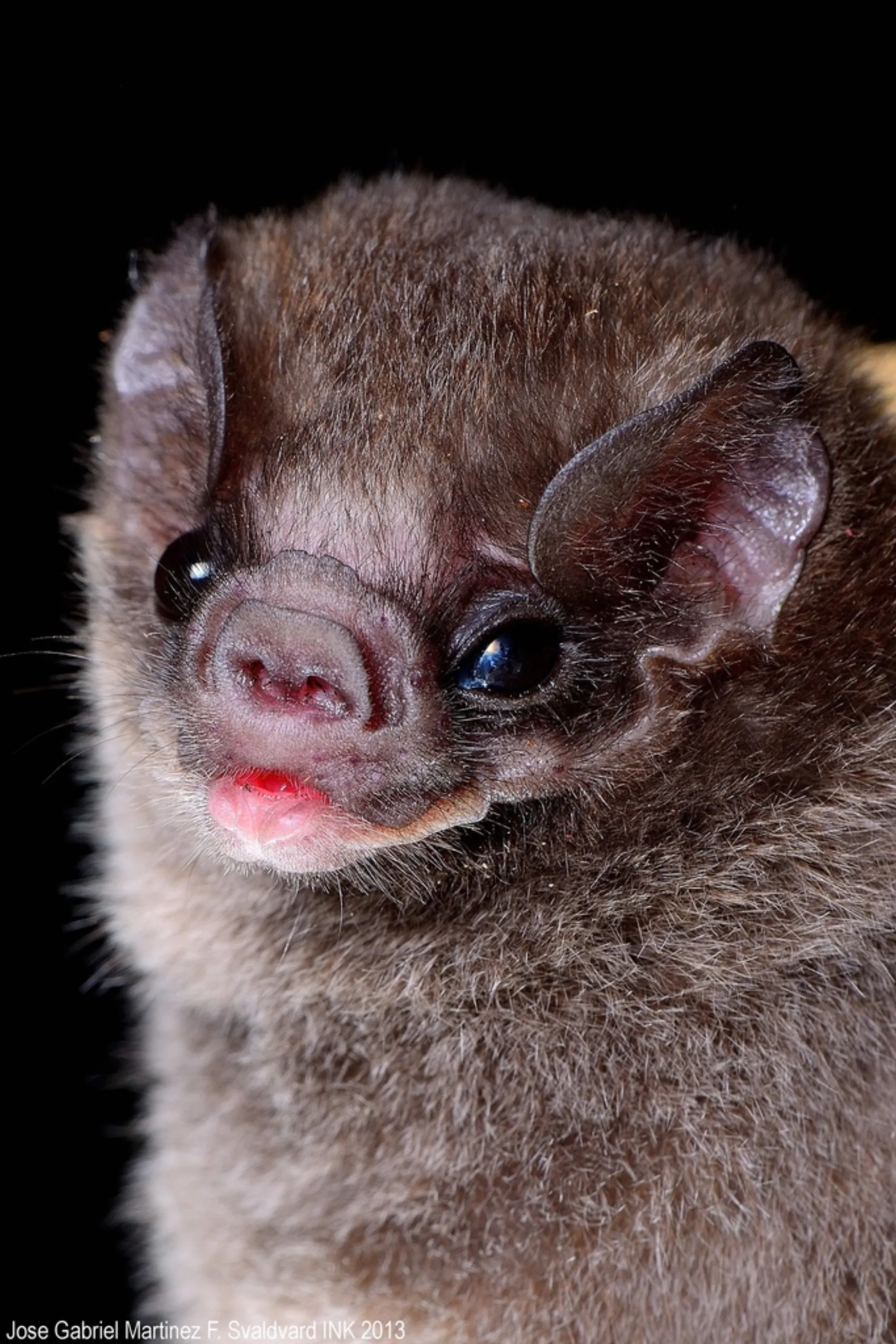
Soft, long fur and large, shiny eyes give the Hairy-legged Vampire Bat a distinctive appearance. Its back is dark brown, with lighter fur underneath, and it has short, broad ears. The bat has no tail and weighs 24 to 43 g; its head and body measure 75 to 93 mm. One of three living vampire bat species, it resembles the common vampire bat but can be distinguished by its eyes and ears.
Its range stretches through Central and South America, mainly in tropical and subtropical forests. It has been recorded in countries from Mexico and Guatemala to Brazil, Peru and Venezuela. One female was also found in an abandoned railway tunnel near Comstock, southern Texas, in 1967. The species occurs from sea level to 1,900 m and tolerates a variety of habitats.
Active at night, it spends the day in sheltered roosts, favouring caves and mines but sometimes using hollow trees. It usually roosts alone, although small groups of twelve or fewer are found and gatherings of up to 50 have been reported. It can share a roost with common vampire bats and other leaf-nosed bats. Its main food is the blood of wild birds, though it also feeds on domestic birds and mammals, including cattle and humans. Individuals can share food by regurgitating blood to one another. There is no clearly defined breeding season, and females can become pregnant throughout the year. After a pregnancy of around 5.5 months, a female usually gives birth to one pup. Young bats begin to fly at about 57 days, but may still seek milk and regurgitated blood from their mothers until around 223 days old. Females have also been observed nursing pups that are not their own.
Written from the English Wikipedia article Hairy-legged vampire bat (CC BY-SA 4.0).
- Records
- 86
- Countries
- 5
No atlas park has a record of the Hairy-legged Vampire Bat in or around it yet.
These are open occurrence records, so they show where people looked for and recorded the Hairy-legged Vampire Bat as much as where it lives. Cells are up to 25 km across, and every location is generalised to its cell.
Generalised encounter areas, not exact locations. Each shape is a grid cell coloured by how likely the species is there.
- Very likelyMexico25 km zone · medium confidence · 59 records · updated 80 days ago
- Very likelyColombia25 km zone · medium confidence · 11 records · updated 80 days ago
- LikelyBrazil25 km zone · medium confidence · 13 records · updated 80 days ago
- PossiblePeru25 km zone · medium confidence · 3 records · updated 80 days ago
- RareBolivia25 km zone · low confidence · 0 records · updated 80 days ago
Conservation status not assessed here yet, so every location is generalised to its grid cell.