Virginia Opossum
Didelphis virginiana
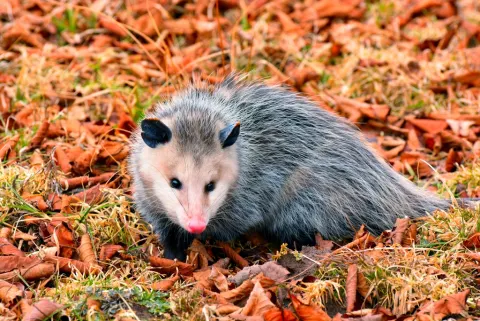
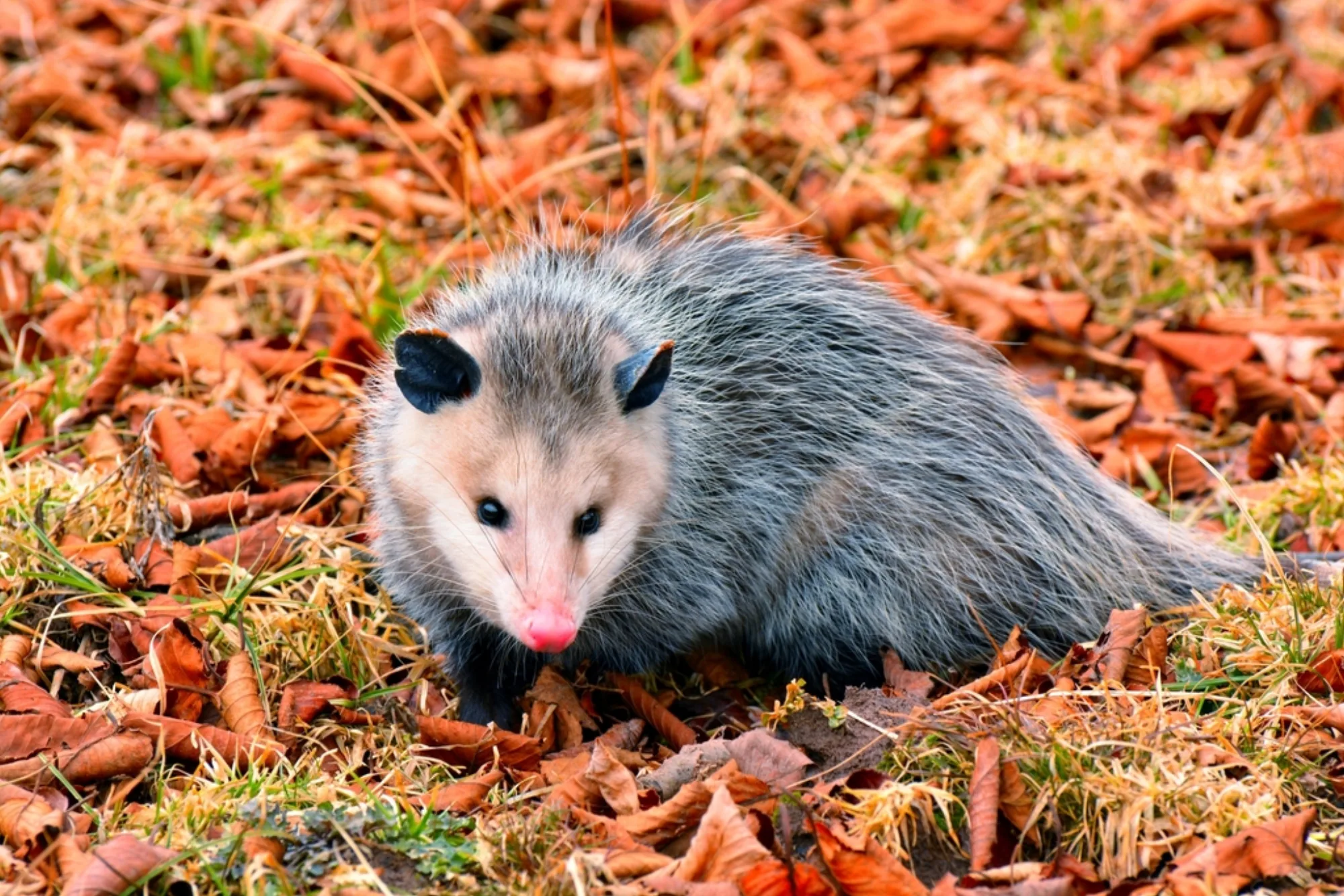
About the size of a domestic cat, the Virginia Opossum is a solitary, nocturnal marsupial with a dull greyish brown coat and a white face. Its long, flat nose and hairless ears add to its distinctive appearance, while its long, bare tail can grip branches and carry small objects. It ranges from southern Canada to northern Costa Rica and has spread northwards into parts of Canada. It also lives along much of the Pacific coast, where it was introduced. Often found around settlements, it visits gardens, compost piles and places where pet food or rubbish is available.
An opportunistic omnivore, it eats plant foods and animals, including insects, eggs, fish, small mammals and carrion. Grasshoppers, crickets and beetles make up much of its animal diet, while autumn foods include persimmons, apples and acorns. It is most active in spring and summer and slows down in winter, sometimes remaining in its den for several days during cold weather. When threatened, it may flee or stand its ground, hissing, baring its teeth and raising its fur. Extreme fear can prompt it to lie motionless and feign death, sometimes for several hours.
Most young are born between February and June, and a female may produce one to three litters a year. The young spend about two and a half months in her pouch before riding on her back, leaving her after about four or five months. Roads pose a serious danger: opossums are drawn to roadside carrion, and their slow movements can make them vulnerable to vehicles. Predators are another risk, particularly for females carrying young and for males travelling through unfamiliar territory in search of mates.
Written from the English Wikipedia article Virginia opossum (CC BY-SA 4.0).
- Records
- 4,521
- Countries
- 3
- Atlas places
- 1
These are open occurrence records, so they show where people looked for and recorded the Virginia Opossum as much as where it lives. Cells are up to 25 km across, and every location is generalised to its cell.
Generalised encounter areas, not exact locations. Each shape is a grid cell coloured by how likely the species is there.
- Very likelyUnited States25 km zone · medium confidence · 3932 records · updated 80 days ago
- Very likelyMexico25 km zone · medium confidence · 348 records · updated 80 days ago
- Very likelyCanada25 km zone · medium confidence · 241 records · updated 80 days ago
Conservation status not assessed here yet, so every location is generalised to its grid cell.