Sumatran Rhinoceros
Dicerorhinus sumatrensis
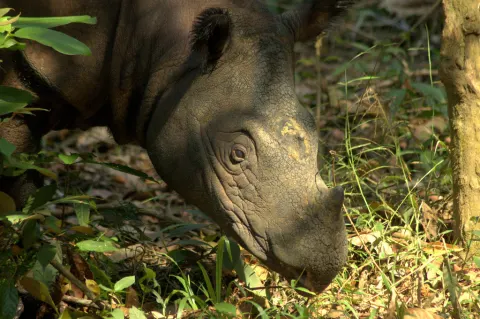
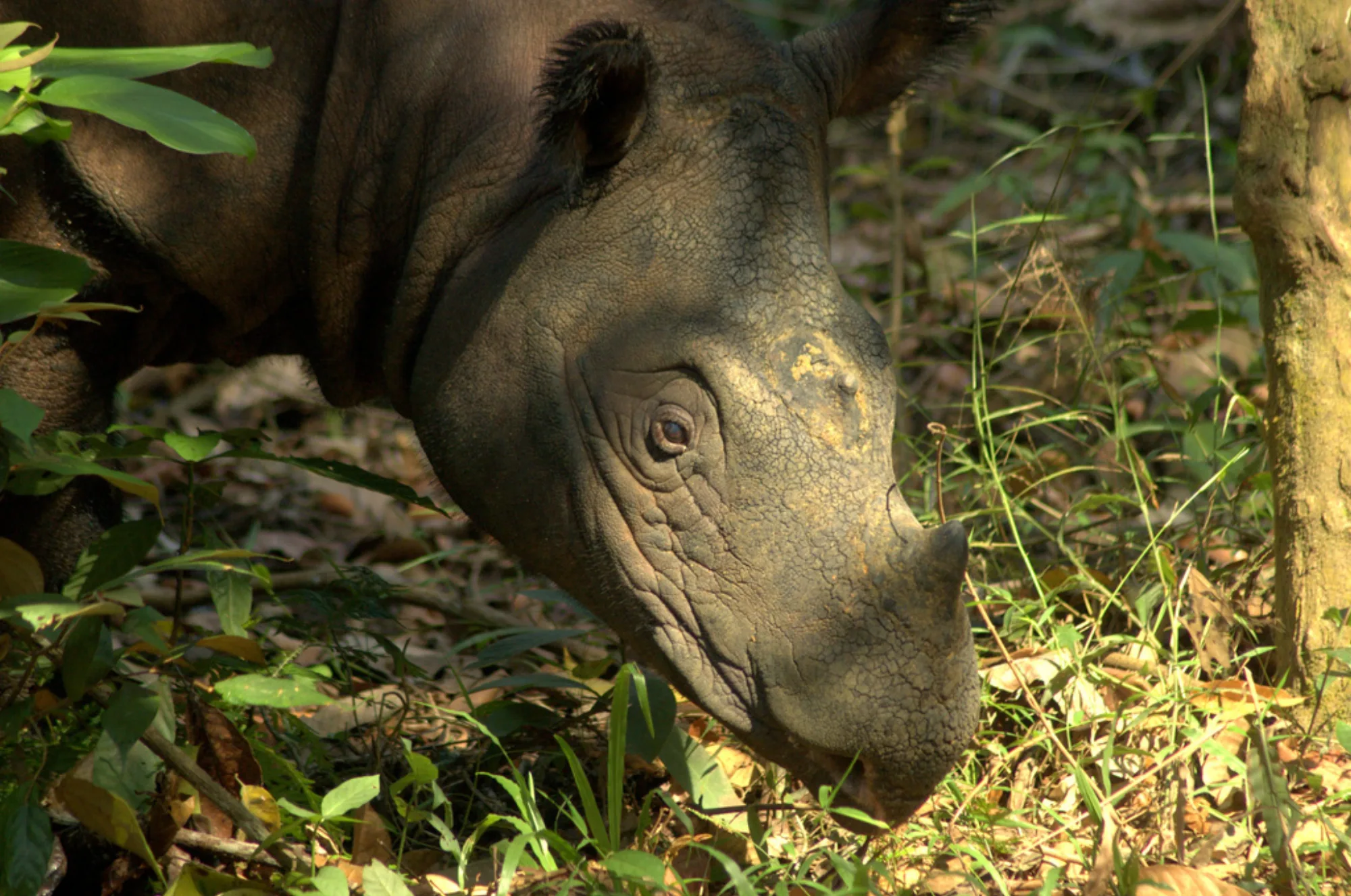
The Sumatran rhinoceros is the smallest of its family, standing between 112 and 145 cm high at the shoulder. It is unique for its reddish-brown hair, which can be dense on calves but often appears scarce on adults. Like African species, it possesses two horns, though the nasal horn is typically a short 15 to 25 cm and the second is often just a knob. These animals are famously vocal, communicating through yelps, whistle-blows, and song-like sounds.
Once found across Southeast Asia and India, these rhinos are now restricted to Indonesian Borneo and Sumatra. They inhabit lowland and highland rainforests, swamps, and cloud forests, often favoring hilly areas near water. They are solitary and most active at dawn and dusk, spending much of the day wallowing in mud to regulate their temperature and deter parasites. Their diet is high in fiber, consisting of around 50 kg of saplings, leaves, and shoots daily.
Breeding is a slow process; a single calf is born after a 15 to 16 month gestation and remains with its mother for up to three years. The species faces severe pressure from illegal poaching, driven by the high market price of horns used in traditional beliefs. Habitat loss from logging also impacts them, though they can withstand various forest conditions. Today, fewer than 80 mature individuals are estimated to remain in the wild.
Written from the English Wikipedia article Sumatran rhinoceros (CC BY-SA 4.0).
- Atlas places
- 0
These are open occurrence records, so they show where people looked for and recorded the Sumatran Rhinoceros as much as where it lives. Cells are up to 25 km across, and every location is generalised to its cell.
No encounter zones yet
Where and when you can expect to see Sumatran Rhinoceros is calculated from observation density. No zones have been computed for this species yet.