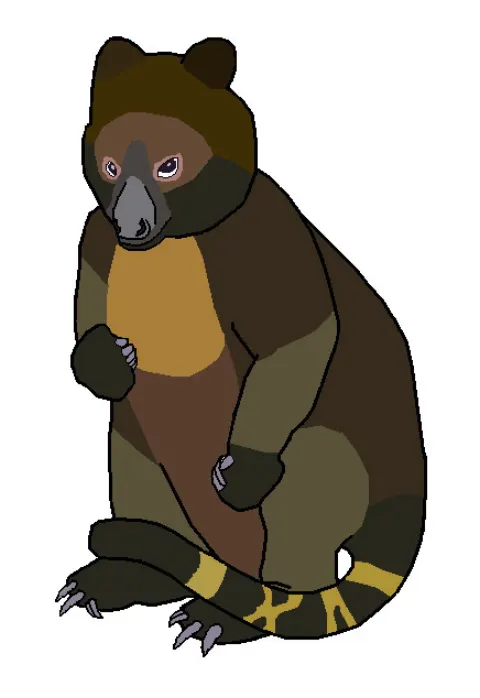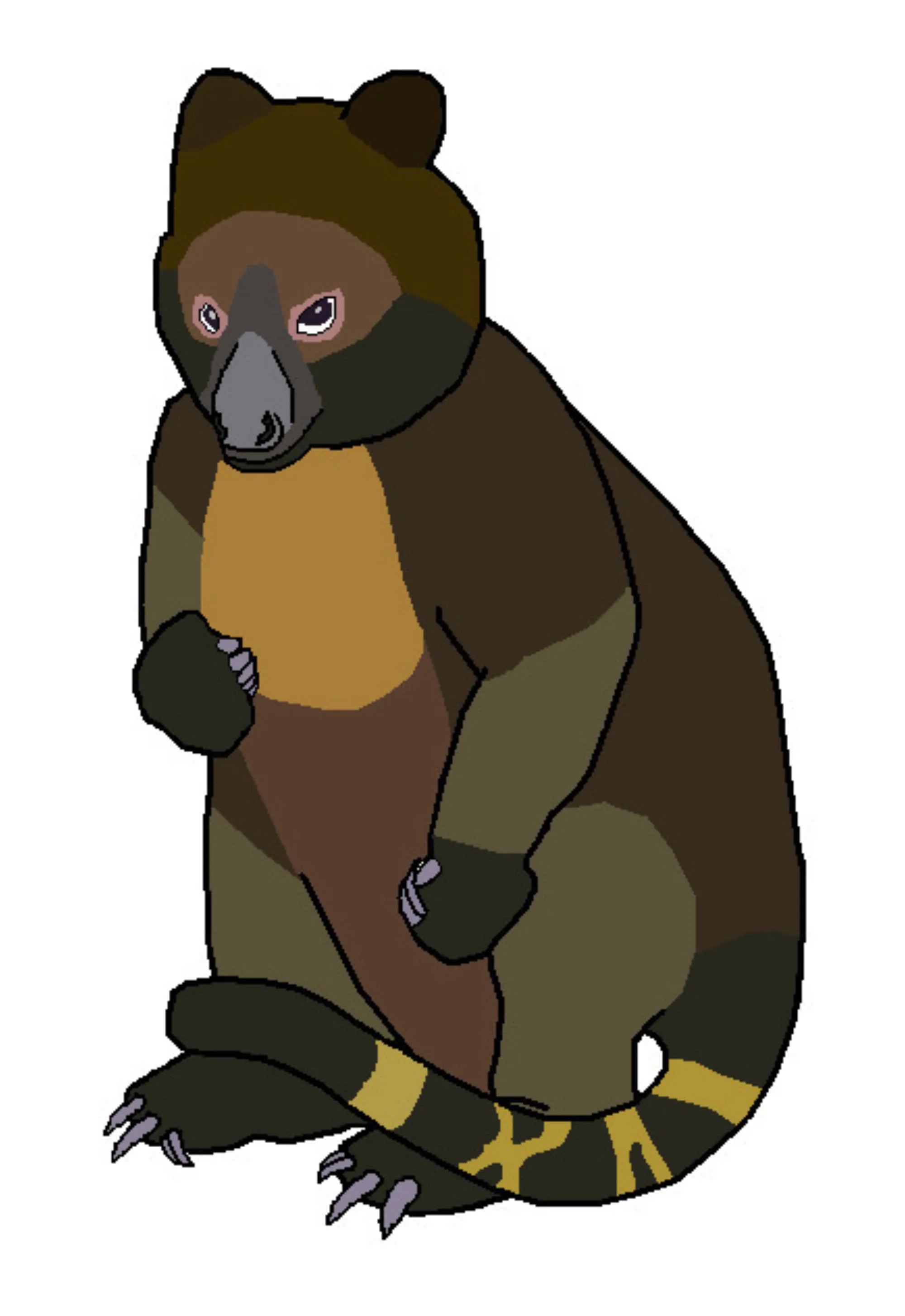
Tenkile
Dendrolagus scottae
This elusive tree-kangaroo is found only within a tiny region of the Torricelli Mountains in Papua New Guinea. It lives in mid-montane rainforests at elevations between 900 and 1,700 metres above sea level. These animals occupy a very limited habitat that covers no more than 125 square kilometres. They are mostly black in colour, though they have chocolate-brown fur on their limbs and long tails. Adult males are larger than females, generally weighing between 9 and 11 kilograms.
While most kangaroos cannot lift their arms over their heads, the Tenkile is capable of doing so. It can move by hopping or by walking on two legs, and it possesses a notably long snout. These herbivores search for vines, ferns and leafy plants on the ground or up in the treetops. They are thought to be quite intelligent and tend to avoid human activity. Although they were once seen in groups of four, most modern sightings are of individual animals.
Population numbers have dropped significantly, with one sub-population believed to contain fewer than 250 individuals. Threats include industrial logging, the illegal pet trade and being hunted for their fur or meat. Domesticated dogs also pose a danger. Because females only produce one young per year, reproduction is thought to occur slowly. This low rate of birth makes it difficult for the species to replace lost individuals or increase its total numbers.
Written from the English Wikipedia article Tenkile (CC BY-SA 4.0).
- Atlas places
- 0
These are open occurrence records, so they show where people looked for and recorded the Tenkile as much as where it lives. Cells are up to 25 km across, and every location is generalised to its cell.
No encounter zones yet
Where and when you can expect to see Tenkile is calculated from observation density. No zones have been computed for this species yet.