Russel’s Viper
Daboia russelii
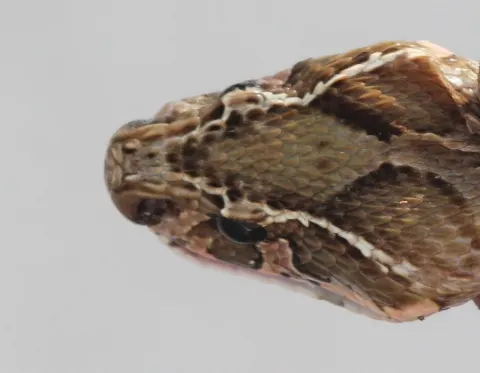
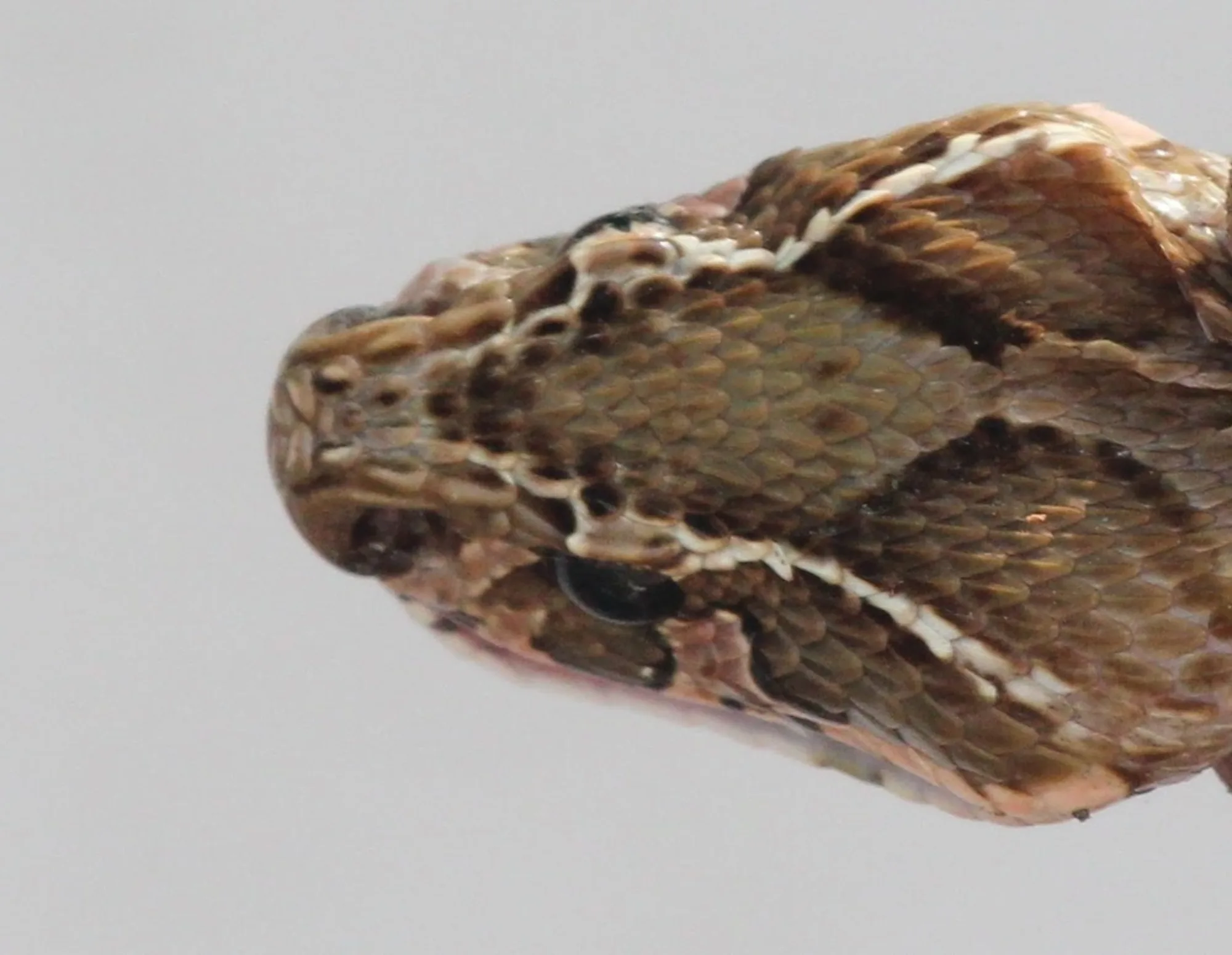
A stout body and rows of dark, ringed spots make the Russel’s Viper distinctive against its yellow, tan or brown ground colour. Its flattened, triangular head is distinct from the neck, with dark patches on the temples and a V or X marking pointing towards the snout. A dark streak, edged in white, pink or buff, runs behind each eye. This highly venomous snake has an extremely painful bite. In mainland Asia it averages about 120 cm in length, though it is slightly shorter on islands.
Native to South Asia, it ranges from Pakistan and India to Nepal, Bangladesh and Sri Lanka. It favours open grassland and bushy ground, but can also be found on farmland, among plantation trees and in scrub. It is most common on plains, in coastal lowlands and in suitable hills, while dense forest and humid places such as swamps are generally avoided. It can also turn up in towns and rural settlements, attracted by rodents and lizards around human habitation.
The viper lives on the ground and usually forages at night, becoming more active by day in cool weather. Adults are often slow unless provoked, but can strike at great speed. When threatened, the snake coils into a series of S-loops, raises the front of its body and hisses. Rodents make up much of its diet, which also includes scorpions, land crabs, small reptiles and other arthropods. Young snakes actively hunt lizards, shifting towards rodents as they grow. Births occur from May to November, mostly in June and July, and litters of 20 to 40 young are common.
Written from the English Wikipedia article Russell's viper (CC BY-SA 4.0).
- Records
- 162
- Countries
- 4
No atlas park has a record of the Russel’s Viper in or around it yet.
These are open occurrence records, so they show where people looked for and recorded the Russel’s Viper as much as where it lives. Cells are up to 25 km across, and every location is generalised to its cell.
Generalised encounter areas, not exact locations. Each shape is a grid cell coloured by how likely the species is there.
- Very likelyIndia25 km zone · medium confidence · 159 records · updated 80 days ago
- LikelyMyanmar (Burma)25 km zone · medium confidence · 3 records · updated 80 days ago
- PossiblePakistan25 km zone · low confidence · 0 records · updated 80 days ago
- RareSri Lanka25 km zone · low confidence · 0 records · updated 80 days ago
Conservation status not assessed here yet, so every location is generalised to its grid cell.