Spix's Macaw
Cyanopsitta spixii
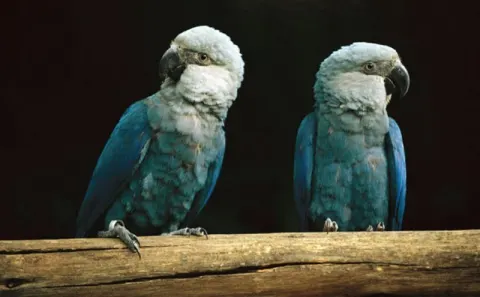
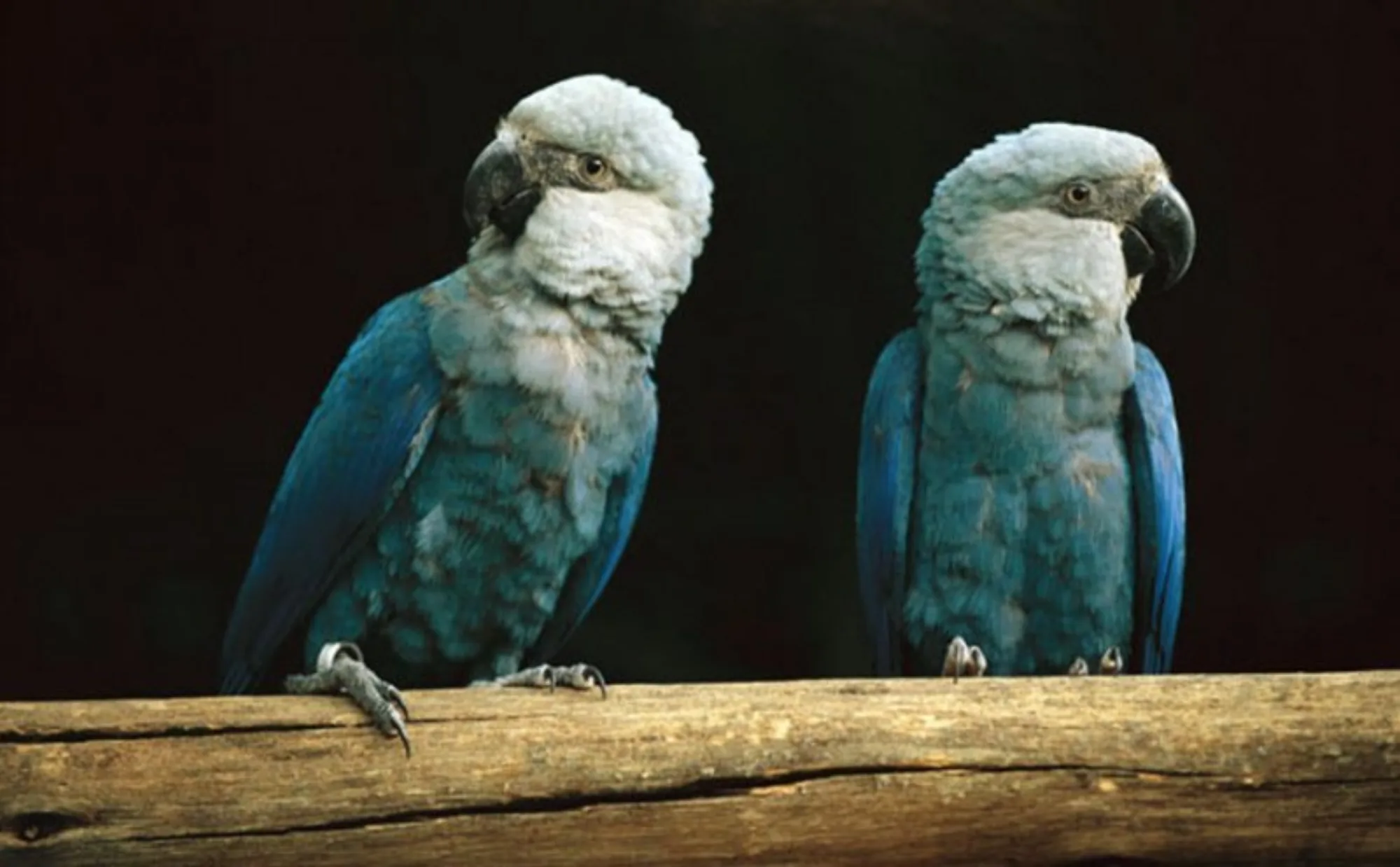
Travellers looking for this medium-sized parrot will notice its distinct blue plumage. Its head is grey-blue, while the belly is pale blue and the upper parts show a more intense blue. A defining feature is the bare grey skin around the eyes and face. Adults weigh about 300 grams and reach 56 cm in length, including a tail up to 38 cm. This species lived in the interior of northeastern Brazil, specifically within the dry Caatinga forest. It relies on woodland galleries within the Rio São Francisco basin, residing among Caribbean trumpet trees. These tall trees provide essential shelter and hollows for the birds to nest.
In this arid environment, the Spix's Macaw searches for seeds and nuts from various shrubs. It often eats fruit from spurge plants and the seeds of the Caraiba tree. From November to March, breeding pairs perform flight displays and feed each other. They typically lay three eggs, timed so that hatching occurs during the January rains. While the female incubates for about 25 to 28 days, the young become independent after 100 days. These parrots communicate with short, grating calls or a specific "whichaka" sound.
The bird's survival has been compromised by centuries of human activity and agricultural development. Massive deforestation and the construction of the Sobradinho Dam destroyed much of its specialized habitat. Trapping for the illegal bird trade also caused a sharp decline in numbers. Today, introduced predators like black rats and feral cats prey on eggs and young birds. Recent reports indicate that surviving individuals face a fatal circovirus. Despite these challenges, experts have bred 200 macaws and began returning groups to their environment in 2022.
Written from the English Wikipedia article Spix's macaw (CC BY-SA 4.0).
- Atlas places
- 0
These are open occurrence records, so they show where people looked for and recorded the Spix's Macaw as much as where it lives. Cells are up to 25 km across, and every location is generalised to its cell.
No encounter zones yet
Where and when you can expect to see Spix's Macaw is calculated from observation density. No zones have been computed for this species yet.