Hog-nosed Bat
Craseonycteris thonglongyai
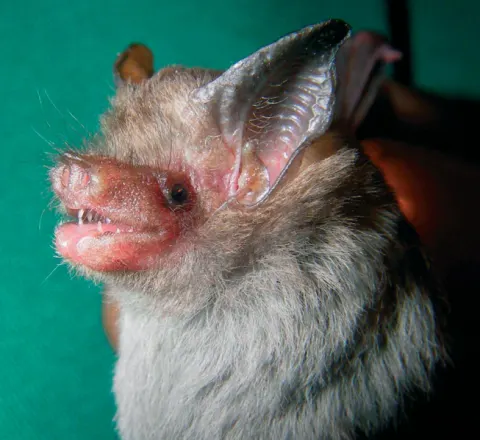
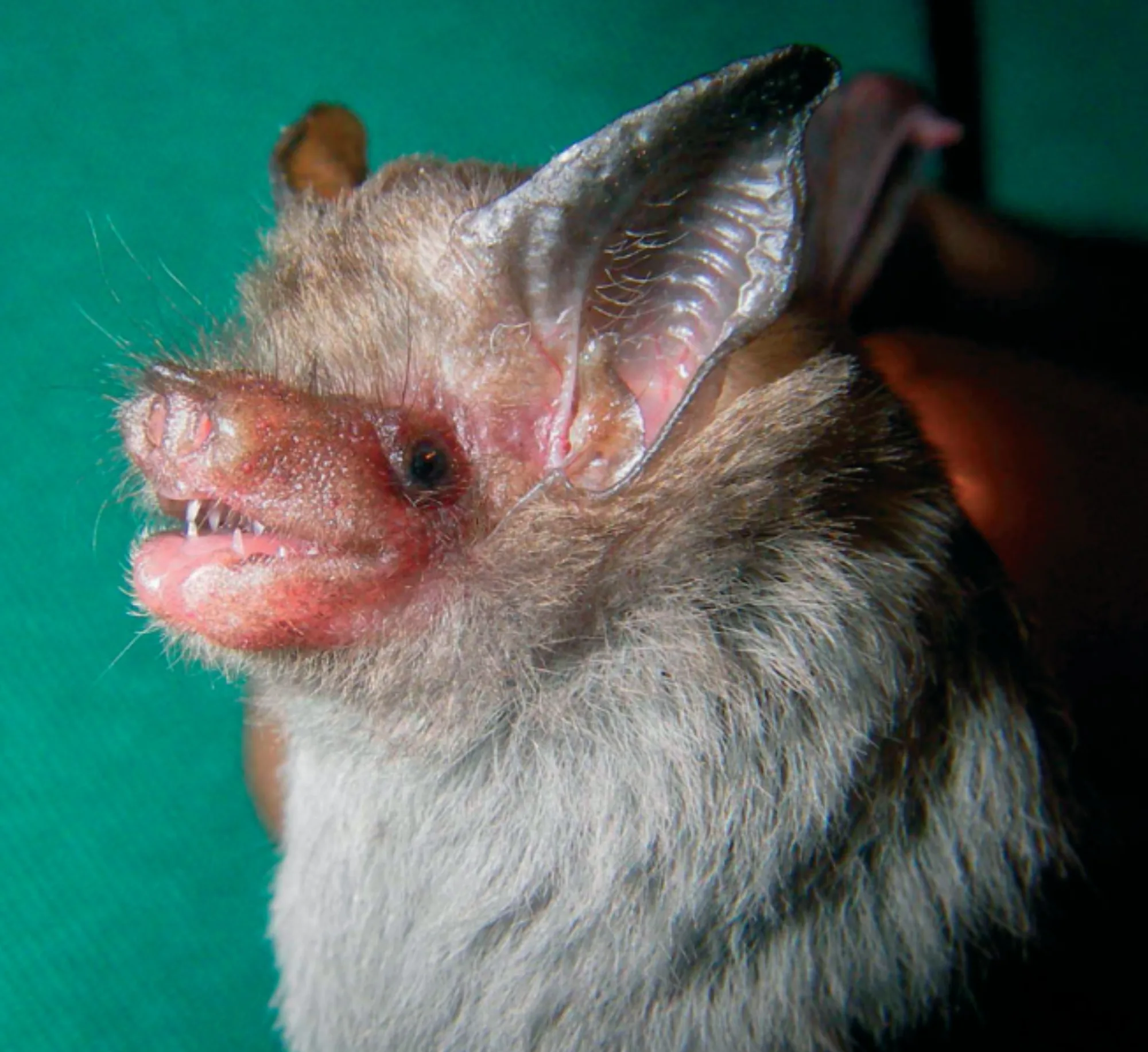
Small enough to be known as the bumblebee bat, the Hog-nosed Bat measures approximately 29 to 33 mm long and weighs around 2 g. It is the smallest bat species, with a swollen, pig-like snout, relatively large ears and small eyes mostly hidden by fur. Its coat is reddish-brown or grey above and generally paler underneath; its dark wings have long tips, and it has no visible tail.
The bat lives in western Thailand and southeast Myanmar, in limestone caves beside rivers in dry evergreen or deciduous forest. In Thailand its range is confined to a small part of the Tenasserim Hills in Kanchanaburi Province, including much of Sai Yok National Park. In Myanmar, it has been recorded at sites in limestone outcrops in the Dawna and Karen Hills. Inside caves, the bats roost high on walls or roof domes, well away from the entrance and from one another. Many caves hold only 10 to 15 bats, although the average group is 100 and the largest recorded group is about 500. They also move between caves with the seasons.
Flights are brief: the bats leave the roost for only 30 minutes each evening and for 20 minutes around dawn; heavy rain or cold can interrupt them. They forage over fields and around bamboo and teak, within one kilometre of the roost, eating small flies, other insects and spiders. Females give birth to one young each year, late in the dry season. Disturbance at roosts and habitat degradation pose risks, while annual forest burning could be the most significant long-term threat to the Thai population. Threats in Myanmar remain poorly known.
Written from the English Wikipedia article Kitti's hog-nosed bat (CC BY-SA 4.0).
- Records
- 7
- Countries
- 1
No atlas park has a record of the Hog-nosed Bat in or around it yet.
These are open occurrence records, so they show where people looked for and recorded the Hog-nosed Bat as much as where it lives. Cells are up to 25 km across, and every location is generalised to its cell.
Generalised encounter areas, not exact locations. Each shape is a grid cell coloured by how likely the species is there.
- Very likelyThailand25 km zone · medium confidence · 7 records · updated 80 days ago
Conservation status not assessed here yet, so every location is generalised to its grid cell.