Grey Butcherbird
Cracticus torquatus
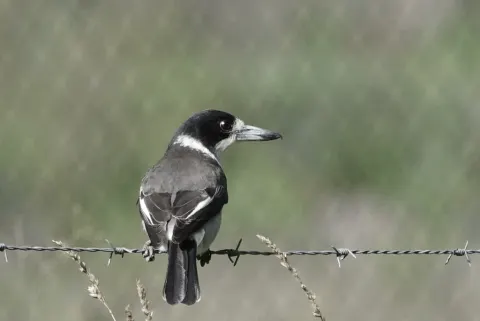
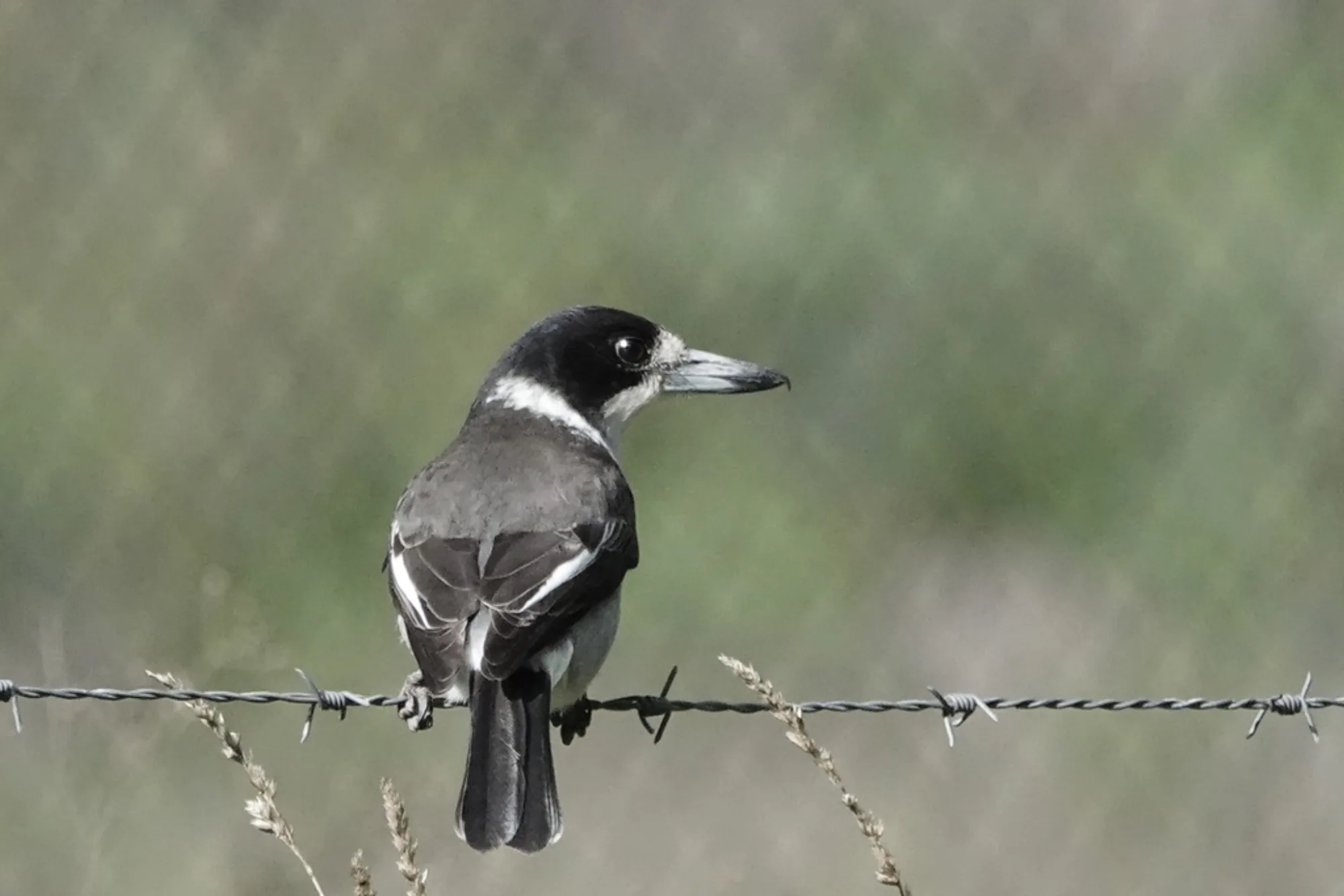
With its black head, white throat and grey back, the Grey Butcherbird is a distinctive bird of southern Australia. Adults have white patches on their grey wings, narrow white tips on the black tail and a slightly hooked beak. Listen, too, for a loud, rolling song that mixes musical and harsh notes. Birds often sing in duets or groups, taking turns through different phases of a song, which can last up to 15 minutes.
Found only in Australia, this butcherbird ranges across the south but is absent from the central deserts and the northern monsoon tropics. It lives in habitats from eucalypt forest and woodland to rainforests, shrublands and vegetation beside waterways. It also appears to be adapting to cities and can be seen in suburbs including those of Brisbane, Melbourne, Perth, Sydney and Hobart. A bird may sit on a branch waiting for prey, then pounce on it on the ground. It also catches insects and small birds in flight, and may ambush birds feeding on the ground. Its diet includes mainly insects, as well as lizards, other small birds and their young, with fruit and small seeds eaten occasionally. Grey butcherbirds sometimes catch more than they need, storing food in branch forks or impaling it for later. They may forage by themselves, with a partner or alongside a small family group.
Breeding usually takes place from July to January, and both sexes defend their territory and nest year-round. Females sit on the eggs, while both parents bring food to nestlings and fledglings. Their shallow nest is made from sticks and twigs, lined with grass and other soft fibres, and normally placed within 10 m of the ground.
Written from the English Wikipedia article Grey butcherbird (CC BY-SA 4.0).
- Records
- 506,264
- Countries
- 1
- Atlas places
- 5
These are open occurrence records, so they show where people looked for and recorded the Grey Butcherbird as much as where it lives. Cells are up to 25 km across, and every location is generalised to its cell.
Generalised encounter areas, not exact locations. Each shape is a grid cell coloured by how likely the species is there.
- Very likelyAustralia25 km zone · high confidence · 506264 records · updated 80 days ago
Conservation status not assessed here yet, so every location is generalised to its grid cell.