Pied Butcherbird
Cracticus nigrogularis
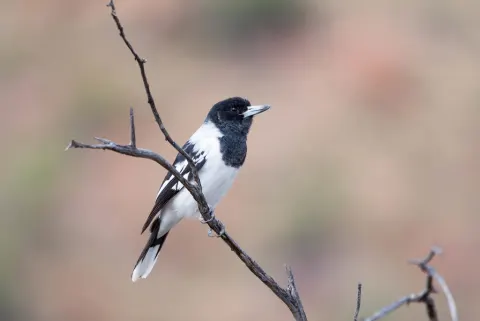
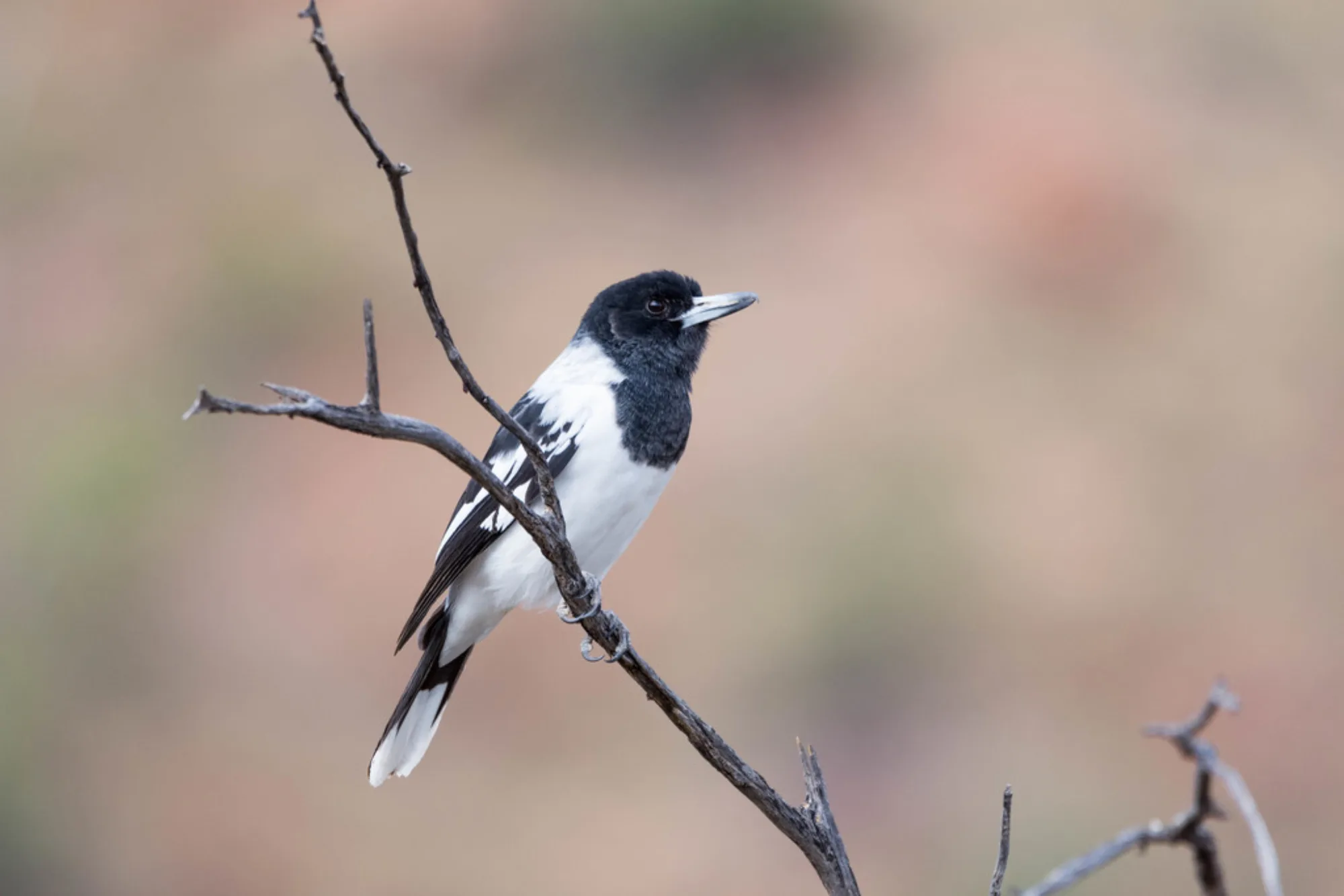
A black hood and a clear, varied song make the Pied Butcherbird a bird to look and listen for across much of Australia. This stocky songbird measures 28 to 32 cm long, with a hooked bill, white underparts and a white collar behind its black head and throat. Young birds are mostly brown and white, gaining black feathers as they mature. Its melodies differ across the continent, and birds often sing at dawn, sometimes in duets or larger choirs.
The species occurs across much of Australia, but not in Tasmania or the far south of the mainland. It favours open forests, eucalypt and acacia woodlands, and scrub, and is also common in urban environments. In the north and in dry areas, look for it in woodland bordering rivers and billabongs. Most birds stay within their range year-round, with little seasonal movement. Urban development has made the bird rare around Darwin, although land clearing has coincided with an increase in south-west Western Australia.
Watch for a bird perched on a fencepost, stump or branch, looking for prey before pouncing on the ground. Its diet includes insects, spiders, worms and small vertebrates, as well as fruit and nectar. Some birds seek scraps around houses and picnic sites, and may become tame enough to take food from people. Food is sometimes stored on a stick or barbed wire, or tucked into a crevice. A cup-shaped nest of sticks, lined with finer material, sits inconspicuously in a tree fork. The clutch contains two to five eggs, and helper birds sometimes assist the pair in feeding the young and defending the nest.
Written from the English Wikipedia article Pied butcherbird (CC BY-SA 4.0).
- Records
- 254,131
- Countries
- 1
- Atlas places
- 4
These are open occurrence records, so they show where people looked for and recorded the Pied Butcherbird as much as where it lives. Cells are up to 25 km across, and every location is generalised to its cell.
Generalised encounter areas, not exact locations. Each shape is a grid cell coloured by how likely the species is there.
- Very likelyAustralia25 km zone · high confidence · 254131 records · updated 80 days ago
Conservation status not assessed here yet, so every location is generalised to its grid cell.