Silvery Pigeon
Columba argentina
This rare bird inhabits low-lying coastal regions and offshore islands across parts of Indonesia and Malaysia. It typically stays below an altitude of 100 m, favouring mangrove forests and other woodlands. Once feared extinct, the Silvery Pigeon was confirmed to still exist in the wild through photographs taken in 2008 and 2011. It is often found traveling alongside much larger groups of pied imperial pigeons, a habit that may provide protection from predators by making it harder for them to target a single bird.
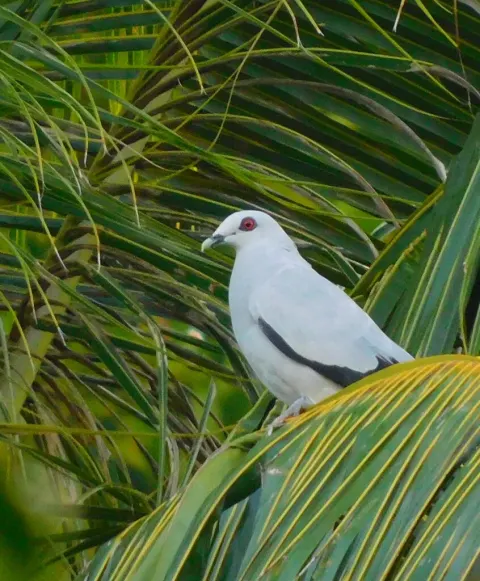
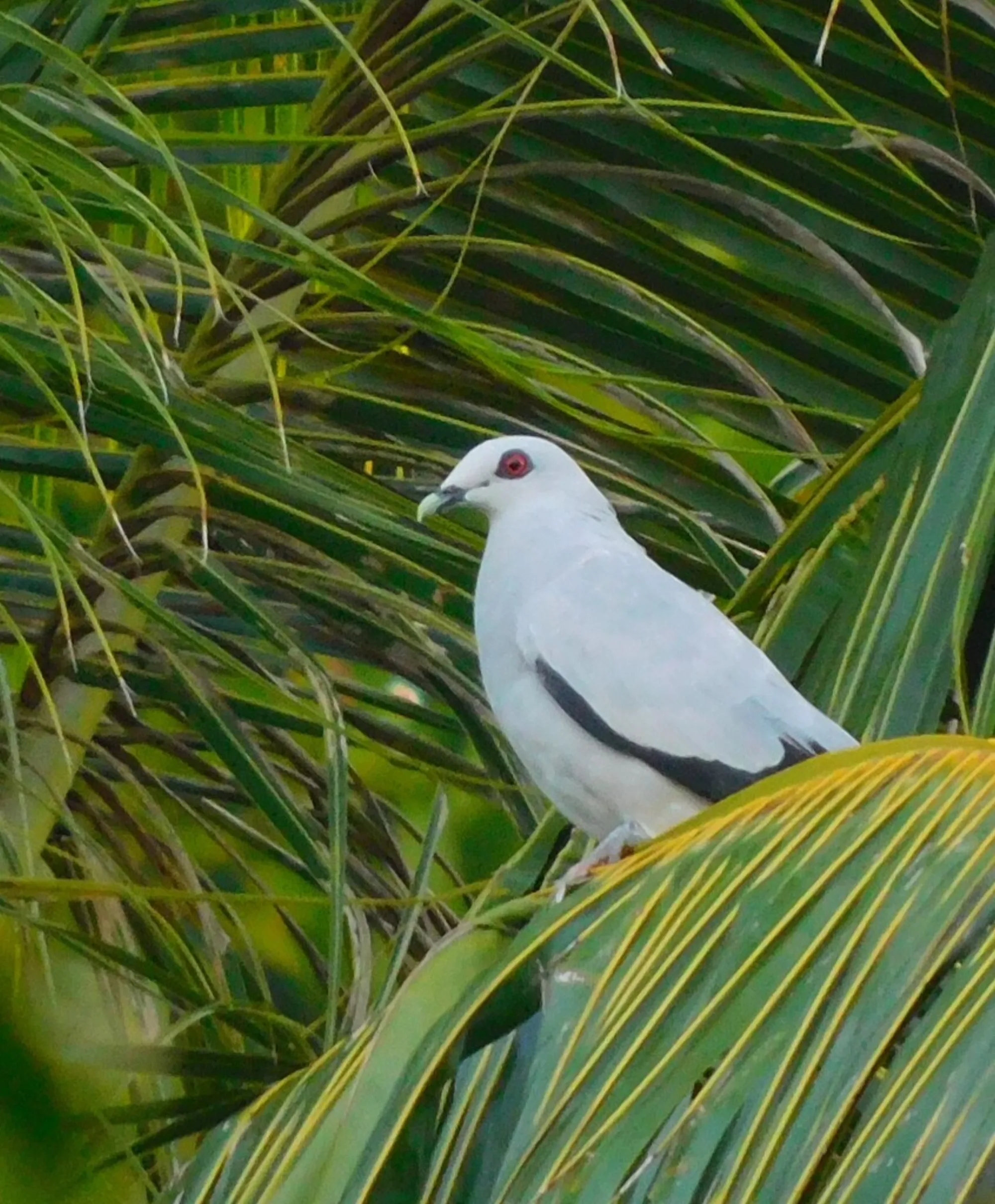
While easily confused with its more common relatives from afar, the Silvery Pigeon is recognizable at close range by its pale silvery grey plumage and distinct head features. It has a sloping forehead, dark red or purple eye-wattles, and a bill that is dusky purple at the base with a green tip. Measuring roughly 36 cm in length, these birds are slightly smaller than the pied imperial pigeon. They are believed to move between locations following seasonal fruit. During the breeding season, which likely starts around March or April, they build simple stick nests in trees to lay one white egg.
Habitat loss poses a significant threat to the species, particularly the clearing of mangrove forests. On offshore islets, the arrival of alien predators like feral cats can also put their nesting sites at risk. Though it was never considered a very numerous bird, its tendency to blend into flocks of similar species means it may be more common than the few confirmed sightings suggest.
Written from the English Wikipedia article Silvery pigeon (CC BY-SA 4.0).
- Atlas places
- 0
These are open occurrence records, so they show where people looked for and recorded the Silvery Pigeon as much as where it lives. Cells are up to 25 km across, and every location is generalised to its cell.
No encounter zones yet
Where and when you can expect to see Silvery Pigeon is calculated from observation density. No zones have been computed for this species yet.