Northern Harrier
Circus hudsonius
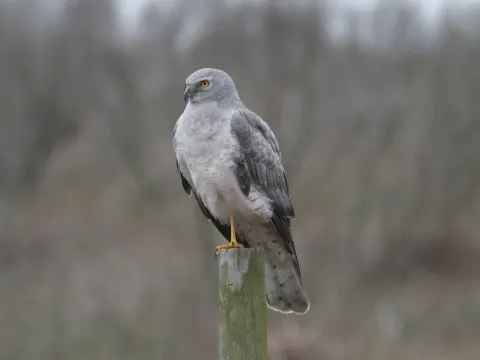
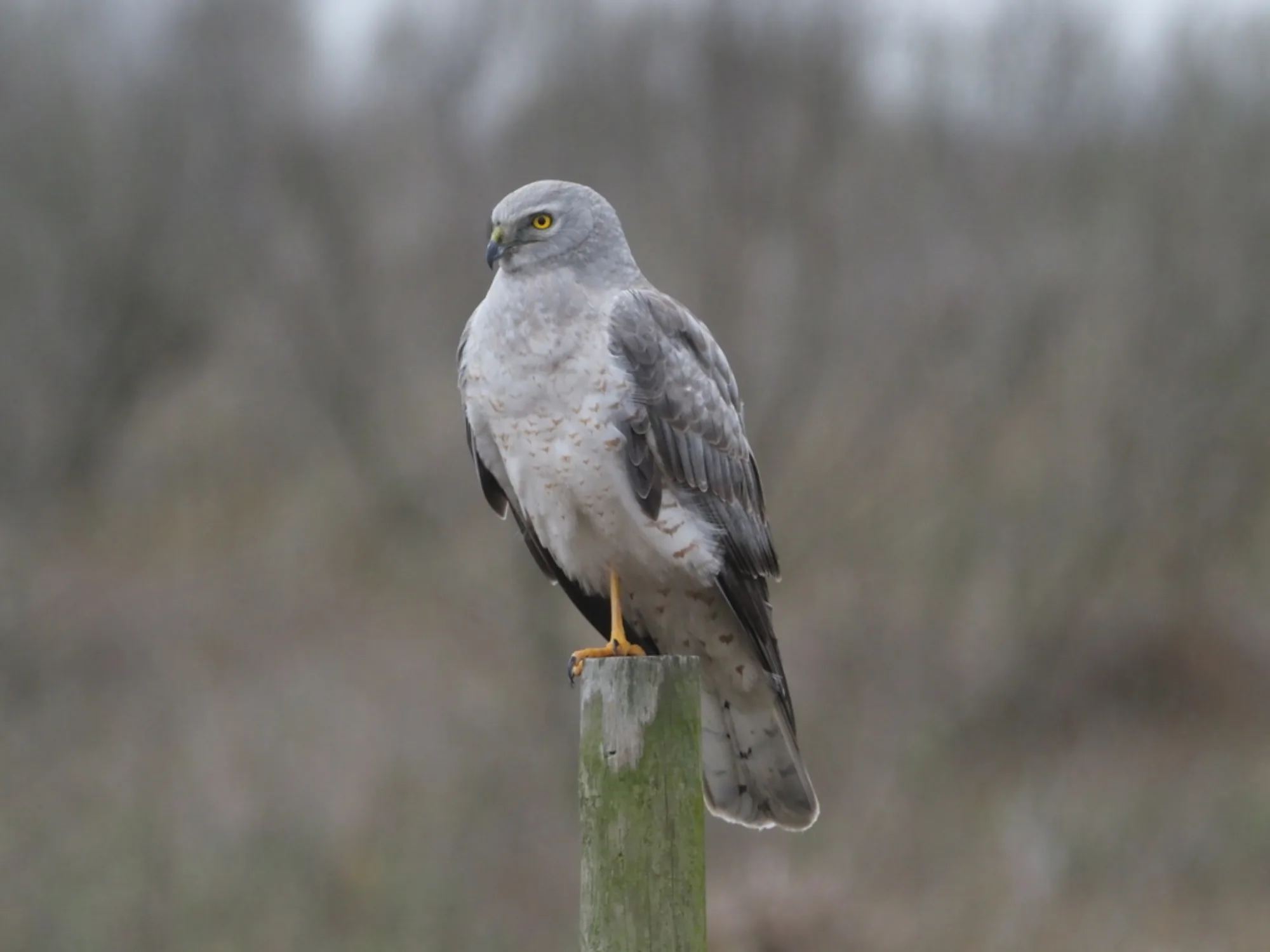
Long wings held in a shallow V make the Northern Harrier a distinctive sight as it flies low over open ground, following the contours of the land. This medium-sized bird of prey has a long tail, and males and females have different plumage, with the adult male showing grey. It measures 41 to 52 cm in length, with a wingspan of 97 to 122 cm. Mostly silent, it can also give fast kek notes and may call while gliding over hunting grounds.
Northern Harriers breed across Canada and the northernmost United States, using open habitats from moorland and bogs to prairies, farmland, marshes and grasslands. Birds breeding in Canada and the northern Great Plains migrate for winter to southern parts of the United States, as well as Mexico and Central America. Some remain year-round in the United States, including parts of the Midwest, the mountain west and states along the north Atlantic coast.
A hunting harrier flies close to the ground, circling and listening as well as looking for prey. Small mammals form much of its diet, including voles, cotton rats and ground squirrels, but it also takes birds and occasionally frogs, reptiles and insects. The nest sits on the ground or a mound, built from sticks and lined with grass and leaves. Females usually lay four to eight whitish eggs and do most of the incubation, while males hunt and bring food to their mates and chicks. Young birds leave the nest at around 36 days old. Eggs and chicks are vulnerable to predators including foxes, raccoons, crows and owls, and fledglings are also regularly taken. Heavy pesticide use caused population declines in the 1970s and 1980s, and there is evidence that the population has declined.
Written from the English Wikipedia article Northern harrier (CC BY-SA 4.0).
- Records
- 1,397,206
- Countries
- 3
- Atlas places
- 2
These are open occurrence records, so they show where people looked for and recorded the Northern Harrier as much as where it lives. Cells are up to 25 km across, and every location is generalised to its cell.
Generalised encounter areas, not exact locations. Each shape is a grid cell coloured by how likely the species is there.
- Very likelyUnited States25 km zone · high confidence · 1205277 records · updated 80 days ago
- Very likelyCanada25 km zone · high confidence · 166369 records · updated 80 days ago
- Very likelyMexico25 km zone · high confidence · 25560 records · updated 80 days ago
Conservation status not assessed here yet, so every location is generalised to its grid cell.