Pink Fairy Armadillo
Chlamyphorus truncatus
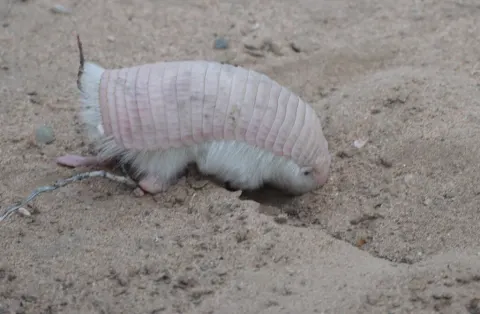
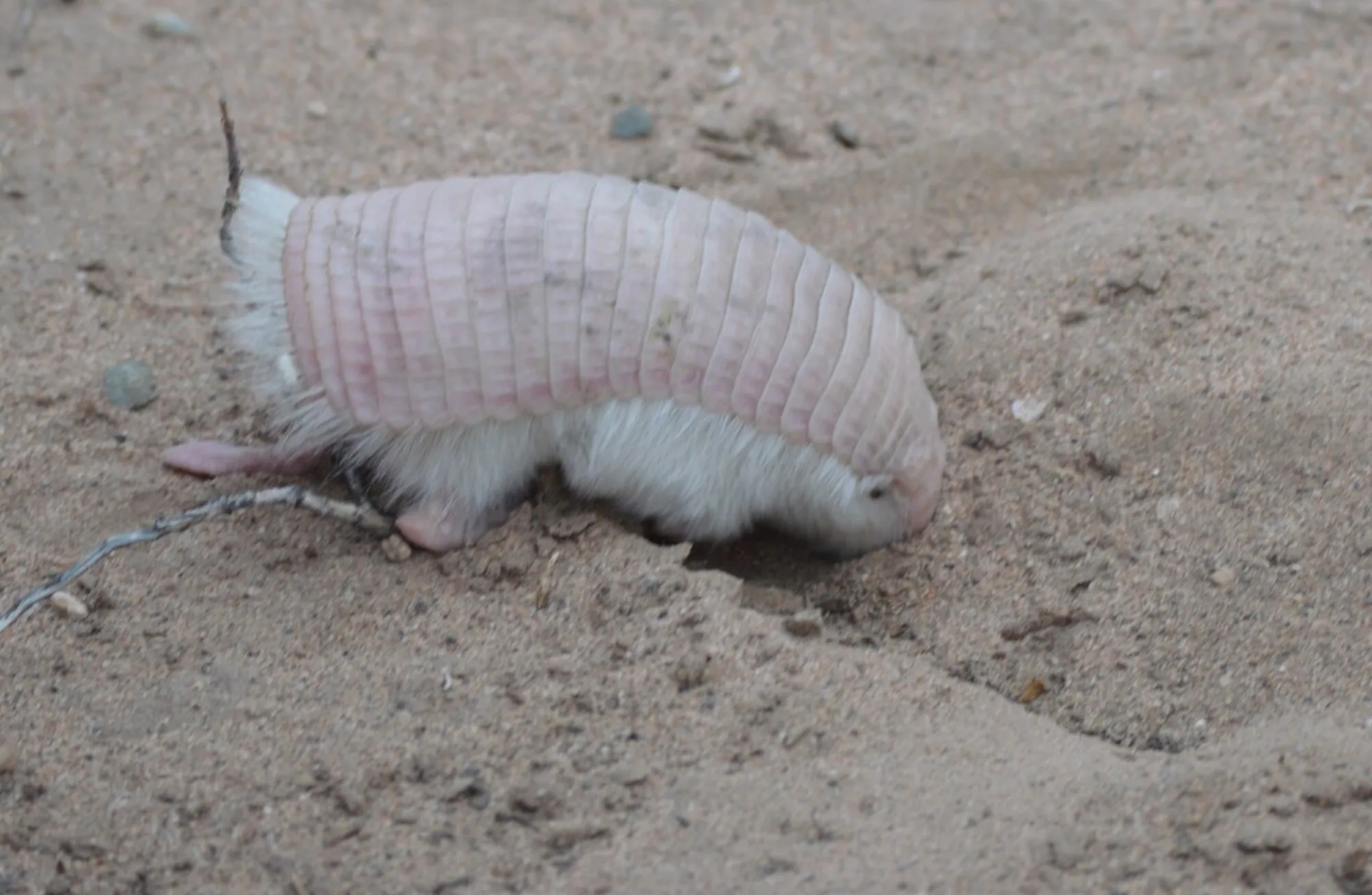
Measuring only 90 to 115 mm long and weighing around 120 g, the Pink Fairy Armadillo is the smallest species of its kind. It is recognizable by its yellowish white fur and a soft, flexible shell that appears pink due to the blood vessels visible beneath its surface. This armor is unusual because it only joins to the body via a thin membrane along the animal's spine. This allows a layer of insulating hair to continue underneath the shield. These solitary creatures are found only in central Argentina, where they inhabit sandy plains, dunes, and scrubby grasslands.
Adapted for a subterranean lifestyle, these mammals use massive claws to dig through soil so quickly they are known as sand-swimmers. Their torpedo-shaped bodies and hairless tails provide stability as they tunnel. While they are strictly nocturnal, they must leave their burrows during heavy rain to avoid drowning. Above ground, they rely on a keen sense of smell and hearing to navigate, as their eyes are greatly reduced. Their diet consists primarily of ants and larvae, though they also consume worms, snails, and various plant roots.
Several factors make this species difficult to find and protect. They are extremely sensitive to stress and environmental changes, often dying within days if taken into captivity. Their populations are declining due to the conversion of their habitat into farmland, where burrows are plowed over and pesticides contaminate their food sources. Additionally, they face heavy predation from domestic dogs, cats, and wild boars. Because they have a low metabolism and cannot store fat, they are also highly susceptible to being wiped out by cold temperatures.
Written from the English Wikipedia article Pink fairy armadillo (CC BY-SA 4.0).
- Atlas places
- 0
These are open occurrence records, so they show where people looked for and recorded the Pink Fairy Armadillo as much as where it lives. Cells are up to 25 km across, and every location is generalised to its cell.
No encounter zones yet
Where and when you can expect to see Pink Fairy Armadillo is calculated from observation density. No zones have been computed for this species yet.
Conservation status not assessed here yet, so every location is generalised to its grid cell.