Charles Island Giant Tortoise
Chelonoidis niger
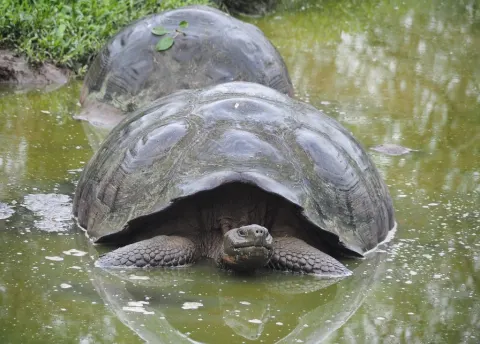
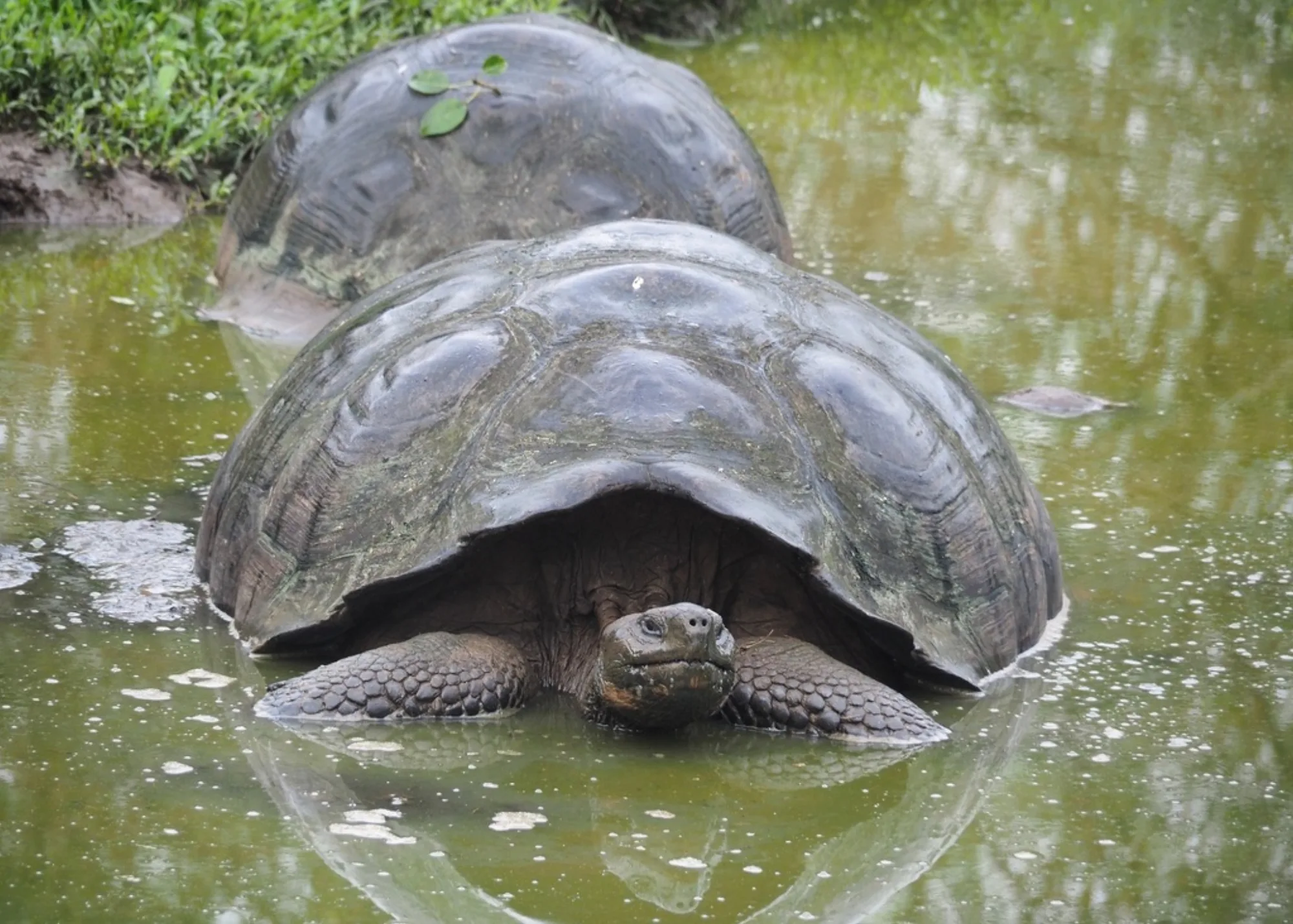
The Charles Island Giant Tortoise belongs to a Galápagos species whose enormous size and slow pace make it distinctive. Its shell is dull brown or grey, and lichens can grow on it. Across the islands, shell shapes range from rounded domes to saddlebacks raised at the front. Tortoises from humid highlands tend to be larger and shorter-necked, while those from dry islands tend to be smaller and longer-necked. Hunting is believed to have wiped out the Floreana Island population by 1850, though genetic evidence points to descendants on Isabela. Some tortoises there partly match the genetic profile of Floreana museum specimens, and researchers suggest that individuals from the Floreana population might still survive on Isabela.
Galápagos tortoises bask after dawn before spending much of the day feeding, and usually travel between grazing and resting places in the early morning or late afternoon. They eat plants including grasses, cacti, leaves and berries, and obtain most of their water from dew and plant sap. On wetter islands, some move seasonally between lowland grasslands and higher meadows, following paths used by generations of tortoises. Females travel to dry, sandy coastal nesting areas between July and November, laying eggs in holes that they seal before leaving them to the sun's warmth. Young tortoises face introduced predators, including pigs, dogs, cats and black rats, which eat eggs and hatchlings. Hunting for meat and oil, agricultural clearance and introduced animals have all contributed to the decline of Galápagos tortoises. Captive breeding has helped their recovery, with thousands of young tortoises released on their ancestral islands.
Written from the English Wikipedia article Galápagos tortoise (CC BY-SA 4.0).
- Records
- 163
- Countries
- 1
- Atlas places
- 1
These are open occurrence records, so they show where people looked for and recorded the Charles Island Giant Tortoise as much as where it lives. Cells are up to 25 km across, and every location is generalised to its cell.
Generalised encounter areas, not exact locations. Each shape is a grid cell coloured by how likely the species is there.
- Very likelyEcuador25 km zone · medium confidence · 163 records · updated 80 days ago
Conservation status not assessed here yet, so every location is generalised to its grid cell.