Green Turtle
Chelonia mydas
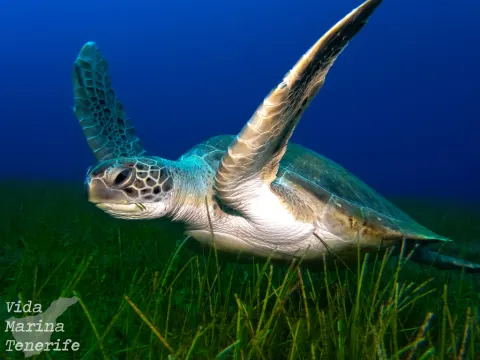
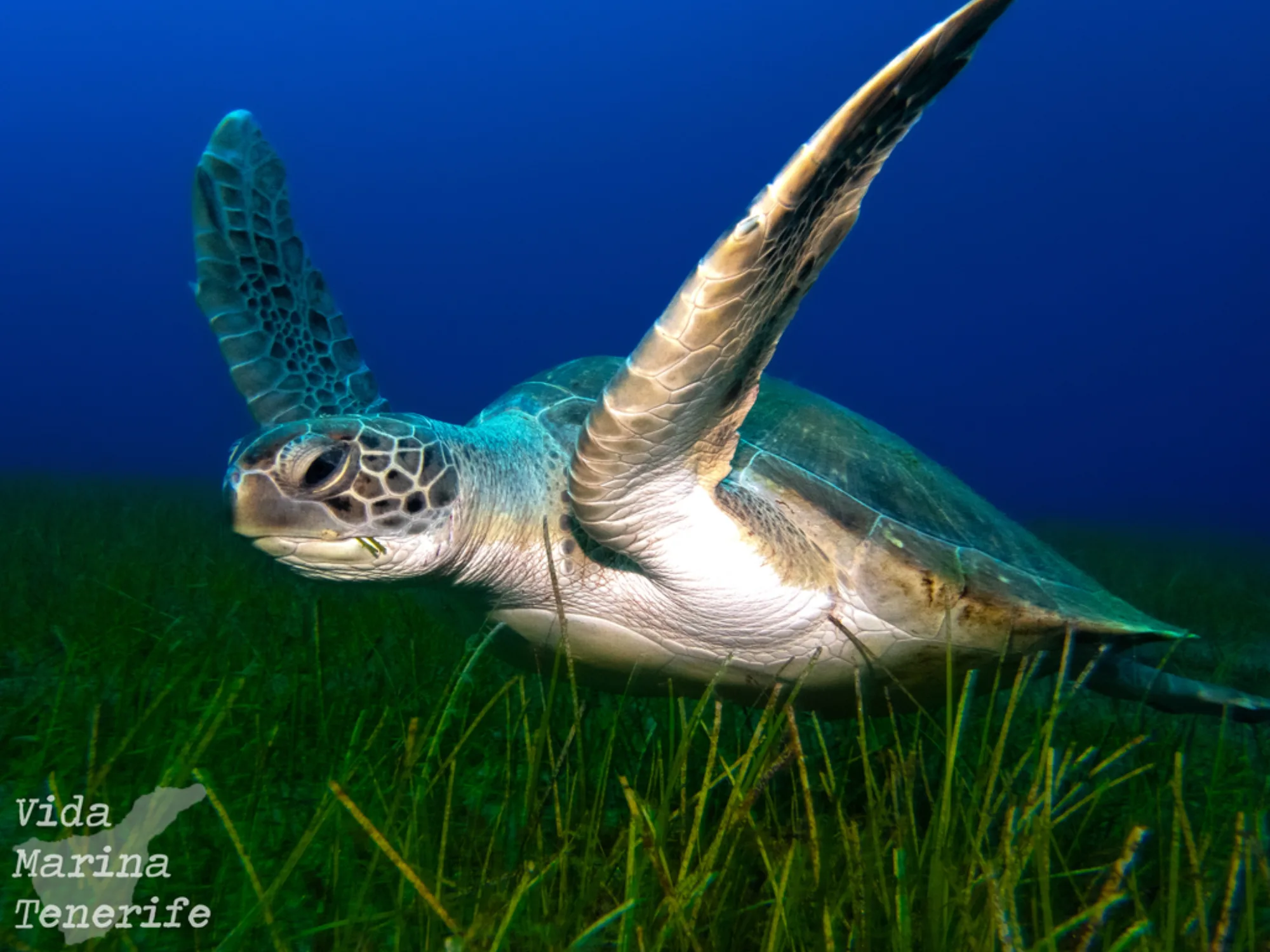
With a broad, teardrop-shaped shell and large paddle-like flippers, the Green Turtle is built for swimming. Adults can grow to 1.5 metres long, and their shells may be brown, spotted or marbled. Despite the name, the shell is not necessarily green: the name comes from the colour of the fat beneath it. In eastern Pacific populations, parts of the shell can be almost black.
Green Turtles live in tropical and subtropical seas around the world, from continental coasts and islands to the open ocean. Mature turtles spend much of their time in shallow coastal waters, including bays and lagoons with seagrass meadows. Coral reefs and salt marshes also form part of their coastal habitat. Young turtles spend their early years in the open ocean, where they are rarely seen, before settling into shallower water. Their diet changes as they grow: young turtles eat animals as well as plant material, while adults feed mainly on seagrass and algae. At night, adults may sleep beneath rocks or reef ledges, sometimes returning to the same place night after night.
These turtles travel long distances between feeding and nesting grounds, and mature individuals often return to the beach where they hatched. Females come ashore at night to dig nests and lay eggs; the hatchlings later emerge and head for the water. Crabs and shorebirds prey on young turtles, while tiger sharks hunt turtles of all sizes. Human pressures include hunting turtles and collecting their eggs, accidental capture in fishing nets, pollution and the loss of nesting beaches to development. Artificial light can disorient hatchlings, and plastic can entangle turtles or be swallowed.
Written from the English Wikipedia article Green sea turtle (CC BY-SA 4.0).
- Records
- 68,289
- Countries
- 33
- Atlas places
- 6
These are open occurrence records, so they show where people looked for and recorded the Green Turtle as much as where it lives. Cells are up to 25 km across, and every location is generalised to its cell.
Generalised encounter areas, not exact locations. Each shape is a grid cell coloured by how likely the species is there.
- Very likelyAustralia25 km zone · high confidence · 57509 records · updated 80 days ago
- Very likelyUnited Arab Emirates25 km zone · high confidence · 5960 records · updated 80 days ago
- Very likelyUnited States25 km zone · medium confidence · 1057 records · updated 80 days ago
- Very likelyTanzania25 km zone · medium confidence · 644 records · updated 80 days ago
- Very likelyOman25 km zone · medium confidence · 587 records · updated 80 days ago
- Very likelyCosta Rica25 km zone · high confidence · 474 records · updated 80 days ago
- Very likelyMexico25 km zone · medium confidence · 441 records · updated 80 days ago
- Very likelyEcuador25 km zone · medium confidence · 353 records · updated 80 days ago
- Very likelyIndia25 km zone · high confidence · 180 records · updated 80 days ago
- Very likelyNorfolk Island25 km zone · high confidence · 140 records · updated 80 days ago
Conservation status not assessed here yet, so every location is generalised to its grid cell.