Hector's Dolphin
Cephalorhynchus hectori
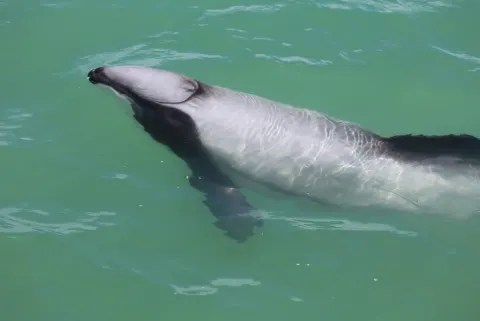
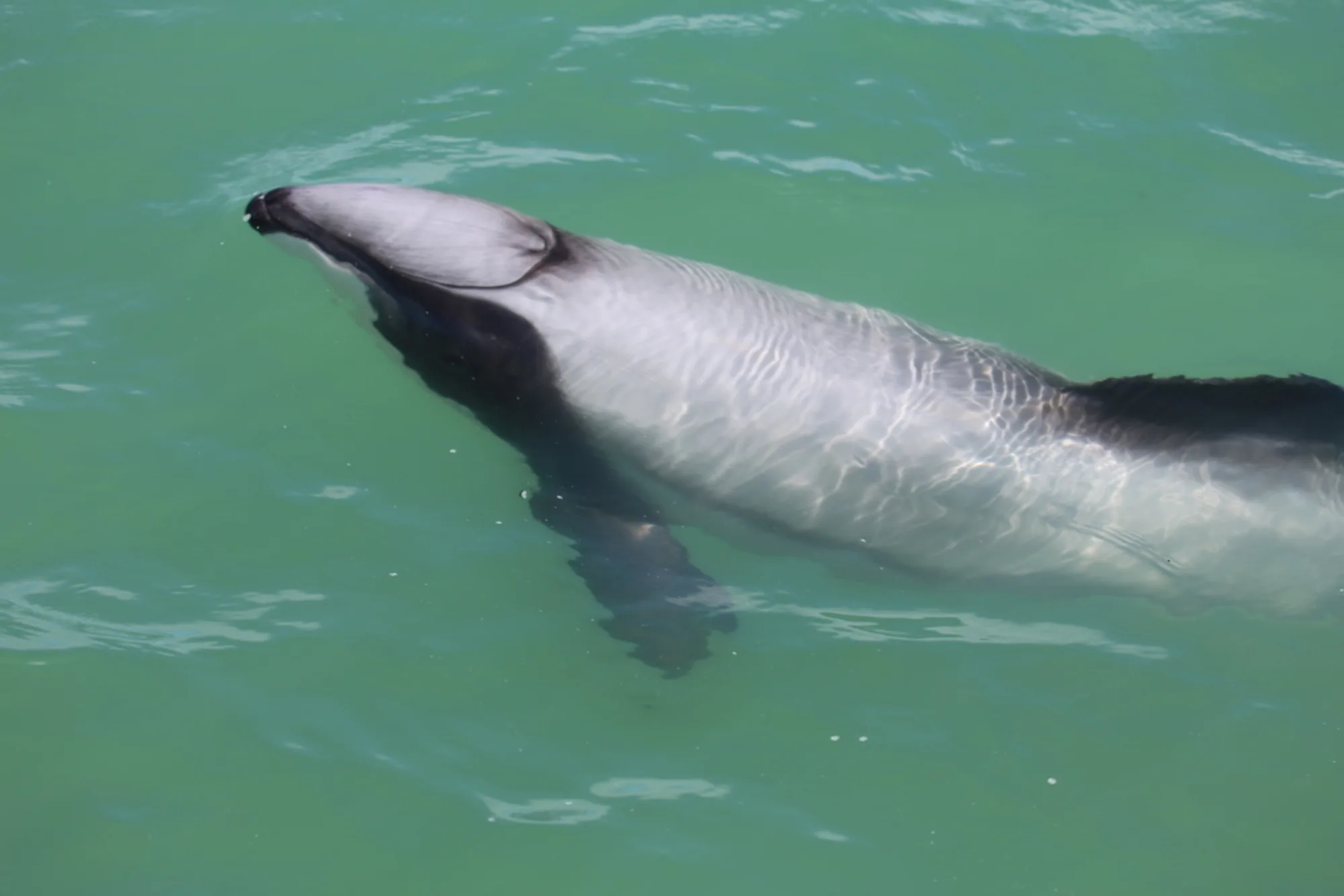
Small and stocky, Hector's Dolphin can be recognised by its rounded dorsal fin and a pattern of grey, white and black. Adults measure 1.2 to 1.6 m and have no discernible beak. A black mask surrounds the eyes, while the throat and belly are white.
These dolphins live only in New Zealand's coastal waters, where they favour shallows near the South Island. Around the South Island, numbers are highest along the east and west coasts, especially near Banks Peninsula; Māui dolphins are typically found off the North Island's west coast. Most sightings occur in water shallower than 50 m, often about 1000 m from shore. In spring and summer they favour shallow coastal waters, moving into deeper water in autumn and winter. Some return to the same feeding locations in successive summers.
Hector's dolphins usually form small groups, and their associations with one another are fluid. Nursery groups usually bring females together with their calves, without adult males. The dolphins use echolocation clicks and eat a varied diet of fish and squid, generally choosing prey by size. Red cod, flatfish and New Zealand arrow squid are among their prey. Calves are born in spring and summer, and females calve every 2 to 3 years. Population growth is slow, leaving the dolphins at risk of decline. Both commercial and recreational fishing can kill them when they become caught in gillnets or trawls. Disease is another threat: toxoplasmosis and brucellosis have both been linked to dolphin deaths. Isolated populations face a loss of genetic diversity and inbreeding, while oil spills, gas drilling and noise pollution add further pressures.
Written from the English Wikipedia article Hector's dolphin (CC BY-SA 4.0).
- Records
- 114
- Countries
- 1
- Atlas places
- 4
These are open occurrence records, so they show where people looked for and recorded the Hector's Dolphin as much as where it lives. Cells are up to 25 km across, and every location is generalised to its cell.
Generalised encounter areas, not exact locations. Each shape is a grid cell coloured by how likely the species is there.
- Very likelyNew Zealand25 km zone · medium confidence · 114 records · updated 80 days ago
Conservation status not assessed here yet, so every location is generalised to its grid cell.