Northern Cassowary
Casuarius unappendiculatus
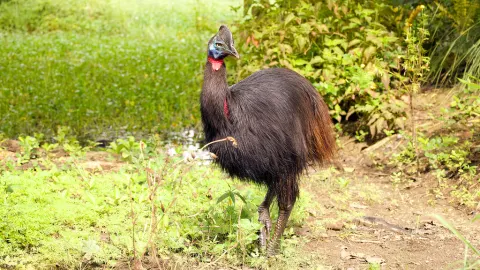
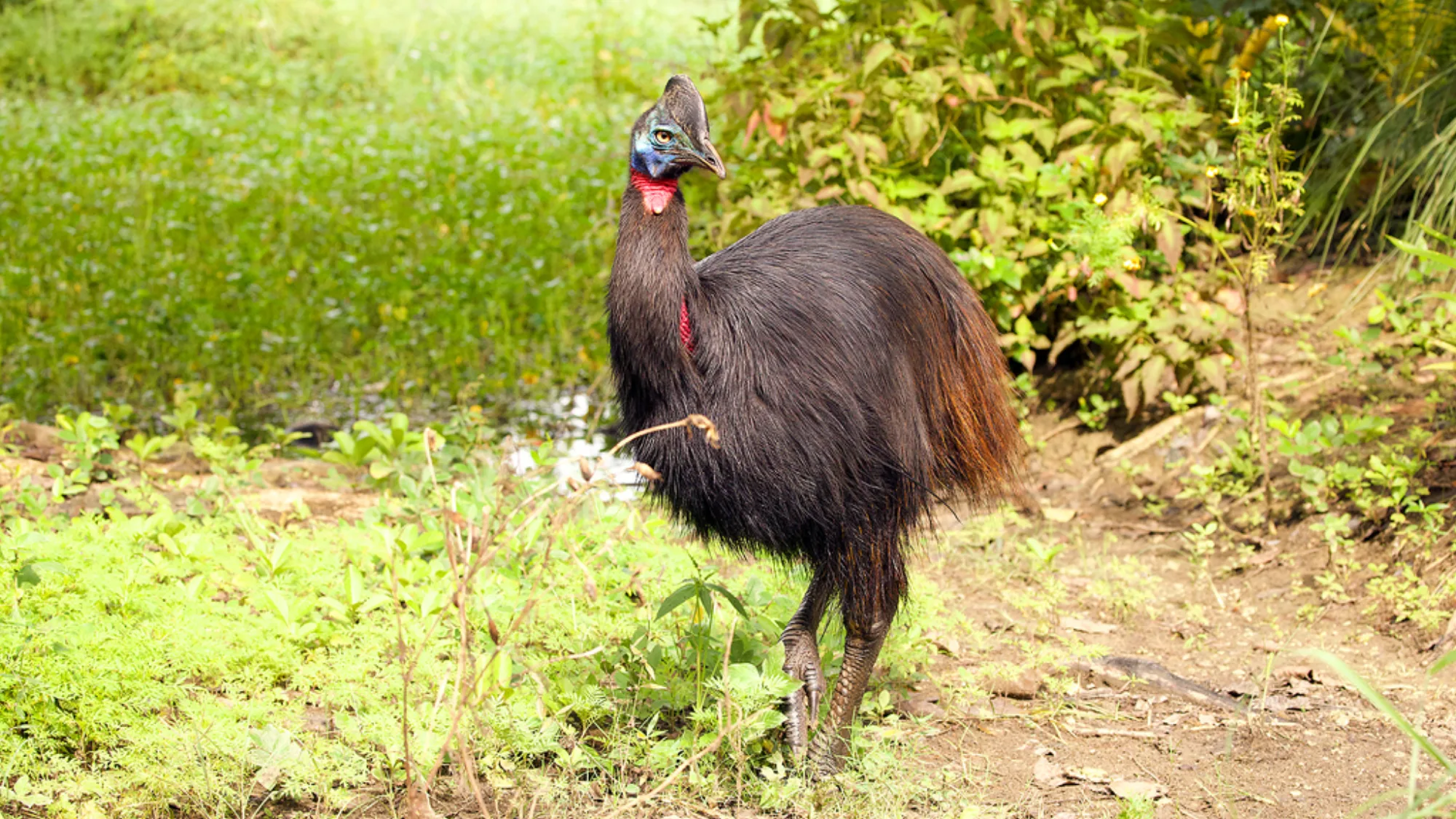
Stocky and flightless, the Northern Cassowary moves through the lowlands of northern New Guinea and nearby islands. It has stiff black feathers, blue skin on its face and a casque on its head. Its neck and single wattle are bright red or yellow, while its large, strong feet carry a long, dagger-like claw on the inner toe. Adults stand 1.5 to 1.8 m tall, and females are larger than males, although the sexes look similar.
This shy, solitary bird lives in coastal swamps and lowland rainforest on New Guinea, Yapen, Batanta and Salawati, in Indonesia and Papua New Guinea. It generally favours elevations below 490 m, though a 2026 study found it as high as 1,962 m. Listen for grunts and hisses, sounds it shares with other cassowaries. Berries and fruit make up much of its diet, supplemented by small animals ranging from insects and snails to frogs, lizards and smaller birds. It also eats dead animals when it finds them.
During the breeding season, the male prepares a well-camouflaged nest in which the female lays three to five green eggs. She leaves to find another mate, while the male spends around 50 days incubating the eggs, then cares for the chicks on his own for about nine months. Hunting remains the biggest threat, with habitat continuing to disappear and some areas subject to excessive hunting. Local people make use of the bones and eggs, and raise captured chicks for meat. As logging opens more forest, hunting is expected to become a greater problem.
Written from the English Wikipedia article Northern cassowary (CC BY-SA 4.0).
- Records
- 207
- Countries
- 2
No atlas park has a record of the Northern Cassowary in or around it yet.
These are open occurrence records, so they show where people looked for and recorded the Northern Cassowary as much as where it lives. Cells are up to 25 km across, and every location is generalised to its cell.
Generalised encounter areas, not exact locations. Each shape is a grid cell coloured by how likely the species is there.
- Very likelyIndonesia25 km zone · medium confidence · 166 records · updated 80 days ago
- LikelyPapua New Guinea25 km zone · medium confidence · 41 records · updated 80 days ago
Conservation status not assessed here yet, so every location is generalised to its grid cell.