Sandbar Shark
Carcharhinus plumbeus
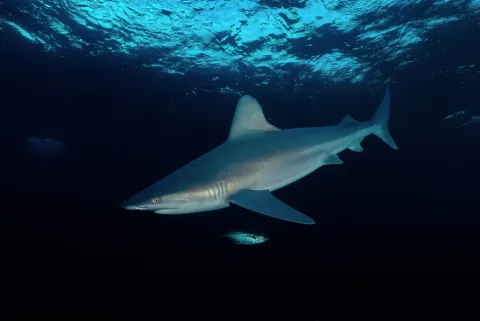
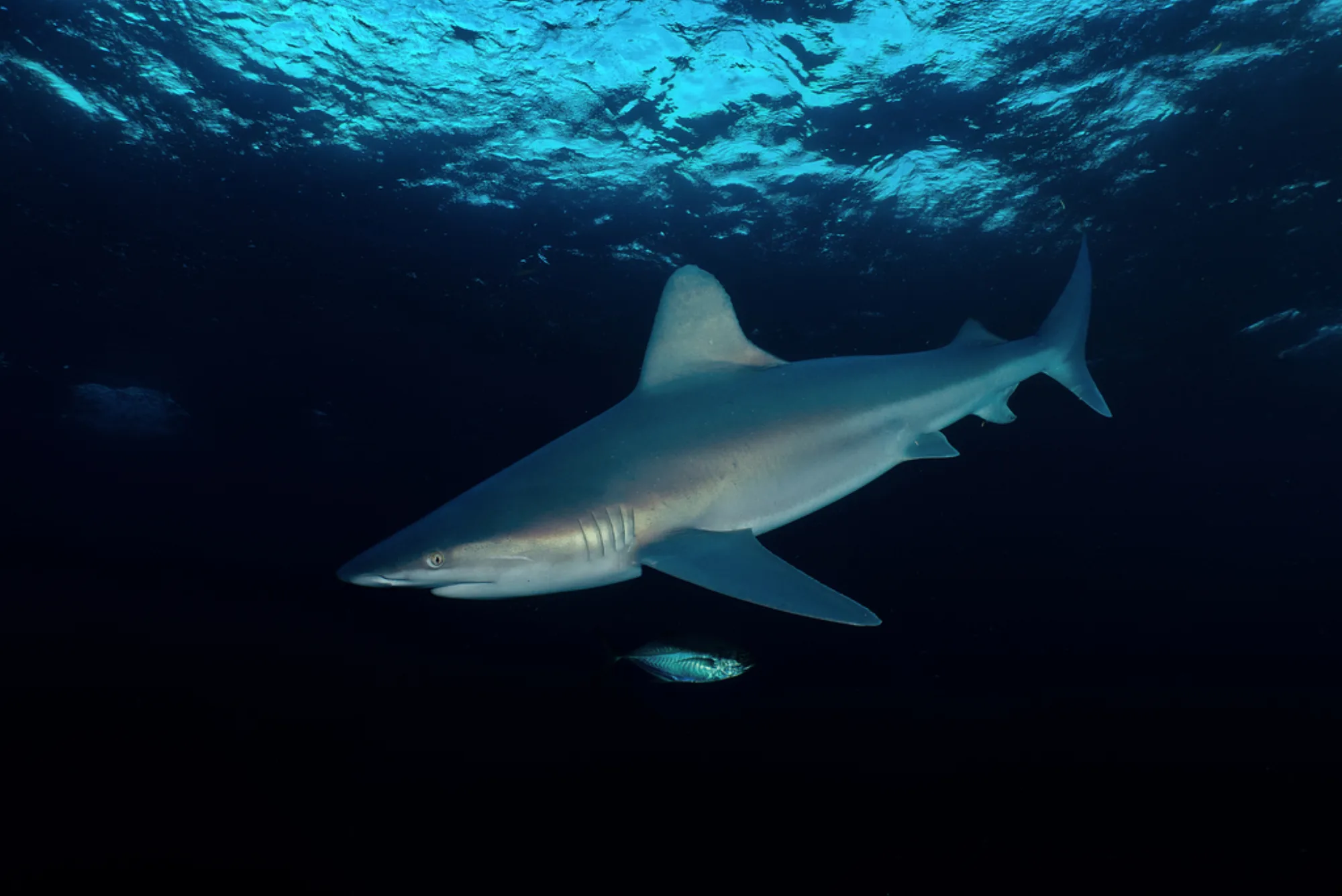
A tall, triangular first dorsal fin gives the Sandbar Shark a distinctive profile in coastal waters. One of the world's largest coastal sharks, it has a heavy-set body, a rounded snout and long pectoral fins. Its upper body ranges from blue-ish brown to grey or bronze, while its underside is white or pale. Females can grow to 2.5 m, while males reach up to 1.8 m.
Sandbar Sharks live in tropical to temperate waters across the Atlantic and Indo-Pacific, including the western Atlantic from Massachusetts to Brazil. Look for them over muddy or sandy bottoms in shallow bays, estuaries, harbours and river mouths, although they also enter intertidal zones and water 200 m or deeper. Young sharks occur in numbers in lower Chesapeake Bay, and nurseries extend from Delaware Bay to South Carolina, with others in the Florida Keys and Bonjuk Bay in Turkey. They swim alone or form schools separated by sex, and eat fish, rays, crabs and molluscs. In the Mediterranean and Gulf of Gabés, their recorded diet includes bony fish, octopuses, European squid and cuttlefish.
After carrying their young for 1 year, females produce eight pups on average. They may reproduce every two or three years, returning to the same place to give birth. Tiger sharks and, rarely, great white sharks prey on them, while overfishing has also put pressure on the species. Commercial shark fisheries in the US targeted Sandbar Sharks heavily because of their high fin-to-body weight ratio, before commercial landings were banned in 2008.
Written from the English Wikipedia article Sandbar shark (CC BY-SA 4.0).
- Records
- 19,349
- Countries
- 8
- Atlas places
- 2
These are open occurrence records, so they show where people looked for and recorded the Sandbar Shark as much as where it lives. Cells are up to 25 km across, and every location is generalised to its cell.
Generalised encounter areas, not exact locations. Each shape is a grid cell coloured by how likely the species is there.
- Very likelyAustralia25 km zone · high confidence · 18930 records · updated 80 days ago
- Very likelyFaroe Islands25 km zone · medium confidence · 163 records · updated 80 days ago
- Very likelyUnited States25 km zone · medium confidence · 144 records · updated 80 days ago
- Very likelyUnited Kingdom25 km zone · high confidence · 96 records · updated 80 days ago
- LikelyMozambique25 km zone · medium confidence · 5 records · updated 80 days ago
- LikelyNew Caledonia25 km zone · medium confidence · 5 records · updated 80 days ago
- LikelyFrench Polynesia25 km zone · medium confidence · 4 records · updated 80 days ago
- LikelyMexico25 km zone · medium confidence · 2 records · updated 80 days ago
Conservation status not assessed here yet, so every location is generalised to its grid cell.