Pondicherry Shark
Carcharhinus hemiodon
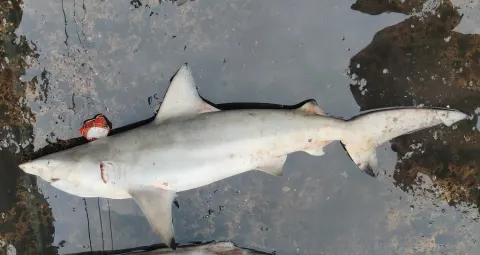
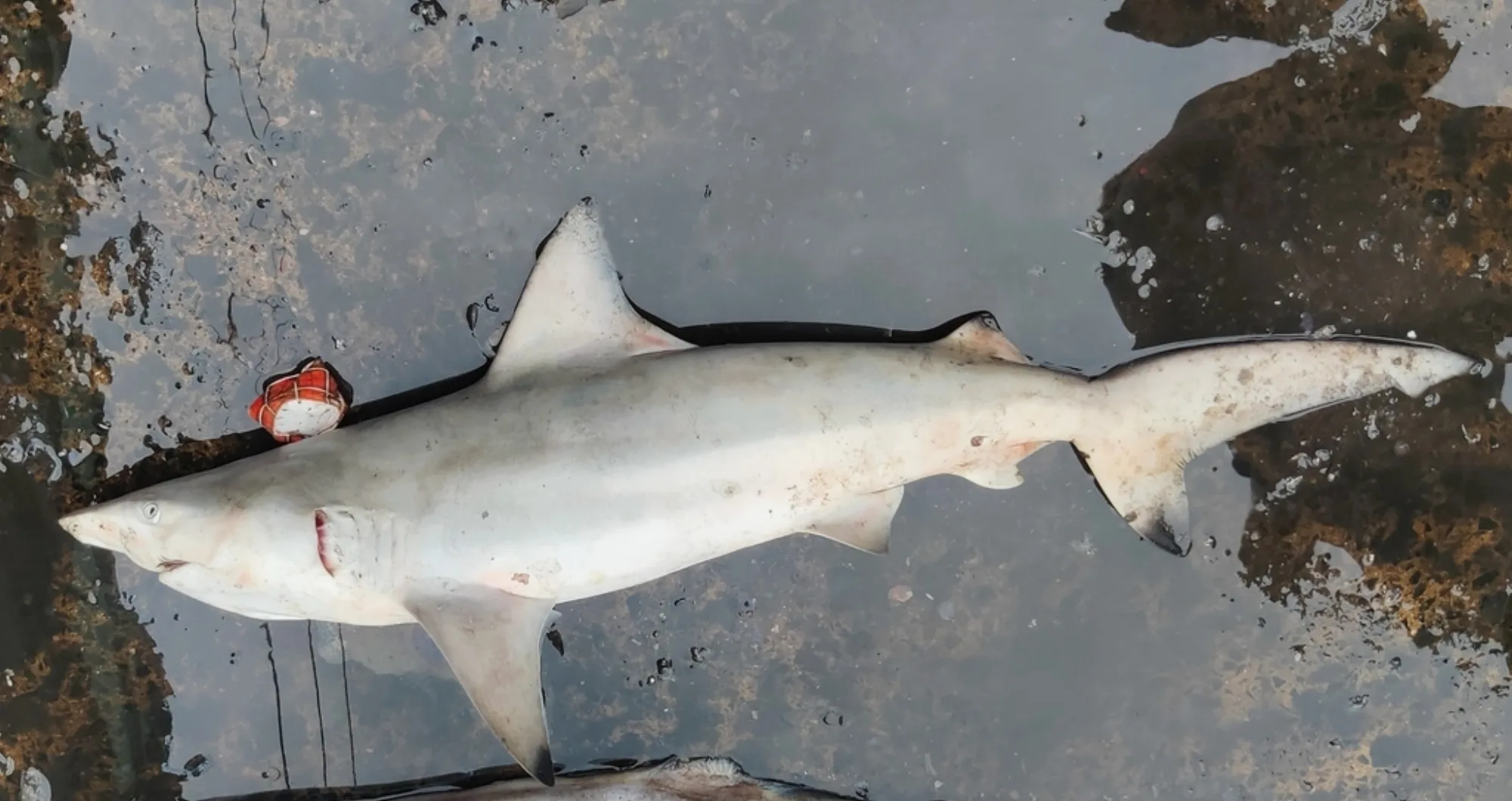
This rare and robust requiem shark is a small species, typically reaching lengths of around 1 m. Known also as the long nosed shark, it is identified by a pointed snout and a tall first dorsal fin featuring a notably long trailing tip. Its grey body is marked by a pale stripe along the sides and distinct black tips on the pectoral fins, the second dorsal fin, and the bottom section of the tail. While its mouth contains rows of smooth lower teeth, the upper teeth are unique, possessing smooth tips but heavily serrated bases.
Historically, the Pondicherry shark occupied coastal waters across the Indo-Pacific, from the Gulf of Oman through to New Guinea. Although it primarily inhabits inshore marine environments, it has been known to enter fresh water. Its diet likely consists of small bony fish, crustaceans, and cephalopods. Like its relatives, it gives birth to live young, with embryos receiving nourishment through a placental connection to the mother.
Very little is known about the animal's life in the wild because it has become exceptionally difficult to find. No definitive sightings have been recorded since 1979, leading to concerns that it might have disappeared entirely. The primary threat to its survival is the heavy and intensifying pressure from both commercial and artisanal fishing throughout its former range. It was once caught regularly for its meat, but today it is one of the most sought after lost species in the world.
Written from the English Wikipedia article Pondicherry shark (CC BY-SA 4.0).
- Atlas places
- 0
These are open occurrence records, so they show where people looked for and recorded the Pondicherry Shark as much as where it lives. Cells are up to 25 km across, and every location is generalised to its cell.
No encounter zones yet
Where and when you can expect to see Pondicherry Shark is calculated from observation density. No zones have been computed for this species yet.