Borneo Shark
Carcharhinus borneensis
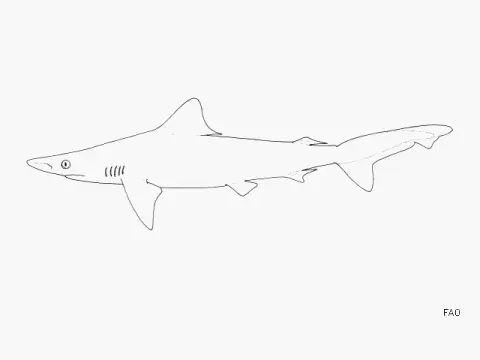
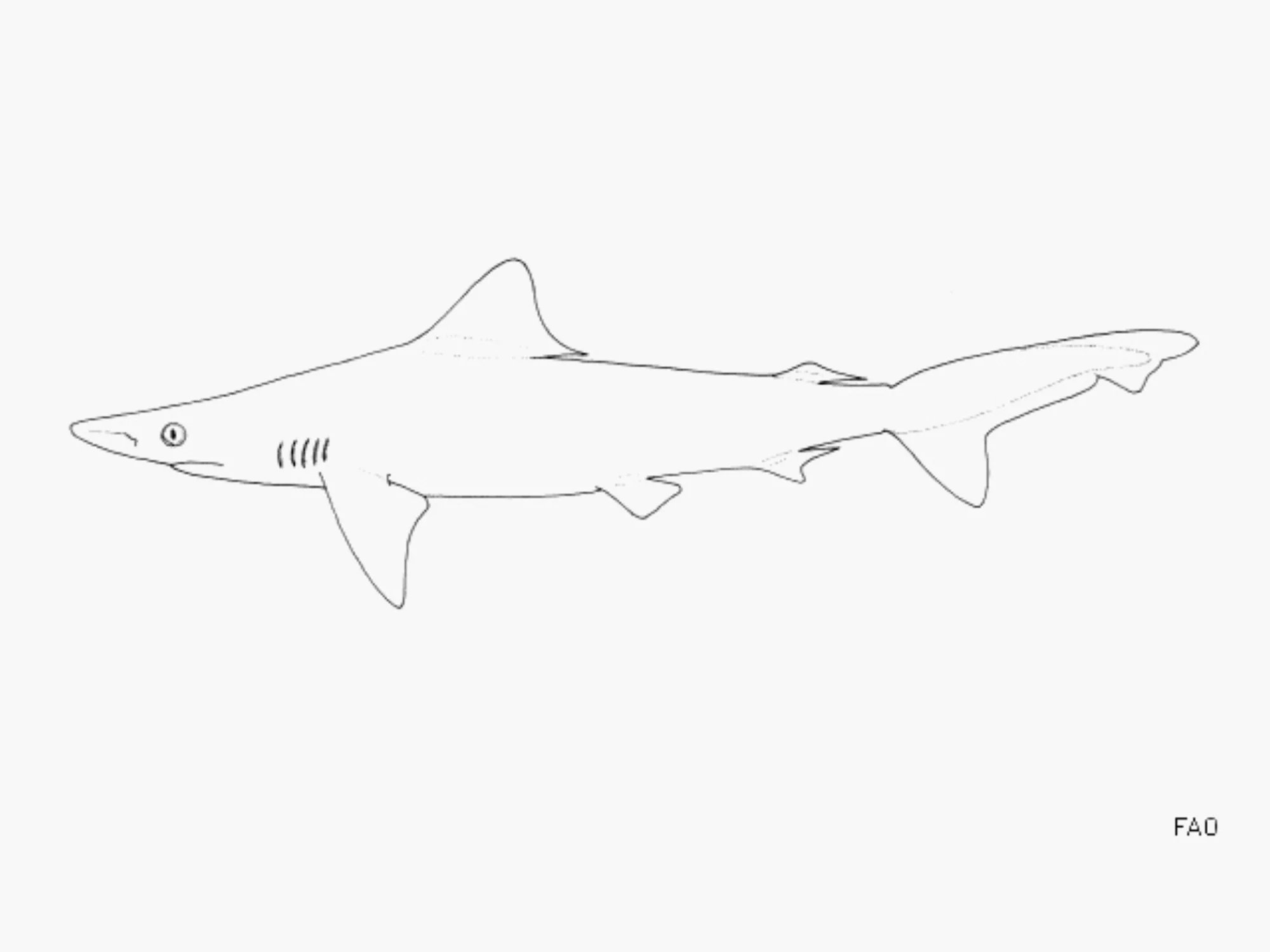
Reaching just 65 cm in length, this slim requiem shark is distinguished by its long, pointed snout and a slate-gray upper body that pales to white underneath. It is the only member of its genus to feature a row of prominent pores located just above the corners of its mouth. Some individuals may also display irregular patterns of small white blotches. Its fins are generally short and pointed, with a small, low second dorsal fin positioned behind the start of the anal fin.
While this rare species may have once occupied a wider range reaching as far as China, it is currently known only from the shallow, inshore waters around Mukah in northwestern Borneo. Travellers are unlikely to encounter it easily, as almost nothing is known about its natural behavior in the wild. Scientists believe that bony fishes likely make up the majority of its diet. Like its relatives, the Borneo Shark is viviparous, with mothers providing for their young through a placental connection before giving birth to litters of six pups.
The survival of this shark is a matter of serious concern because it occupies a highly restricted geographic range. These waters are subject to heavy pressure from both commercial and artisanal fishing operations. Although it has little commercial value, the shark is frequently caught by line gear and utilized for its meat. Recent surveys across the rest of the region have failed to locate other populations, suggesting its presence is now limited to these specific, heavily fished coastal areas.
Written from the English Wikipedia article Borneo shark (CC BY-SA 4.0).
- Atlas places
- 0
These are open occurrence records, so they show where people looked for and recorded the Borneo Shark as much as where it lives. Cells are up to 25 km across, and every location is generalised to its cell.
No encounter zones yet
Where and when you can expect to see Borneo Shark is calculated from observation density. No zones have been computed for this species yet.