Hispid Hare
Caprolagus hispidus
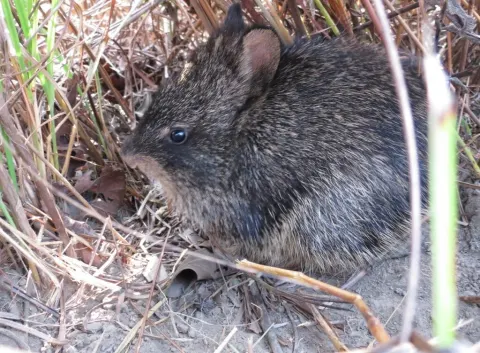
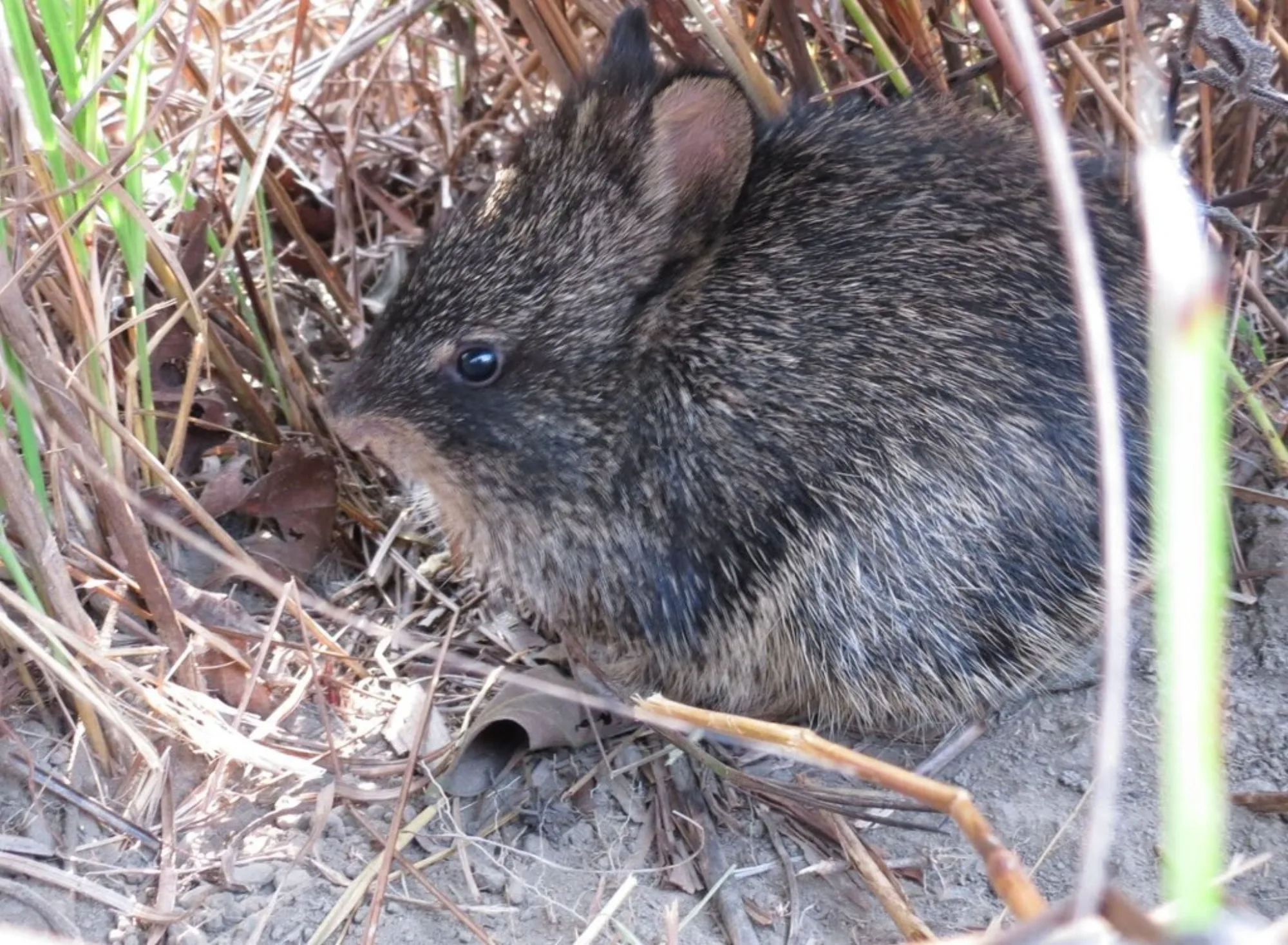
Defined by its coarse, dark brown coat and unusually large nose, the Hispid Hare is a unique rabbit found in South Asia. Unlike the similar Indian hare, this species has very short ears and a tail that is completely brown. Adults typically weigh between 1,810 and 2,610 grams, though females are slightly heavier on average. These rabbits are most active at dawn and dusk, navigating small home ranges that are often less than a single hectare in size.
Today, these animals live in isolated pockets across northern India, southern Nepal, and eastern Bhutan. They prefer tall elephant grasslands that provide both food and shelter. During the dry season, they move toward riverbanks or marshy areas to avoid fires, though they generally favor dry ground over wet, dense vegetation. Their diet is strictly herbivorous, consisting of at least 23 plant species. They particularly enjoy kans grass and cogongrass, often stripping the outer sheath from shoots and roots before eating them.
Survival is difficult for this species as its habitat is highly fragmented and occupies less than 500 square kilometres. Human activities such as agriculture, flood control, and the collection of grasses for thatch have caused populations to decline. Cattle overgrazing and the practice of burning vegetation are also significant threats, especially when fires occur during the breeding season. Because females produce only about three small litters of two or three young each year, recovering from these disturbances is a slow process.
Written from the English Wikipedia article Hispid hare (CC BY-SA 4.0).
- Atlas places
- 0
These are open occurrence records, so they show where people looked for and recorded the Hispid Hare as much as where it lives. Cells are up to 25 km across, and every location is generalised to its cell.
No encounter zones yet
Where and when you can expect to see Hispid Hare is calculated from observation density. No zones have been computed for this species yet.