Western Roe Deer
Capreolus capreolus
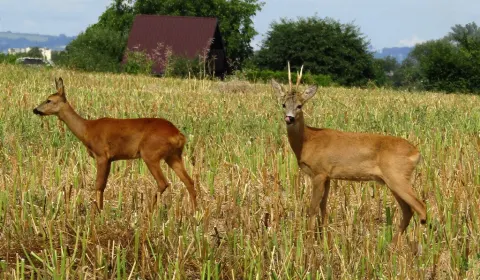
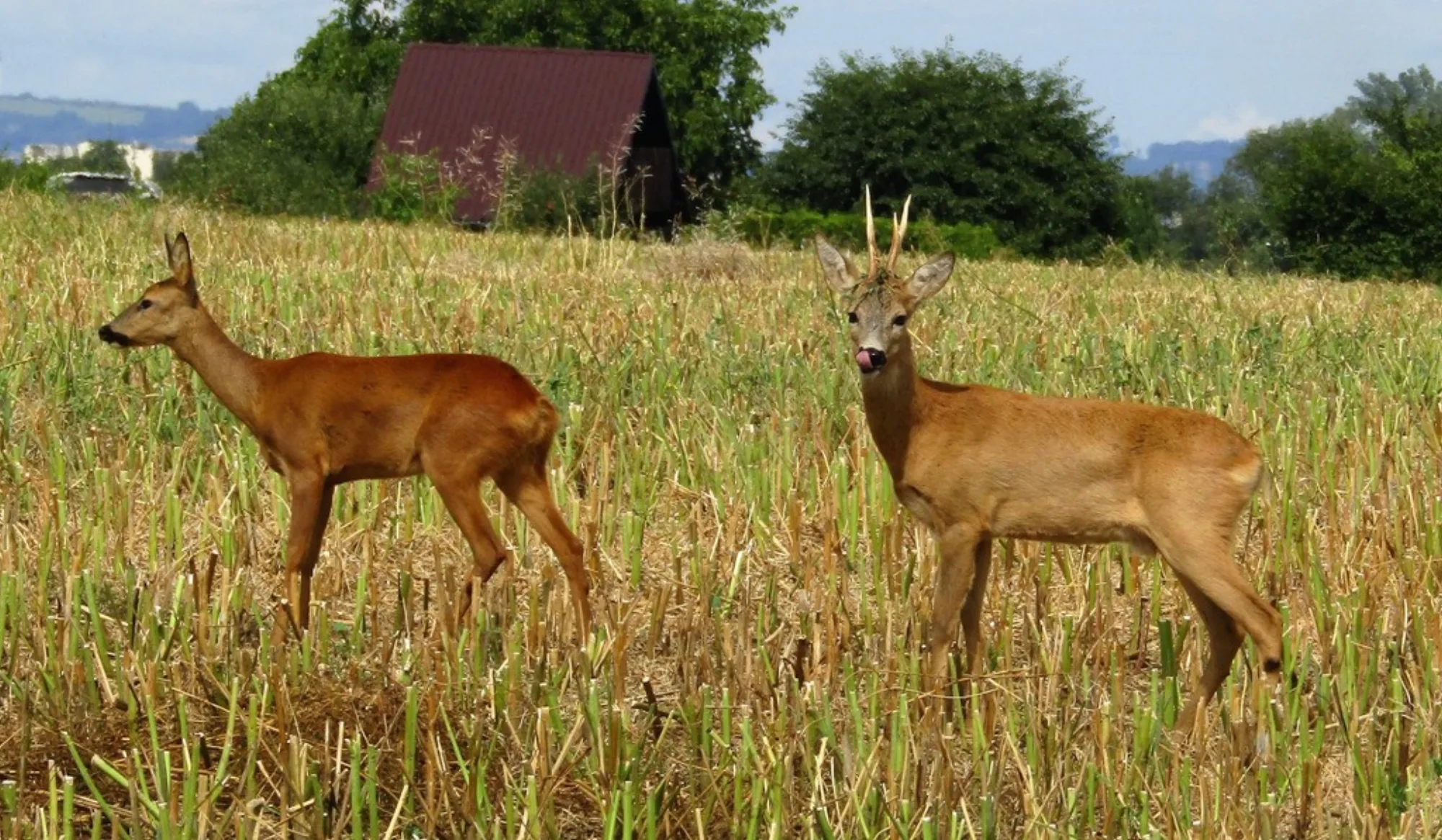
Small and suited to cold environments, the Western Roe Deer has a reddish to grey-brown coat. An adult has a body length of 95 to 135 cm and an average weight of 20 to 25 kg. Males in good condition can grow antlers with two or three points, and occasionally four. When alarmed, a roe deer may bark like a dog and flash its white rump patch.
The species ranges across much of Europe, from Scotland to the Caucasus and as far east as northern Iran. In the Mediterranean region it lives mainly in mountains and is rare or absent at low elevations. It uses habitats from farmland to ground above the tree line, provided food and cover are available. A nearby forest offers a place to retreat, while dense woodland, bramble scrub or even a hedgerow can provide a resting place. During the day, roe deer tend to stay in shelter, moving into more open ground at night or around dawn and dusk.
Roe deer eat mainly grass, leaves, berries and young shoots, with a particular liking for tender, moist grass. They are territorial, although a male's territory may overlap with a female's. Males compete for territory in early summer, and females usually give birth the following June, typically to two spotted fawns. The young hide in long grass, while their mother returns to suckle them repeatedly each day for around three months. Predators can kill fawns in their first weeks, and farm machinery sometimes does too. Starvation and disease can also cause deaths during the first winter. Roe deer are hunted for sport and meat across Europe.
Written from the English Wikipedia article Roe deer (CC BY-SA 4.0).
- Records
- 1,092,440
- Countries
- 35
No atlas park has a record of the Western Roe Deer in or around it yet.
These are open occurrence records, so they show where people looked for and recorded the Western Roe Deer as much as where it lives. Cells are up to 25 km across, and every location is generalised to its cell.
Generalised encounter areas, not exact locations. Each shape is a grid cell coloured by how likely the species is there.
- Very likelySwitzerland25 km zone · high confidence · 697029 records · updated 86 days ago
- Very likelyFrance25 km zone · high confidence · 199255 records · updated 86 days ago
- Very likelyGermany25 km zone · high confidence · 101488 records · updated 86 days ago
- Very likelyBelgium25 km zone · high confidence · 18979 records · updated 86 days ago
- Very likelyAustria25 km zone · high confidence · 12827 records · updated 86 days ago
- Very likelyItaly25 km zone · high confidence · 11830 records · updated 86 days ago
- Very likelyNorway25 km zone · high confidence · 10284 records · updated 86 days ago
- Very likelyDenmark25 km zone · high confidence · 9051 records · updated 86 days ago
- Very likelyLuxembourg25 km zone · high confidence · 7177 records · updated 86 days ago
- Very likelyUnited Kingdom25 km zone · high confidence · 4784 records · updated 86 days ago
Conservation status not assessed here yet, so every location is generalised to its grid cell.