Coyote
Canis latrans
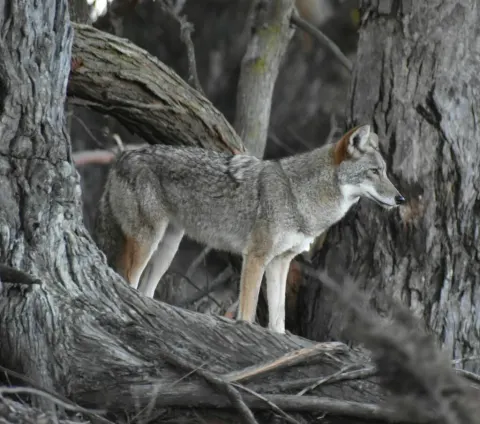
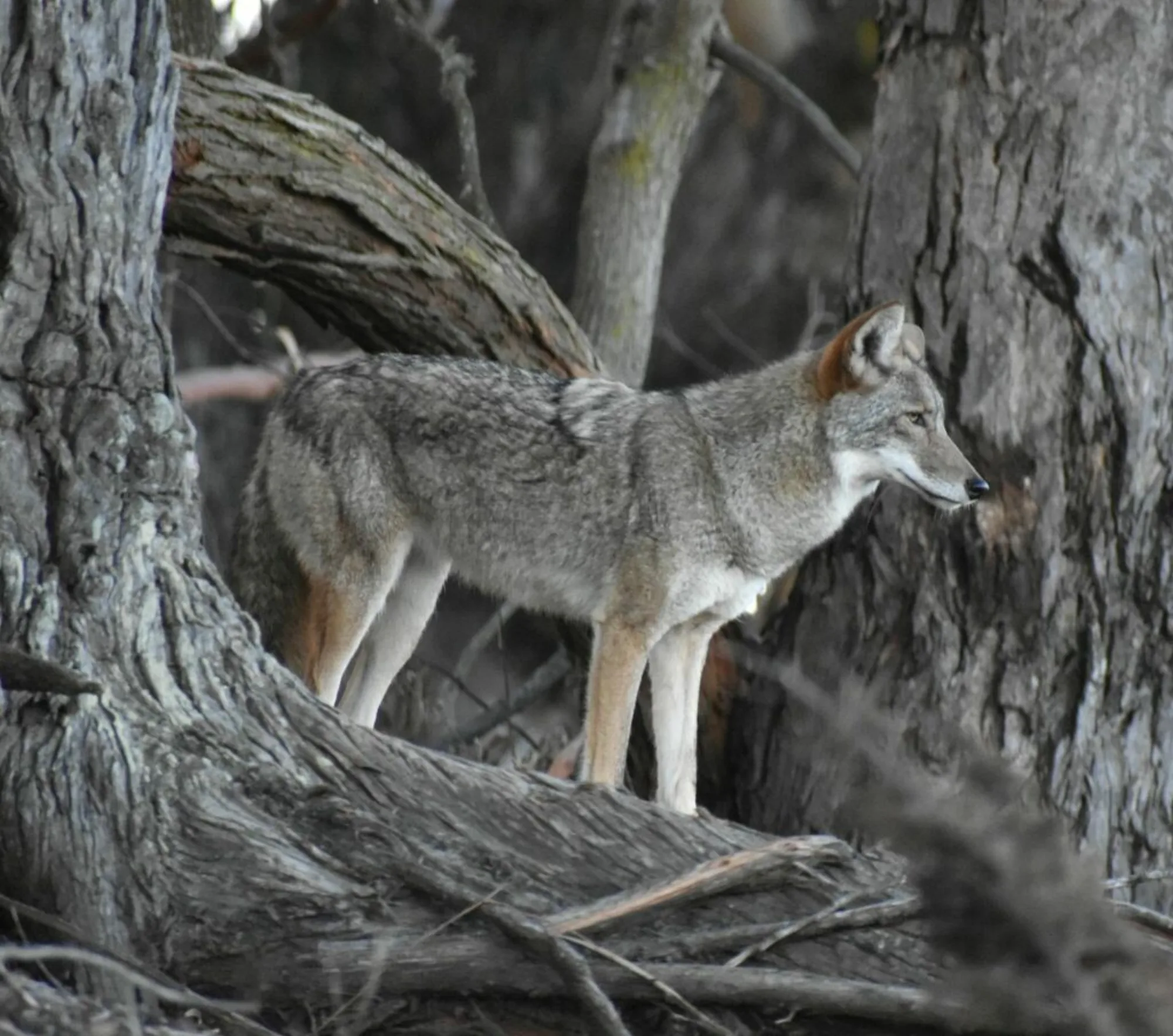
With its slender build, long ears and bushy tail, the Coyote is a North American canine smaller than the grey wolf. Its coat is usually light grey and reddish or tawny, mixed with black and white, while animals at higher elevations tend to have more black and grey than those in deserts. It carries its tail down when walking or running, and its distinctive howl changes quickly in tone and pitch.
Coyotes occupy habitats from grasslands and deserts to mountain regions and broken forests, and they can adapt to places altered by people. They are common in many cities, where they tend to be more active at night, while elsewhere they are often active around evening and the start of the night. A family may live together, but unrelated animals can also form loose, temporary packs, sometimes to tackle prey too large for one animal. Small prey is usually caught alone, with coyotes pouncing on mouse-sized rodents and chasing ground squirrels. Their varied diet includes rabbits, deer, birds, reptiles and fish, as well as occasional fruit and vegetables, and they will scavenge when the opportunity arises.
Breeding pairs establish a territory and prepare a den, sometimes using an abandoned burrow made by another animal. Litters average six pups, which may be born in dens, hollow trees or beneath ledges; both parents help feed the young. After leaving the den, the pups follow their parents on patrols and hunts, although they may eventually leave the family. Humans are the greatest threat to coyotes, while cougars and grey wolves also kill them.
Written from the English Wikipedia article Coyote (CC BY-SA 4.0).
- Records
- 8,163
- Countries
- 4
- Atlas places
- 6
These are open occurrence records, so they show where people looked for and recorded the Coyote as much as where it lives. Cells are up to 25 km across, and every location is generalised to its cell.
Generalised encounter areas, not exact locations. Each shape is a grid cell coloured by how likely the species is there.
- Very likelyUnited States25 km zone · medium confidence · 7306 records · updated 80 days ago
- Very likelyCanada25 km zone · medium confidence · 756 records · updated 80 days ago
- Very likelyMexico25 km zone · medium confidence · 85 records · updated 80 days ago
- Very likelyCosta Rica25 km zone · medium confidence · 16 records · updated 80 days ago
Conservation status not assessed here yet, so every location is generalised to its grid cell.