Ivory-billed Woodpecker
Campephilus principalis
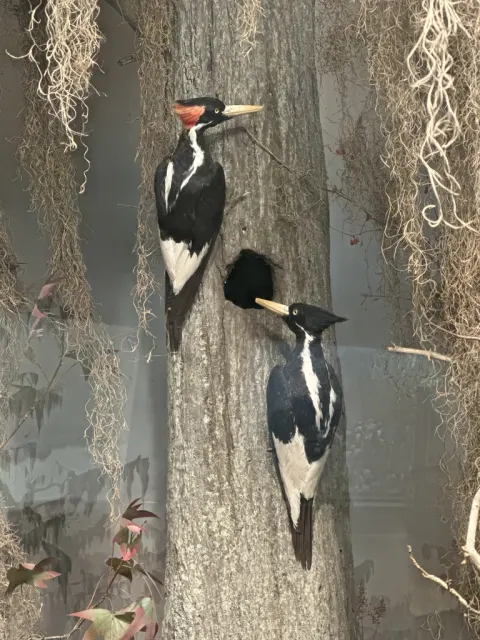
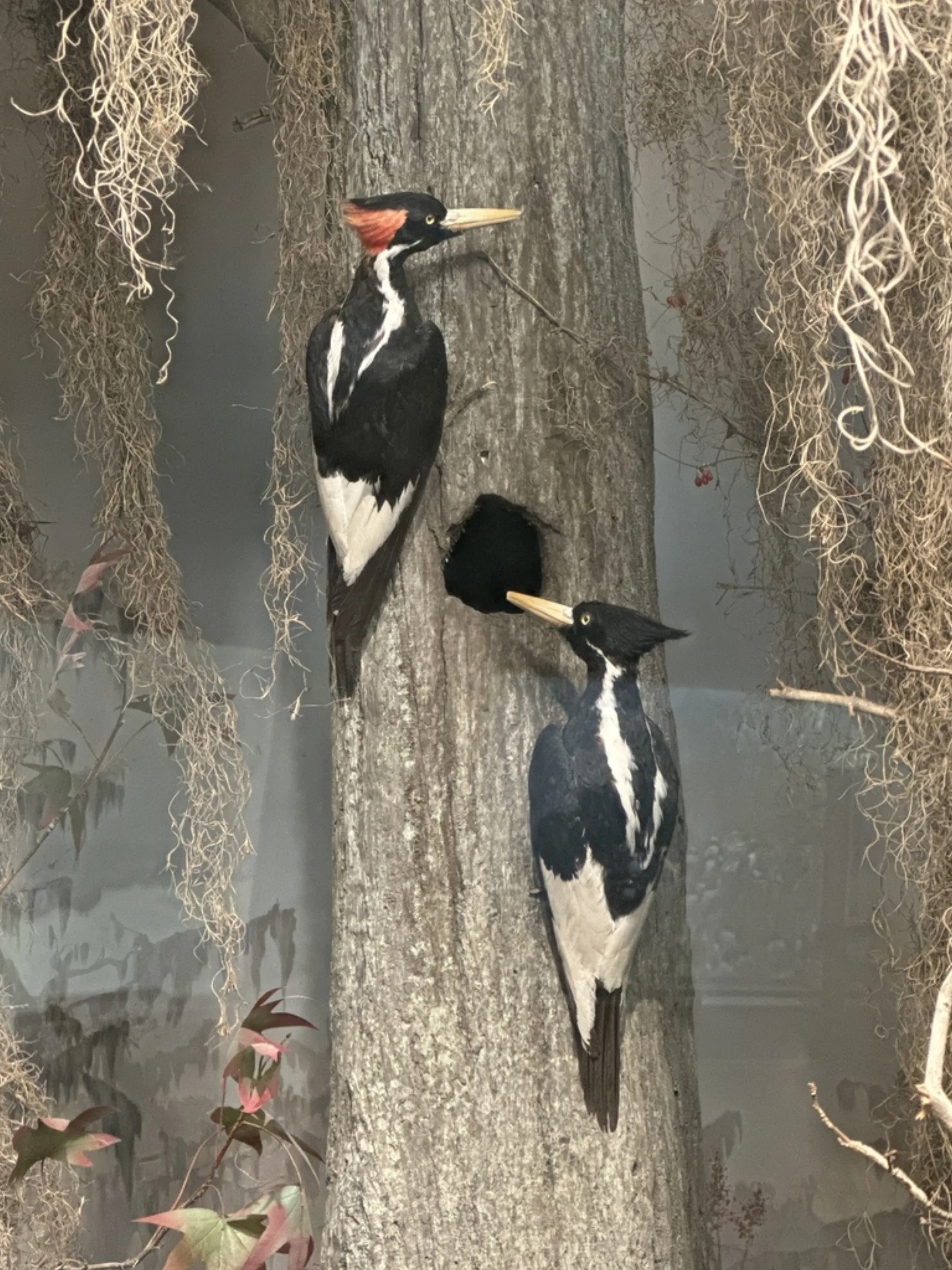
Often called the Lord God Bird, the Ivory-billed Woodpecker is a massive bird of the American South and Cuba. It is defined by its namesake ivory-colored bill and striking black plumage with white stripes running down the neck and back. Males are distinguished by a prominent red crest, which is solid black in females. In flight, the bird reveals extensive white on the trailing edges of its wings, a feature that separates it from the smaller, dark-billed pileated woodpecker. Its voice is equally distinct, often described as a series of notes resembling a toy trumpet.
This bird lives in dense swamplands, old-growth hardwood forests, and temperate pine woods. It is a specialist feeder, using its chisel-like bill to peel bark from dead trees to reach large beetle larvae. This diet is supplemented with vegetable matter such as pecans, acorns, wild grapes, and persimmons. Pairs are believed to mate for life and breed between January and May, working together to carve out nest cavities in living or partially dead trees. They are non-migratory and generally travel in pairs or small family groups.
The species suffered a catastrophic decline during the late 19th century. Massive logging operations destroyed millions of acres of its required habitat, while hunters and bird collectors further thinned the population. Though some modern reports suggest it may still persist in remote areas of Arkansas, Louisiana, or Florida, these sightings remain unproven and highly controversial. Today, the primary threat remains the lack of large, connected tracts of suitable forest, leading many to fear it may already be lost.
Written from the English Wikipedia article Ivory-billed woodpecker (CC BY-SA 4.0).
- Atlas places
- 0
These are open occurrence records, so they show where people looked for and recorded the Ivory-billed Woodpecker as much as where it lives. Cells are up to 25 km across, and every location is generalised to its cell.
No encounter zones yet
Where and when you can expect to see Ivory-billed Woodpecker is calculated from observation density. No zones have been computed for this species yet.