Imperial Woodpecker
Campephilus imperialis
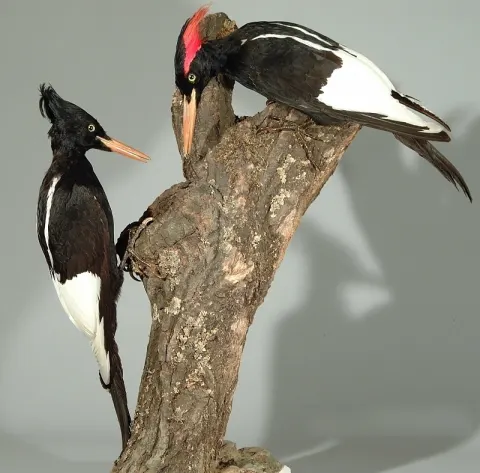
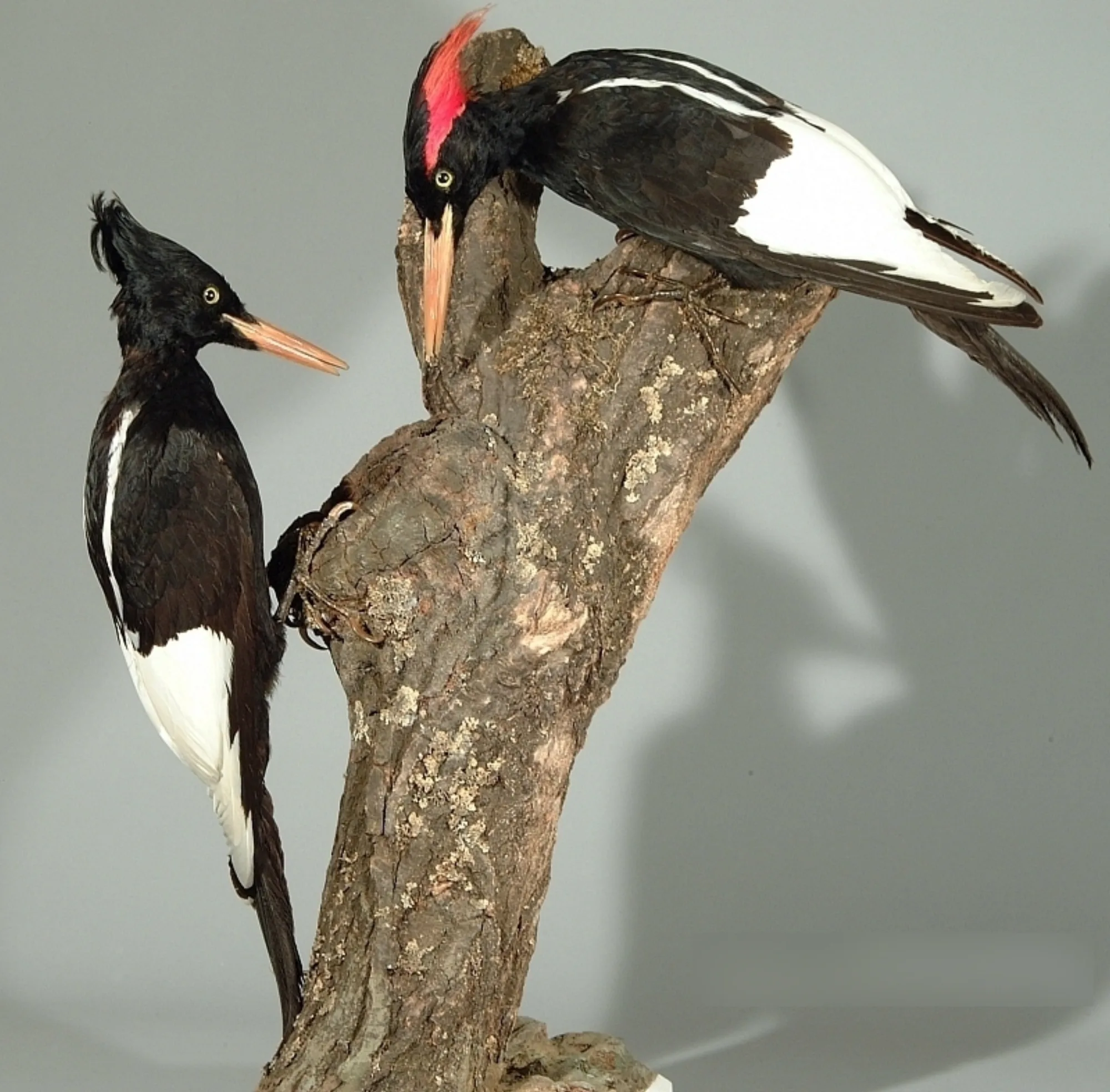
Reaching up to 60 centimetres in length, the Imperial Woodpecker is the largest known member of its family. This bird is predominantly black with a massive ivory-coloured bill and large white patches on its wings. Males are distinguished by a crest that is red on the sides and black in the centre, while females possess a recurved, entirely black crest. When it calls, the bird is said to sound like a toy trumpet.
This species is native to Mexico, specifically the high-altitude forests of the Sierra Madre Occidental. It prefers open landscapes of oak and pine, typically between 2,100 and 2,700 m above sea level. These birds rely on vast areas of mature, untouched forest containing many dead trees. They feed primarily on insect larvae found under the bark of these snags. Outside of the breeding season, they are known to move across wide territories in nomadic groups of up to 12 individuals.
There have been no confirmed sightings of this bird since 1956. Its population collapsed due to the destruction and fragmentation of its habitat, alongside extensive hunting for food and traditional medicine. In the 1950s, logging interests even encouraged local people to poison the birds, falsely claiming they damaged valuable timber. While unconfirmed reports of the woodpecker persist, the lack of remaining forest tracts large enough to support them makes their survival very unlikely.
Written from the English Wikipedia article Imperial woodpecker (CC BY-SA 4.0).
- Atlas places
- 0
These are open occurrence records, so they show where people looked for and recorded the Imperial Woodpecker as much as where it lives. Cells are up to 25 km across, and every location is generalised to its cell.
No encounter zones yet
Where and when you can expect to see Imperial Woodpecker is calculated from observation density. No zones have been computed for this species yet.