Wild Bactrian Camel
Camelus ferus
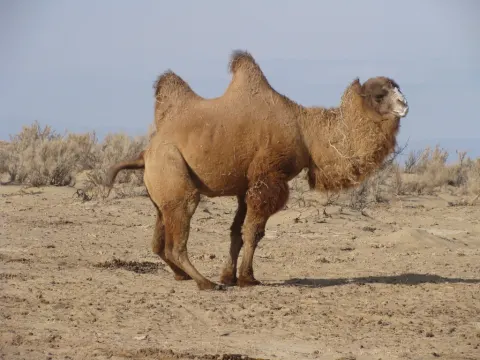
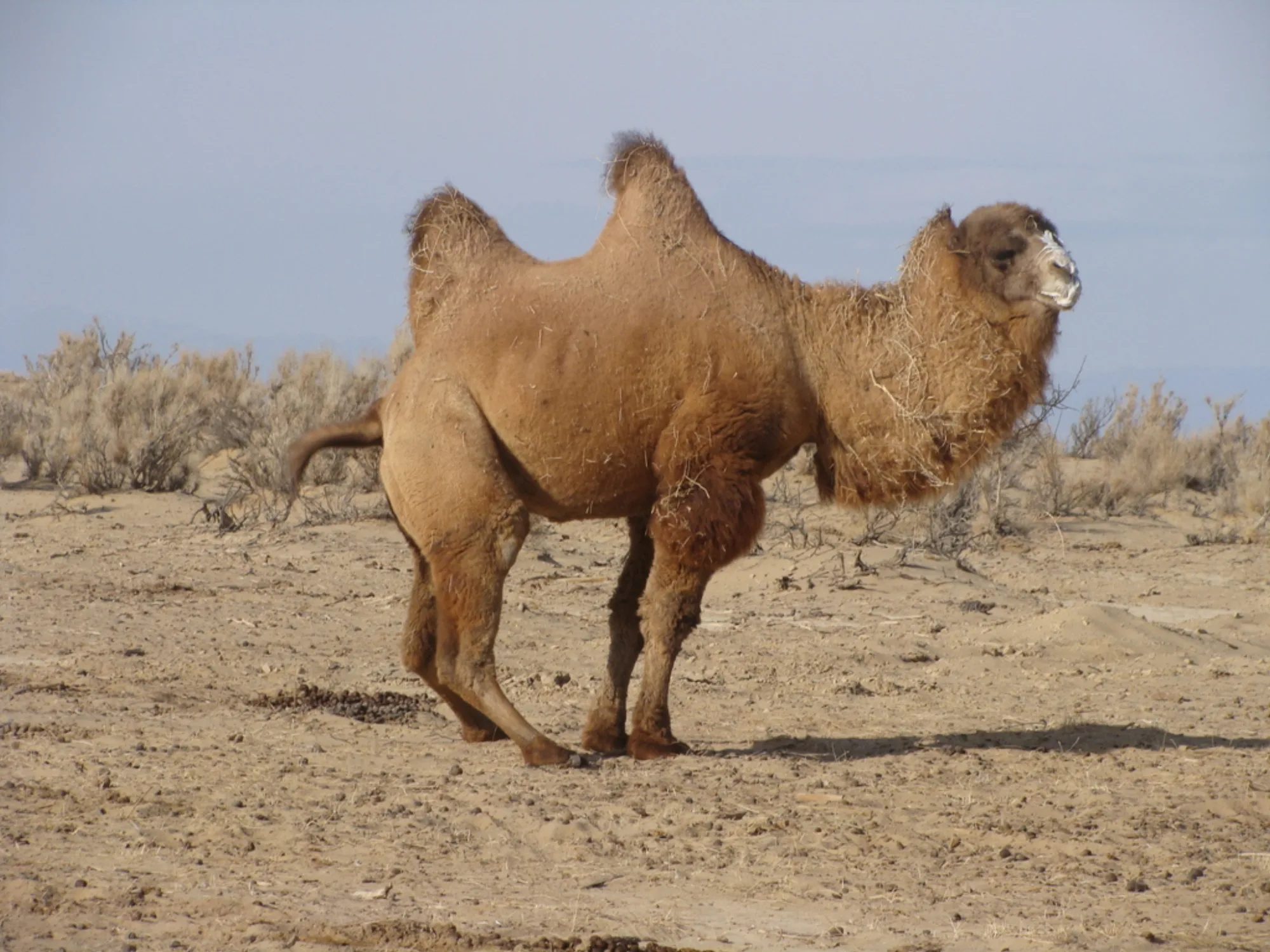
The Wild Bactrian Camel is a slender, lithe creature found in the remote deserts of Northwest China and southwestern Mongolia. Distinguished from its domestic relatives by its flatter skull and smaller, conical humps, this camel is built for the harshest environments. Its sandy-coloured coat changes with the seasons, shifting from a thick, light brown wool in winter to a wiry, darker covering during summer months. To survive sandstorms, it uses slit-like nostrils and a double row of thick eyelashes. Remarkably, it can drink water saltier than the sea and is one of the few mammals capable of eating snow for hydration.
These migratory animals live in small groups, typically consisting of 2 to 15 members, though they may assemble in larger numbers near water. They inhabit parched plains and hills where vegetation is sparse and temperatures swing between 50 °C in summer and -30 °C in winter. Led by a single adult male, herds travel long distances to find springs or snow-covered slopes. Females begin breeding at age 5, generally producing a calf every two years.
With only about 950 individuals remaining, the species faces severe pressure. Hunters sometimes lay land mines near salt water springs to kill them for meat and hide. Modern developments, including oil field exploitation and new roads, further disturb their habitat, while a border fence prevents migration between countries. They also face competition for food from domestic livestock and the risk of interbreeding with domestic camels, which threatens their unique genetic identity.
Written from the English Wikipedia article Wild Bactrian camel (CC BY-SA 4.0).
- Records
- 1
- Countries
- 1
- Atlas places
- 0
These are open occurrence records, so they show where people looked for and recorded the Wild Bactrian Camel as much as where it lives. Cells are up to 25 km across, and every location is generalised to its cell.
Generalised encounter areas, not exact locations. Each shape is a grid cell coloured by how likely the species is there.
- Very likelyMongolia50 km zone · medium confidence · 1 record · updated 4 days ago