Northern Fur Seal
Callorhinus ursinus
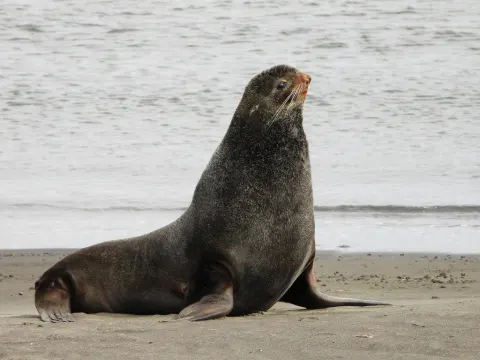
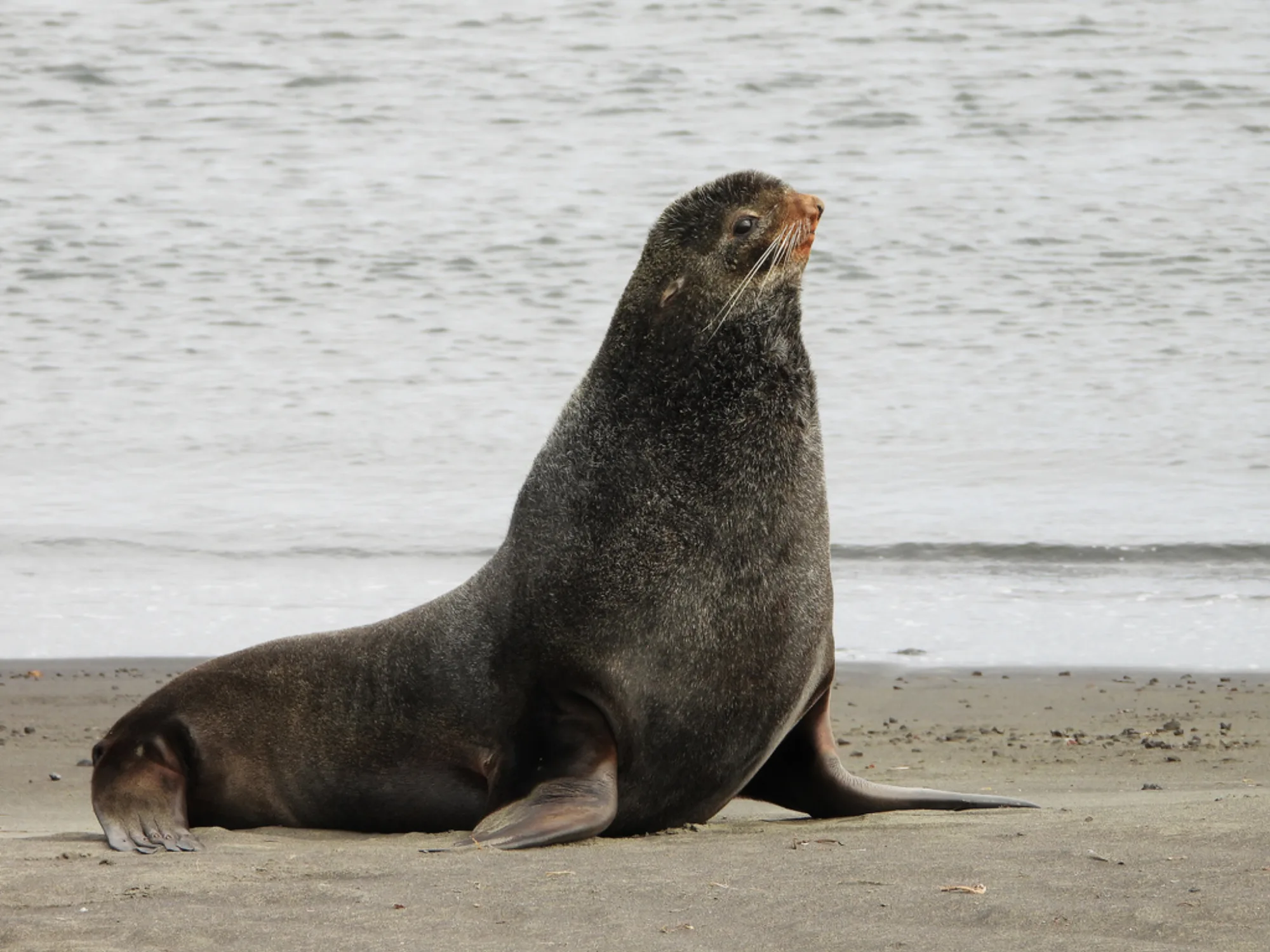
With its conspicuous ears, short muzzle and thick coat, the Northern Fur Seal is the largest of the fur seals. Adult males are stocky, with thick necks and a mane extending over the shoulders, while females have a more moderate build. Males can reach 2.1 m and 270 kg; females can reach 1.5 m and weigh 50 kg or more. Females are dark silver-grey to charcoal above, with cream to tan and rusty tones on the flanks and chest. Pups are blackish at birth and change to the colour of females after three to four months.
These eared seals live across the north Pacific, including the Bering Sea, Sea of Japan and Sea of Okhotsk. Roughly half the estimated population breeds on the Pribilof Islands in the eastern Bering Sea, with other breeding sites on islands from Russia to California. In winter, the seals tend to move south, travelling into Japanese and Korean waters or along the Pacific coast towards Baja California. They generally feed alone, taking fish and squid according to local availability. Their fish prey includes herring, salmon, pollock and mackerel.
Seals arrive at breeding sites in May, with older males generally returning first and competing for places. Females arrive later and give birth shortly afterwards, staying with their pups for eight to ten days before beginning feeding trips. Sharks and killer whales prey on northern fur seals, and a commercial fur trade reduced their numbers in the past. Pup production on the Pribilof Islands has fallen by about 50% since the 1970s. More attacks from killer whales, pressure from fishing and the effects of climate change are possible reasons for recent declines, though scientists have not reached a consensus.
Written from the English Wikipedia article Northern fur seal (CC BY-SA 4.0).
- Records
- 218
- Countries
- 3
- Atlas places
- 1
These are open occurrence records, so they show where people looked for and recorded the Northern Fur Seal as much as where it lives. Cells are up to 25 km across, and every location is generalised to its cell.
Generalised encounter areas, not exact locations. Each shape is a grid cell coloured by how likely the species is there.
- Very likelyUnited States25 km zone · medium confidence · 182 records · updated 80 days ago
- Very likelyRussia25 km zone · medium confidence · 34 records · updated 80 days ago
- LikelyCanada25 km zone · medium confidence · 2 records · updated 80 days ago
Conservation status not assessed here yet, so every location is generalised to its grid cell.