South Island Kōkako
Callaeas cinereus
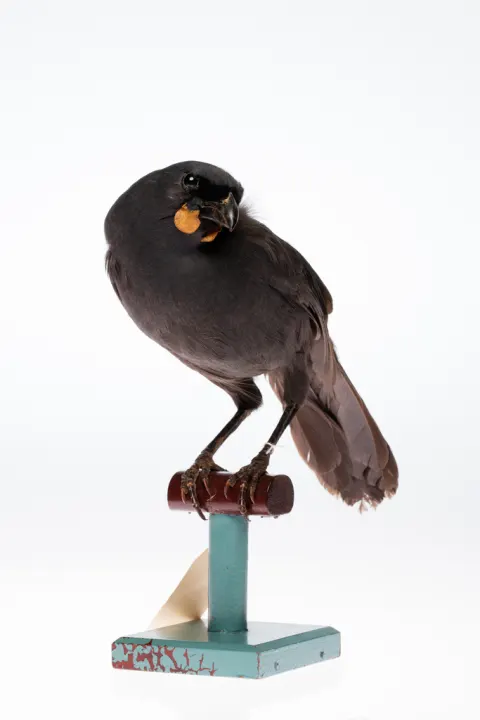
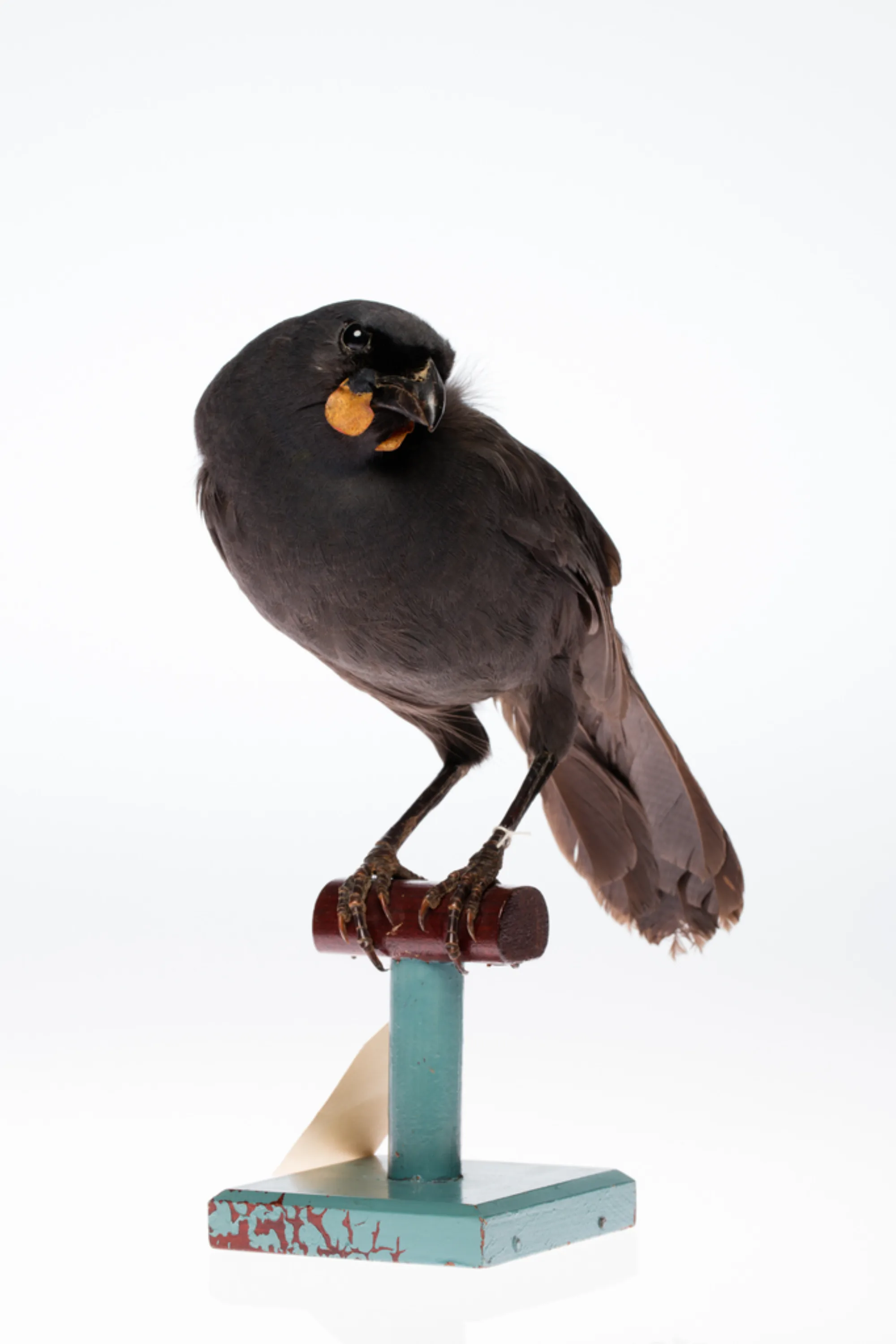
This slate-grey forest bird, once known as the orange-wattled crow, is a rare sight for travellers in the New Zealand wilderness. It is distinguished from its northern relative by its facial ornaments, which are primarily orange with just a small blue patch at the base. These birds weigh roughly 230g on average and possess a dark mask and long legs. Their plumage is slightly lighter than the North Island species, and they are capable of stronger flight. Visitors to the deep south should listen for their organ-like and flute-like duetting calls, which early explorers described as having some of the sweetest and most mellow tones produced by any bird.
While subfossil remains suggest a former presence across the South Island and Stewart Island, the South Island Kōkako is now restricted to a few potential sites. Recent unauthenticated reports and possible sightings have occurred in places like the Heaphy Track in Kahurangi National Park and near Reefton. Historically, these birds lived in the forest and were known to forage and nest close to the ground, laying eggs that were larger than those of the northern species. This habit of staying near the forest floor made them particularly vulnerable to introduced mammalian predators. Their population was also devastated by the burning and clearing of lowland forests by both Māori and later settlers. Since no recent photographs or physical remains have been verified, a reward is currently offered for evidence that can confirm the species still exists in the wild.
Written from the English Wikipedia article South Island kōkako (CC BY-SA 4.0).
- Atlas places
- 0
These are open occurrence records, so they show where people looked for and recorded the South Island Kōkako as much as where it lives. Cells are up to 25 km across, and every location is generalised to its cell.
No encounter zones yet
Where and when you can expect to see South Island Kōkako is calculated from observation density. No zones have been computed for this species yet.