Northern River Terrapin
Batagur baska
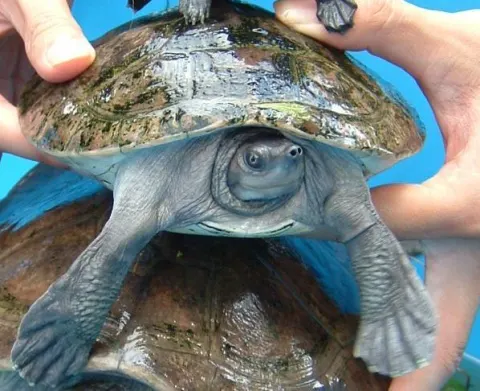
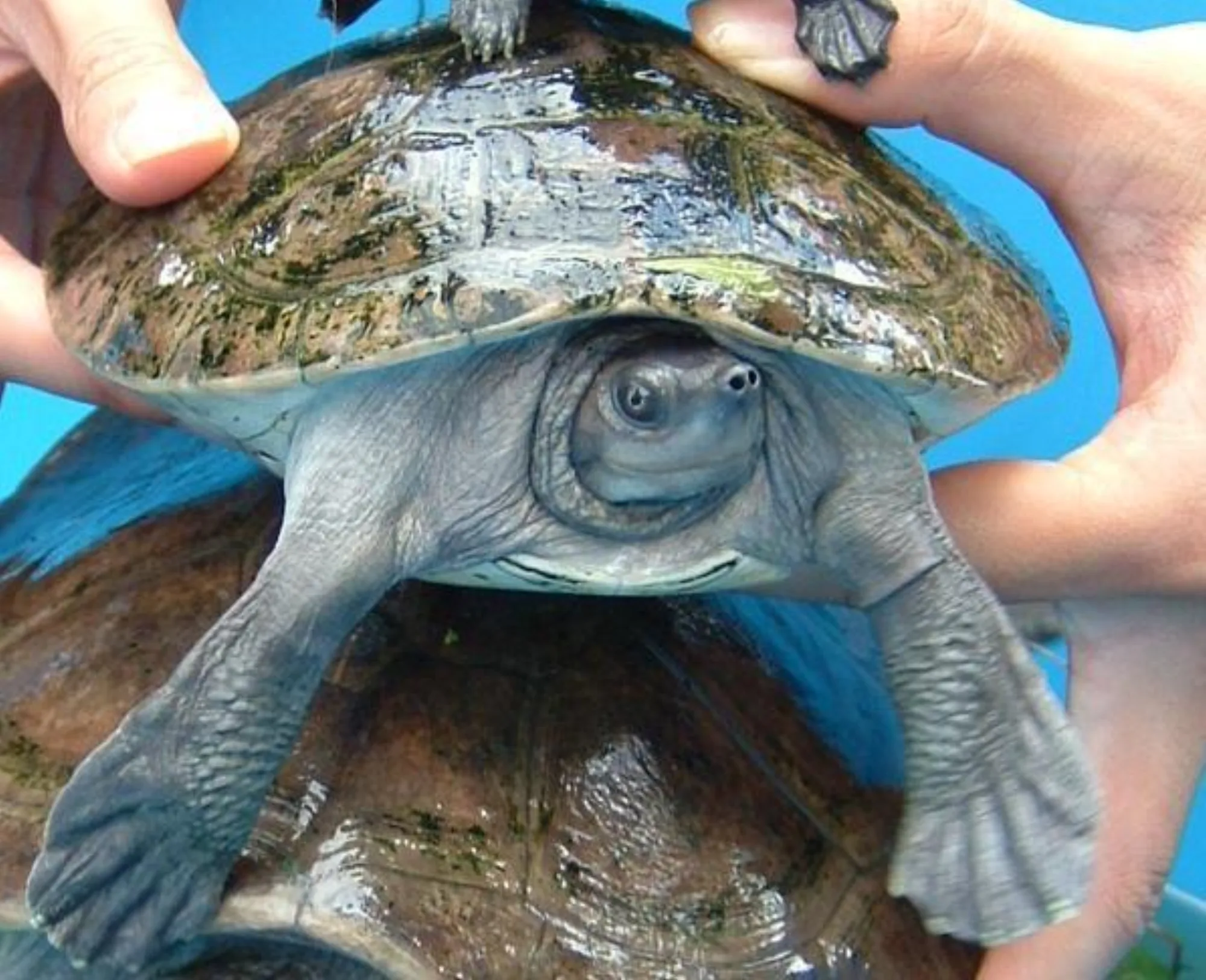
One of the largest turtles in Asian freshwaters, the Northern River Terrapin grows to a weight of 18 kg and a length of 60 cm. It is generally olive-brown with a yellowish underside and a small head featuring an upturned snout. During the breeding season from December to March, the males undergo a striking transformation, developing a black head and neck paired with orange or crimson limbs and backs. Their eyes also change color, turning yellowish-white in males and brown in females.
This aquatic traveler is now found only in the Sunderbans of India and Bangladesh, having disappeared from Thailand and Myanmar. It favors large rivers, mangrove forests, and tidal estuaries. These turtles are omnivorous, consuming riverside vegetation alongside small prey like clams. They are known to migrate 50 to 60 miles to reach the sand banks where they were born. Here, females typically deposit three separate clutches, each containing between 10 and 34 eggs.
Seeing one in the wild is difficult, as the population was estimated at just 100 mature adults in 2018. The species has suffered greatly from being hunted for food, with its eggs harvested and its meat once highly prized in the markets of Calcutta. Illegal trade to China continues to impact their numbers. Additionally, these terrapins face the loss of their essential nesting beaches and the ongoing effects of pollution in their river habitats.
Written from the English Wikipedia article Northern river terrapin (CC BY-SA 4.0).
- Records
- 3
- Countries
- 1
- Atlas places
- 0
These are open occurrence records, so they show where people looked for and recorded the Northern River Terrapin as much as where it lives. Cells are up to 25 km across, and every location is generalised to its cell.
Generalised encounter areas, not exact locations. Each shape is a grid cell coloured by how likely the species is there.
- Very likelyIndia50 km zone · medium confidence · 3 records · updated 4 days ago