Angonoka Tortoise
Astrochelys yniphora
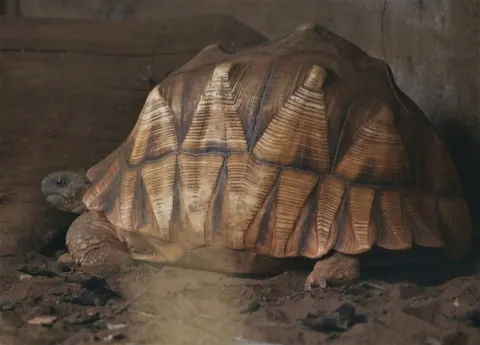
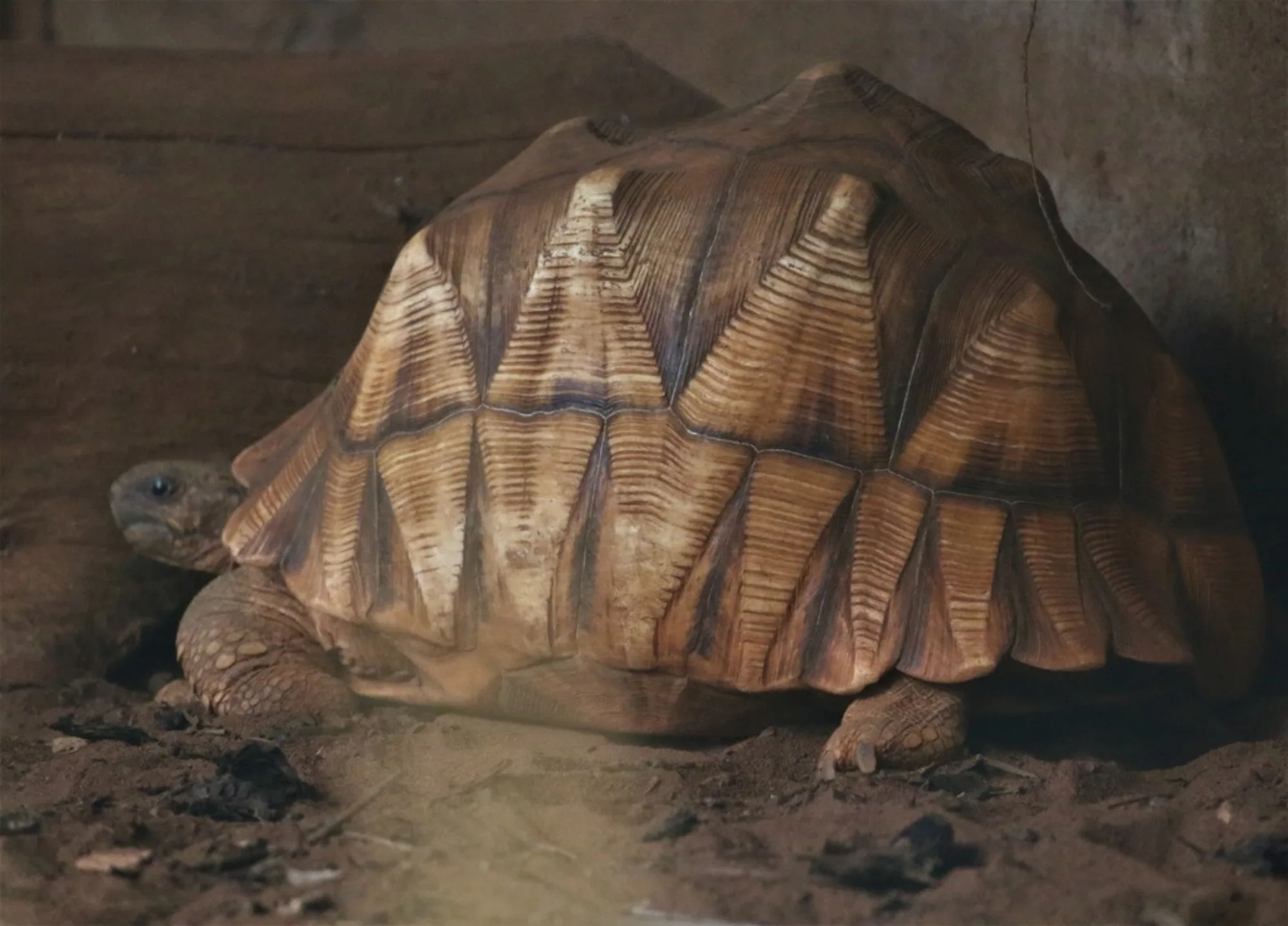
Identifying the Angonoka Tortoise is easiest by looking at the prominent growth rings on its high, light brown dome. This species is unique for the way its chest shell projects forward and curves up towards the neck, resembling a tool used for farming. Males are typically larger than females, growing up to 17 in long and weighing an average of 10.3 kg. These rare animals are found only in northwestern Madagascar near Soalala. They live in low-lying areas under 50 m above sea level, specifically within the bamboo scrub and dry forests surrounding Baly Bay.
In this habitat, the tortoises navigate dense thickets and open rocky ground to find food. Their diet consists of grasses, shrubs, and herbs, and they have even been seen eating the dried waste of carnivores. Breeding is timed with the arrival of the rainy seasons between January and May. A female generally produces about 4.3 hatchlings per season, though she can lay up to four separate clutches of eggs. Young tortoises face significant danger from introduced bushpigs, which prey on both the eggs and the juveniles.
Human activity poses the greatest risk to the remaining wild population, which may number fewer than 400 individuals. People frequently start fires to clear land for cattle, and these can turn into wildfires that destroy the tortoise's limited habitat. Furthermore, the species is under intense pressure from poachers who steal them for the global pet trade. To protect them, conservationists sometimes engrave the shells with marks to make them less attractive to collectors. Because the entire population is concentrated in one small region, they are also highly vulnerable to being wiped out by a single disease or weather event.
Written from the English Wikipedia article Angonoka tortoise (CC BY-SA 4.0).
- Atlas places
- 0
These are open occurrence records, so they show where people looked for and recorded the Angonoka Tortoise as much as where it lives. Cells are up to 25 km across, and every location is generalised to its cell.
No encounter zones yet
Where and when you can expect to see Angonoka Tortoise is calculated from observation density. No zones have been computed for this species yet.