Kahawai
Arripis trutta
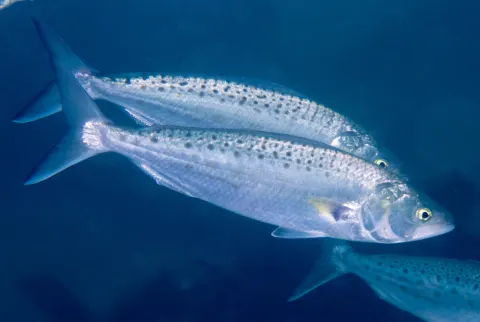
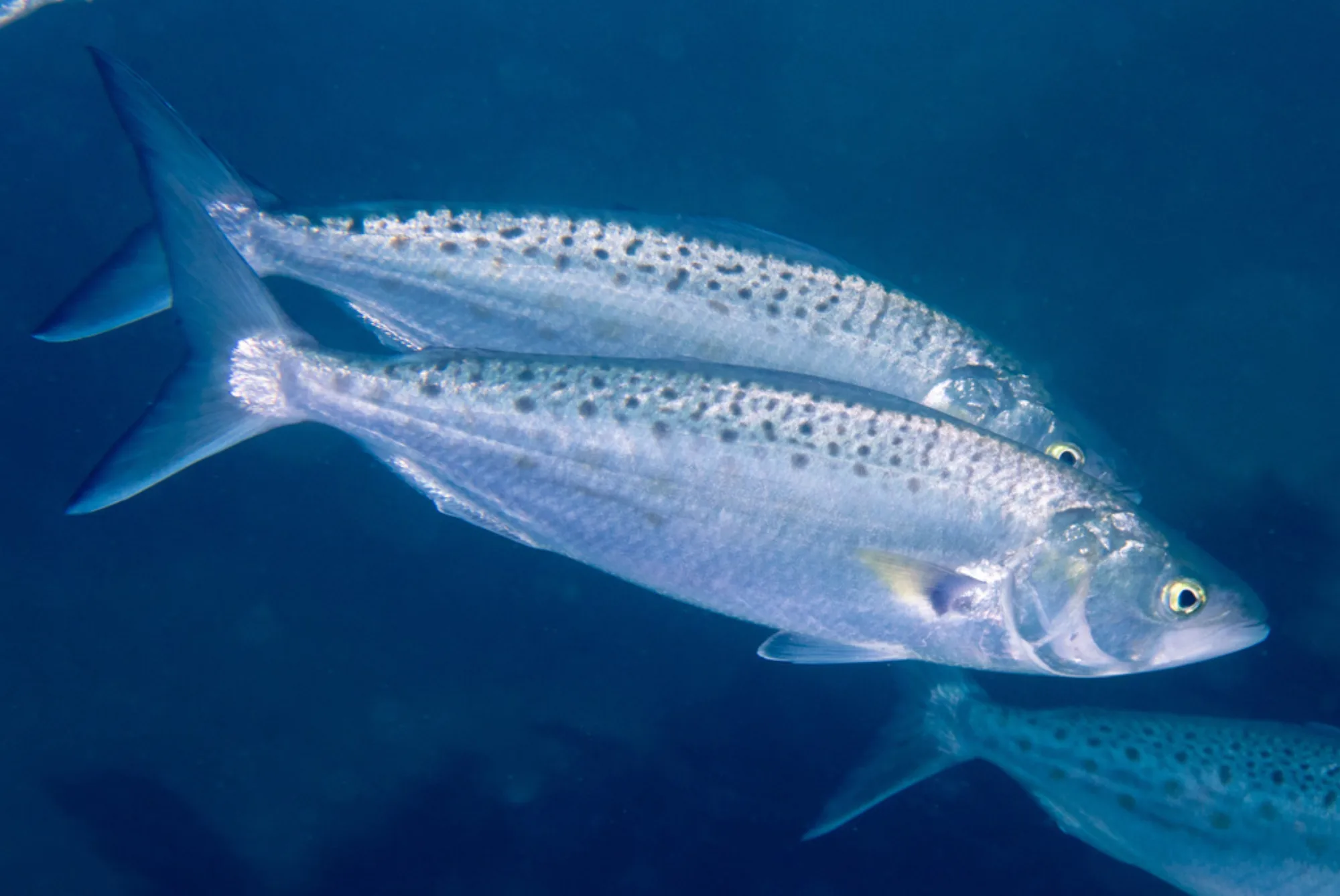
Streamlined and slender, the Kahawai is a marine fish of the cooler South Pacific waters around southeastern Australia and New Zealand. Its back is dark bluish-green, its underside silvery white, and its pectoral fins are vivid yellow. Young fish have golden bars along their upper sides, which break into large spots as they mature. Kahawai commonly reach around 47 centimetres in length, though the largest recorded was 89 centimetres.
Along Australia's coast, its range extends from Queensland's Moreton Bay south and west to Victoria, and includes northern Tasmania, with occasional records at Kangaroo Island. It also occurs around Lord Howe and Norfolk islands, while in New Zealand it lives around the coast and is more common north of Kaikōura. It is found around the Chatham and Kermadec islands too. Adults gather in very large schools off ocean beaches and exposed coasts, sometimes entering rivers, while juveniles form smaller schools in sheltered bays and estuaries. These fish can migrate thousands of kilometres, and their feeding schools drive smaller fish towards the surface, where seabirds can reach them. White-fronted terns often feed alongside kahawai, and fishers look for the birds when searching for schools. Young kahawai eat crustaceans and marine worms, while adults favour small schooling fish such as pilchards, sprats and anchovies.
In Australia, spawning takes place in the surf zone between Lakes Entrance and Bermagui in late spring and summer. Kahawai are caught commercially and by recreational fishers, and can also be taken accidentally in fisheries targeting other schooling species. Seals, dolphins and sharks prey on them, while changes in ocean currents and warmer waters may have contributed to a shift in their diet.
Written from the English Wikipedia article Arripis trutta (CC BY-SA 4.0).
- Records
- 10,650
- Countries
- 2
- Atlas places
- 4
These are open occurrence records, so they show where people looked for and recorded the Kahawai as much as where it lives. Cells are up to 25 km across, and every location is generalised to its cell.
Generalised encounter areas, not exact locations. Each shape is a grid cell coloured by how likely the species is there.
- Very likelyNew Zealand25 km zone · high confidence · 9207 records · updated 80 days ago
- Very likelyAustralia25 km zone · high confidence · 1443 records · updated 80 days ago
Conservation status not assessed here yet, so every location is generalised to its grid cell.